What is Wallpaper? A Complete Guide to Wall Coverings
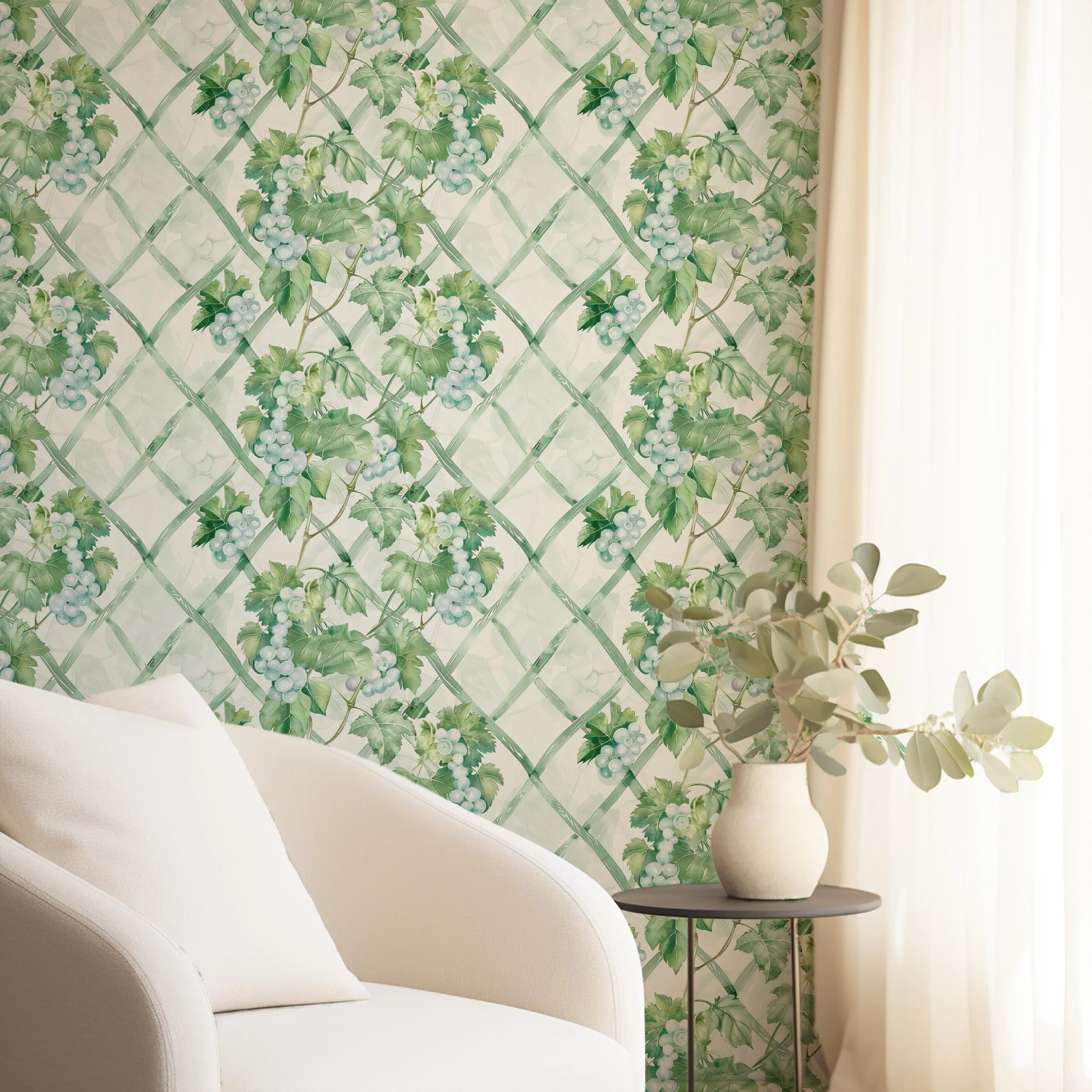
Wallpaper is a wall covering produced from paper, fabric, vinyl, or woven natural fibre, printed or textured on one side and adhered to interior wall surfaces. It is one of the oldest and most versatile interior finishes in residential and commercial design, used for millennia to add colour, pattern, texture, and character to rooms that paint alone cannot achieve. Modern wallpaper bears little resemblance to the fragile, paste-soaked paper rolls of previous generations — today's products are dimensionally stable, moisture-resistant, and digitally printed to a resolution that makes large-format photography, fine art reproductions, and complex botanical illustrations viable as wall coverings.
The distinction between wallpaper and wall mural is one of scale and composition. Wallpaper typically uses a repeating pattern — a botanical motif that tiles across the wall, a geometric repeat, a textured surface that appears continuous. A wall mural is a single, non-repeating image — a panoramic landscape, a custom photograph, a continuous botanical scene — that covers a wall as a unified composition. At Olive et Oriel, we produce both, custom sized to your exact wall dimensions at our Central Coast of New South Wales manufacturing facility, shipping to homes in Australia and more than forty countries globally.


Vintage Garden Panoramic Painted Mural Wallpaper · Jungle Retreat Wallpaper Mural · Ethereal Woodland Wallpaper Mural
Types of Wallpaper
Paste the Wall Smooth. The most widely used contemporary wallpaper substrate. A non-woven backing (a blend of polyester and natural fibres) provides dimensional stability — the wallpaper does not shrink or expand when wet, which makes installation more predictable and forgiving than paper-backed alternatives. The paste is applied to the wall rather than to the paper. The surface is smooth, wipeable, and suitable for all interior environments including bathrooms with adequate ventilation.
Paste the Wall Linen. The same non-woven backing as Smooth, with a surface treatment that creates a woven linen texture. The texture catches light differently throughout the day, adding depth and warmth to the wall surface. Installation method identical to Smooth. Not suitable for high-moisture environments.
Peel and Stick Self-Adhesive. A self-adhesive vinyl substrate that requires no paste or water. Repositionable during installation. Requires three coats of Viponds Self-Adhesive Prep Coat applied to the wall before installation for maximum adhesion and clean removal. Ideal for renters, temporary installations, and first-time wallpaper projects.
Natural fibre (grasscloth, sisal, jute). Woven natural fibres bonded to a paper backing. Every panel is unique due to natural variation in the fibres. Requires professional installation. Not suitable for moisture environments. Creates an extraordinarily warm, organic wall surface that no synthetic product replicates.
How Wallpaper is Made
At our Central Coast facility, every wallpaper panel begins as a high-resolution digital file. Our production team scales and crops the design to the exact dimensions specified by the customer — accounting for pattern repeat, installation excess, and the specific proportions of each wall section. The design is then printed using large-format inkjet printers with archival-quality pigment inks rated for 75+ years lightfastness under gallery conditions.
The substrate moves through the printer at a controlled speed that ensures colour consistency across the full length of the panel. Pattern repeats are calibrated so that the image transitions seamlessly between adjacent panels when installed. The completed panels are inspected, rolled, and packaged for shipping with installation instructions specific to the substrate type.


Valley Haven Wallpaper Mural · Forest Views Wallpaper Mural
Materials
- Paper-backed wallpaper: The traditional substrate. Absorbs moisture during installation, which can cause shrinkage on drying. Requires experience to install well. Less durable than non-woven alternatives.
- Non-woven wallpaper: The modern standard. Dimensionally stable, paste-the-wall installation, wipeable surface. Our primary substrate for both Smooth and Linen finishes.
- Vinyl wallpaper: Durable, washable, moisture-resistant. Used primarily in commercial and high-traffic environments.
- Natural fibre wallpaper: Grasscloth, sisal, jute, and abaca on paper backing. The most tactile and organic option. Requires professional installation and specific maintenance (dust only, no moisture).
Room by Room
- Living room: The most common wallpaper application. Feature wall behind the primary seating, or full-room treatment for a complete immersive environment.
- Bedroom: The headboard wall is the most impactful placement. Creates the focal point that the room's design resolves around.
- Bathroom: Paste the Wall Smooth above the tile line in a well-ventilated bathroom. Transforms a functional space into a designed one.
- Entrance hall: The first impression of the home. Bold pattern at close viewing range — the entrance is where wallpaper has its greatest impact relative to coverage area.
- Kitchen: Above-bench and dining area walls, away from direct steam and splash. Non-woven substrate for moisture resistance.
Designer Tips
- Order the $4.99 sample (48cm x 40cm / 19in x 16in) before committing. The quality, colour, and texture of wallpaper are impossible to accurately assess from a screen image alone.
- Every panel we manufacture is custom sized to your exact wall dimensions. There are no standard roll widths to calculate or pattern repeats to manage — you provide the dimensions, we produce the panels. Production takes 4 business days at our Central Coast NSW facility.
- We ship to over 40 countries globally with all import duties covered on wallpaper orders. See our wallpaper types guide for detailed substrate comparisons and our measuring guide before ordering.
Browse our full wallpaper collection, explore our wall mural range, or read our guide to wallpaper installation for technical guidance.