
Nursery art is bought in the most hopeful weeks of a family's life, usually late at night, usually while tired, and the walls end up holding that story for years. This is the buying guide we wish every expecting parent had: what actually belongs on a nursery wall, the safety rules nobody explains properly, the palettes that genuinely help sleep, and the choices that still look right when the baby is suddenly five.
Every print in our nursery wall decor collection is printed on archival 230gsm fine art paper at our West Gosford facilities, the same stock as our gallery work, because we have never believed children's rooms deserve a lesser standard.


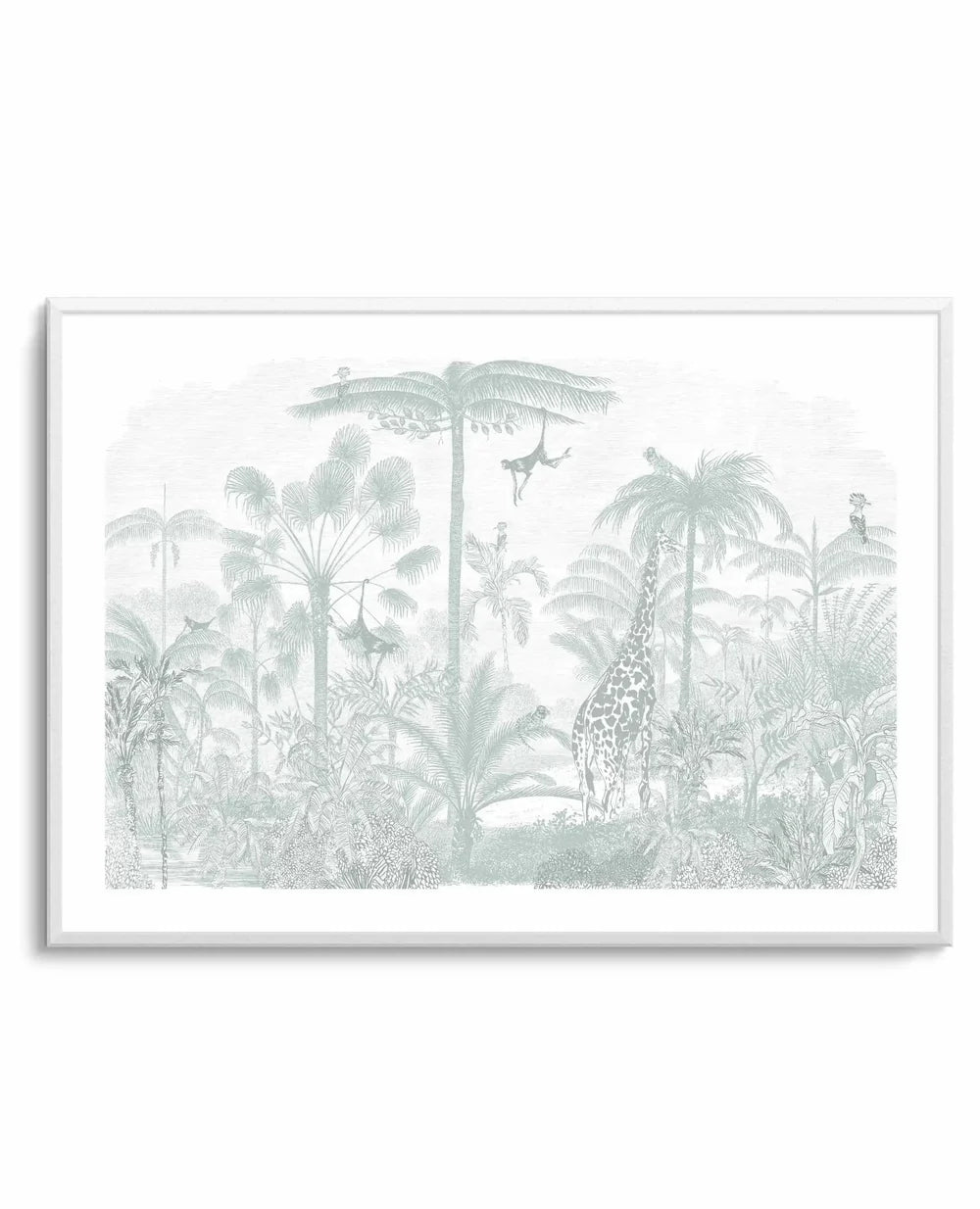
Vintage Jungle in Soft Sage Art Print · Vintage Jungle In Mist Art Print · Vintage Jungle in Powder Blue Art Print
The Sleep-First Palette
A nursery has one job before all others, and the wall art should be recruited to it. Low-contrast, muted palettes measurably reduce visual stimulation in sleep spaces: dusty sage, warm sand, soft blue-grey, gentle blush, the palette our calming art collection is built around. This does not mean beige-only; it means saving saturation for the corners of the room associated with waking, the play mat, the bookshelf, and keeping the sightline from the cot quiet.
The practical test we give customers: squint at the artwork. If it still reads as strong shapes and hard contrast with your eyes half-closed, it will read that way to a settling baby at 2am in a night-lit room. The pieces that pass, tonal animals, soft botanicals, misty landscapes, are the ones that stay up for years.
Decorate the nursery for 2am, not for the baby shower photos.
Safety: The Rules That Are Not Negotiable
- Nothing framed and glazed above the cot, ever. The wall above a cot belongs to wallpaper, painted colour, a fabric decal, or a lightweight unframed print on proper fixings. Everywhere else in the room, framed art is completely safe.
- Proper hooks, not adhesive strips, for glazed frames. Adhesive hooks are rated optimistically and fail without warning in rooms that run warm. A single correctly sized wall hook takes two minutes and holds for a decade; our hanging guide covers every wall type.
- Cords and hardware out of the reach plan. Think eighteen months ahead: a standing toddler in a cot has surprising reach, and anything within it, wire, frame corner, decal edge they can pick, needs to not be there.
- Weight low, height high. The heavier the piece, the higher and better-fixed it should be. Small light prints can live lower on side walls; the 50x70 anchor stays at adult eye level.


Vintage Jungle In Green Art Print · Vintage Jungle In Sahara Art Print
The Five Moments of a Nursery Wall Plan
Nurseries are small rooms with a lot of function packed in, and the art plan works best mapped to the room's real stations. The feeder chair wall takes the anchor, the largest and most personal piece, because it is the one the adult stares at through hundreds of night feeds; choose something you love, not something themed. The cot sightline, what the baby actually sees while settling, wants the quietest work in the room. The change table wall is the entertainment district: this is where a bright pair or a trio earns its keep, because a distracted baby at nappy time is a gift, and the change table is a waking station where stimulation helps rather than hurts.
The door wall takes the personal piece, the name print, the birth details, something from our custom kids art service, positioned where visitors see it and the baby does not particularly need to. And the window wall usually wants nothing at all; it has the curtains and the light, and nurseries breathe better with one empty wall than with four full ones.
Subjects That Grow: The Five-Year Test
The difference between nursery art that survives and nursery art that gets boxed at age two is almost always subject maturity. Artfully drawn animals, a giraffe on linen, a vintage jungle study, outlast cartoon animals by years, because the artistry keeps earning its place after the baby-cuteness stops being the point. Botanical and landscape work never expires at all. The test: would this print look wrong in a stylish eight-year-old's room? If it would, its nursery lifespan is short too, and our animals for kids collection is curated specifically to pass.
Series work is worth knowing about here. Several of our nursery ranges, the Vintage Jungle studies among them, come in multiple colourways of the same artwork, which lets siblings' rooms rhyme without matching, and lets a second baby inherit a coordinated wall without a repeat.


Vintage Giraffe on Linen · Love You
Pairing With Wallpaper and Murals
If the nursery has patterned wallpaper or a mural, the art plan changes: the walls already have a voice, so the prints become punctuation rather than paragraphs. One or two quiet pieces on the non-papered walls, sharing a colour with the paper but not its subject, finish the room; more than that argues with it. The reverse also holds, in a painted nursery, art carries the whole personality budget, which is when the pair-and-trio approach across two walls makes the room feel complete.
Coordinate, never match. Pull the sage out of a jungle mural into a sage-toned animal print; do not buy the same jungle again in a frame. Rooms that share palette but vary subject read as designed; rooms where everything matches read as bought in one click, and oddly enough, they date faster too.
The Practical Buy
- Buy the anchor at real size: 50x70 or A2 above the feeder chair; A4 art on a big wall disappears. Our sizing method scales down to nursery furniture the same way.
- See the paper in person first if unsure: order the smallest size of the same artwork, from $9.95, every size prints on the same 230gsm archival stock, so the A5 tells you the truth about the 50x70.
- Frames: oak for warmth, white to disappear: nursery palettes are warm, and oak frames from the framed range flatter them; black framing usually reads too formal in this room.
- Hang before the baby comes: genuinely, it is the last quiet fortnight for wall work, and drilling near a sleeping newborn is nobody's plan.
- Keep one wall for later: the art a child eventually chooses, and they do, needs somewhere to go.
Light, Aspect and the Australian Nursery
Nurseries get allocated, not chosen, they are usually the smallest bedroom, and their light deserves a moment's planning. A west-facing nursery runs warm and bright exactly at the pre-bedtime window, which is the argument for blockout curtains first and calmer, deeper-toned art second; pale prints in that room disappear into the glare at 5pm and reappear at 7 looking washed. South-facing nurseries, the dimmest, flatter warm palettes, sand, blush, ochre-leaning sage, and are the one place we steer families away from grey-heavy schemes, which go cold without sun to warm them. East light is the nursery jackpot: bright at wake-up, gentle by sleep time, and nearly every palette works in it.
Night lighting matters more than day here. Look at your shortlisted art under the warmest lamp in the house, because that is the light the settling hours actually use; a print that sings at noon can vanish into shadow murk under a 2700K night light. Tonal work with some warmth holds; cool high-detail work goes flat. It is a two-minute test with your phone screen at night and it prevents most nursery art regret.
The Mistakes We See From the Print Floor
Ten years of nursery orders produce clear patterns, and three misfires repeat endlessly. The theme package is the first: cot linen, curtains, art and mobile all in the same licensed print, which photographs sweetly for one newborn announcement and then dates all four surfaces at the pace of one. The art is the easiest layer to hold back, keep it adjacent to the theme rather than inside it and the room outlives the phase. Tiny-art syndrome is the second: nurseries invite miniature thinking, but the walls are the same size as any bedroom's, and a lone A4 above a dresser reads as a placeholder. Buy the anchor at adult scale; the room is for adults half the time anyway.
The third is skipping the personal layer entirely. The prints that never get boxed, the ones still up at age ten, are disproportionately the personal ones: the name print, the birth poster, the artwork bought because it reminded someone of a place. Mass-taste safety is replaceable by definition. One genuinely personal piece per nursery, positioned where the parents see it, is the cheapest insurance against the whole wall feeling interchangeable, and it is usually the piece the child eventually asks to keep.
Siblings, Hand-Me-Downs and the Second Nursery
Second babies inherit rooms, and the art plan can honour that gracefully instead of pretending otherwise. The colourway trick is the elegant version: several of our nursery series print in multiple palettes of the same artwork, so the new baby's wall rhymes with the older child's former room without repeating it, same jungle, new season. Anchor pieces also promote well; the 50x70 that watched over the first baby's feeds moves to the older child's big-kid room as a keepsake with history in it, and the nursery gets a fresh anchor for a fraction of a full redecoration.
For twins and shared nurseries, resist the A-side B-side instinct at the wall level, one coherent scheme with two small personal pieces beats two competing themes in a room that small. The personalised layer does the differentiating: two name prints from the custom service, one per cot corner, and the rest of the walls belong to the room rather than to either child. It is the same shared-room rule that holds at every age, and it starts working from day one.
Frequently Asked Questions
What size prints are best for a nursery?
A4 and A3 suit the walls beside the cot and change table; a 50x70 or A2 carries the wall above a feeder chair. Keep everything at adult standing eye level or higher on the cot wall itself, artwork should never hang where a standing toddler can reach it.
Is it safe to hang framed art in a nursery?
Yes, with two rules: never directly above the cot, and always on proper fixings rather than adhesive hooks for glazed frames. Above the cot, choose a lightweight unframed print, a fabric decal, or leave the wall to wallpaper. Everywhere else, standard framed art on a correctly rated hook is completely safe.
What colours help a baby sleep?
Low-contrast, muted palettes: dusty sage, warm sand, soft blue-grey, blush. The research consistently favours reduced visual stimulation in sleep spaces, which means gentle tonal art rather than bright primary blocks. Save the high-energy colour for the play corner.
Should nursery art match the wallpaper?
Coordinate, never match. Pull one or two colours from the wallpaper into the prints and let the subjects differ. Matching sets wall-to-wall read as a catalogue; a room that shares a palette but varies its voices reads as designed.
How many prints does a nursery need?
Three to five moments: one anchor above the feeder chair or dresser, a pair or trio on the longest free wall, and something small and personal near the door. More than that competes with the room's real job, which is sleep.
Can I personalise nursery art?
Yes, our custom kids art service prints names, birth details and custom colourways to order, made at our West Gosford facilities like everything else we ship.
Do nursery prints work after the baby stage?
The good ones do, which is the buying test worth applying: choose artful animals, botanicals and landscapes over babyish motifs and the same walls carry the room to five and beyond without a redecoration.
Start in the nursery collection, add a matching set or a personalised piece from custom kids art, and let the kids art range take over when the nursery years end. Everything is printed to order in West Gosford and shipped ready to hang, to Australian nurseries and to more than 40 countries beyond, usually within days, which matters when the due date is doing its countdown.


