

On the Wall
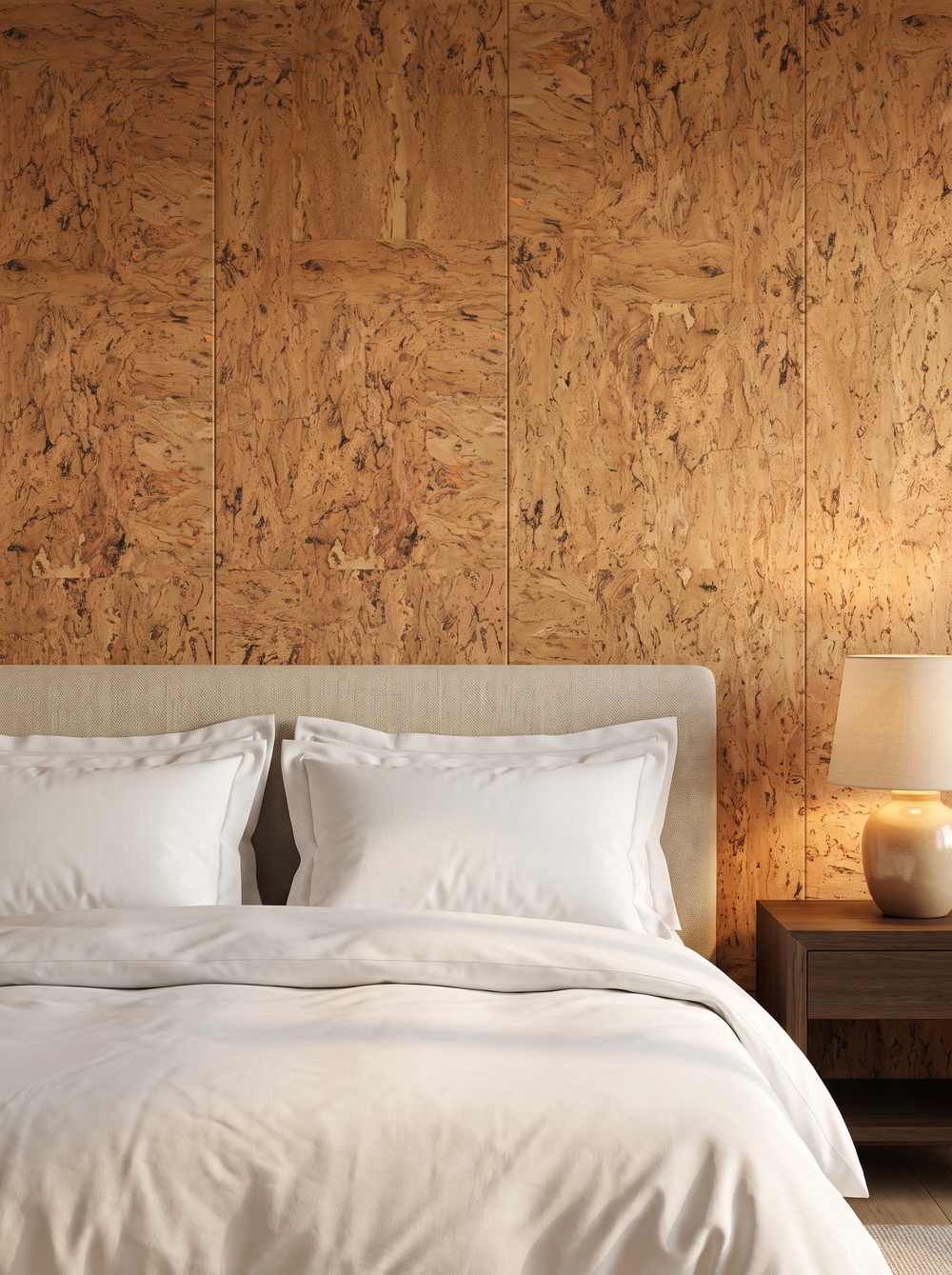

Dark Cork Wallcoverings: Moody Walls That Still Feel Warm
How to style dark cork wallpaper, from espresso to ink black with silver. Why deep cork walls feel warm, not heavy. From Australia's wallpaper makers.
Learn more
Sage Green Wall Art: The Shade Australia Agreed On
Sage green wall art guide: which greens suit which rooms, how to solve undertones with free mockups and $9.95 samples, and how to build a scheme around Australia's favourite shade.
Learn more
Luxury Panoramic Walls: Murals, Wide-Format Art and the Rooms They Transform
There is a certain kind of wall that quietly decides how a whole home feels. It runs four, five, sometimes six metres along an open-plan living space or down a generous entry, and most houses leave it bare because nothing in a standard frame size comes close to filling it. Here is the lovely truth: that wall is the single biggest luxury opportunity in your home, and the wide format is how you claim it. Luxury on a wide wall rarely comes from spending more on lots of things. It comes from one confident decision made at the right scale. A panoramic mural carrying a misty landscape across the entire wall. A framed panoramic artwork, 70cm tall and 140cm wide, hung with generous breathing room. Both say the same thing the moment you walk in: someone chose this wall deliberately, and chose it well. We have spent more than ten years printing wallpaper and framing art at our two manufacturing facilities in West Gosford on the NSW Central Coast, and wide walls are where we see the biggest transformations. This guide covers the luxury treatment specifically: what makes a panoramic wall read as high-end rather than simply large, how to layer texture around it, and how to design for the wide, light-filled rooms so many Australian homes are built around. Wattle & Mist Panoramic Mural in Eucalyptus & Linen Wallpaper · Vintage Oak Tree in Sage Green Wallpaper Mural · Shades of Day by Mindy Zielfelder What Makes a Wide Wall Read as Luxury Walk into any home you would describe as genuinely luxurious and you will notice three things happening on the walls. The first is scale. Expensive rooms commit. One artwork sized properly for the wall will always feel richer than four small pieces scattered across it, because generous scale signals confidence and hesitant pieces signal doubt. That is the entire case for panoramic wall murals and wide-format art in a sentence. The second is restraint in colour. High-end interiors lean on muted, closely related tones: soft eucalyptus greens, misted blues, warm stone, smoky charcoal. A mural in a hushed palette lets the eye travel across five metres of wall without ever feeling shouted at. Save the punchy brights for cushions you can swap in an afternoon. The wall itself should feel like it has always been there. The third is depth. A flat painted wall reflects light in one plane. A panoramic landscape mural adds atmosphere, a horizon line and layers of tone that shift as daylight moves through the room. It behaves less like decoration and more like a view. That sense of looking into something, rather than at something, is what separates a luxury wall from a merely decorated one. For the broader case for the wide format itself, our guide to panoramic wall art and the wide walls it solves covers the sizing logic in detail. This post takes that format to its most refined conclusion. Two Paths to the Same Feeling: Murals and Panoramic Art The luxury treatment of a wide wall comes down to two options, and the right one usually announces itself once you look honestly at the room. The first path is the wall mural. A luxury panoramic mural is printed as one continuous scene and custom sized to your exact wall dimensions, so the composition lands precisely where you want it. The horizon sits where your eye rests, and there are no awkward repeats. This is the full-immersion option, ideal when the wall is truly the room's main event. If murals are new territory, start with our complete guide to choosing a wall mural and come back for the luxury layer. The second path is framed panoramic art. Our panoramic artworks print at 70 x 140cm (about 27 x 55 inches), a wide, low format practically invented for the space above a long sofa, a king bed or a sideboard. Framed in timber with crisp acrylic glazing, a panoramic print gives you gallery presence with the flexibility to move house with you. Hang one alone for quiet drama, or pair two side by side on a truly vast wall. Plenty of the loveliest rooms we see use both: a mural on the feature wall, a framed panoramic on the adjacent one, each in the same soft palette so the room reads as one calm, considered whole. A luxury wall never asks for attention. It simply holds the room so well that everything else gets to relax. Acoustic Sessions II · Almara I LS The Luxury Mural Playbook: Muted Palettes, Soft Focus, Quiet Drama Not every mural reads as luxurious. The designs that carry a high-end room share a few habits worth borrowing. Choose atmosphere over illustration. Misty mountain ranges, hazy coastlines and soft botanical washes work because they suggest a scene rather than spelling one out. Detail that dissolves into softness feels expensive. Detail that competes for attention feels busy. Keep the palette within one family. A mural in four or five closely related tones will sit more gracefully behind your furniture than one juggling ten. If your sofa is oatmeal and your timber is warm oak, a mural in stone, fog and pale sage lets everything hum together. Muted does not mean dull. It means the colour whispers instead of announcing itself. Mind the horizon line. In a seated room like a lounge, a mural whose visual weight sits in the lower two thirds feels grounded and calm. In an entry, where people stand, a taller composition draws the eye up and lifts the ceiling. Because every mural we print is custom made to your measurements, the scene is scaled to your wall rather than cropped to fit it, the difference between a mural that looks placed and one that looks born there. And if you have fallen for this trend at full strength, our deep dive into the statement mural trend dominating 2026 shows where the look is heading next. Layering Luxe Texture: Grasscloth, Sisal and the Walls You Touch Here is the part most guides skip: a luxury panoramic wall rarely works alone. The rooms that feel truly finished layer one hero wall with quieter, textural walls around it, and this is where woven papers earn their keep. Our grasscloth and sisal woven wallpapers are made from natural fibres with real, touchable texture. Up close you can see the subtle variation in the weave, the shifts in tone from strand to strand, the way the surface catches side light in the late afternoon. On the walls surrounding a panoramic mural or flanking a framed panoramic print, grasscloth does what paint cannot: it gives the room a tactile warmth you feel the moment you step in, even before you consciously notice it. The pairing logic is easy. Let the mural or artwork carry the image, and let the woven paper carry the texture. A misty landscape mural behind the lounge, warm sand-toned sisal on the hallway wall beside it, and suddenly the whole zone feels layered the way designer projects do. Because the weave is naturally irregular, grasscloth also forgives the small imperfections older plaster walls love to reveal, a quietly practical bonus. One honest note: natural weaves are best met in person. Order a sample first, run your hand across it, and see the fibre in your own light before committing. Designing the Wide Open-Plan Room Australian homes love an open plan, and open plans create exactly the walls this post is about: long stretches where kitchen, dining and living share one flowing space. The trick is to let the panoramic wall do the zoning for you. Place the mural or wide-format artwork on the wall that anchors the living zone, usually behind the sofa or facing the main seating. It instantly tells everyone where the heart of the room is. Keep the walls in the kitchen and dining zones quieter, in paint or subtle texture, so the eye gets a rest between moments. Scale matters more here than anywhere else, because open-plan rooms are viewed from a distance. A piece that feels large in a hallway can disappear across eight metres of floor. This is where a 70 x 140cm panoramic, a pair of them, or a full extra large artwork earns its place. As a rough rule, art above a sofa should span two thirds to three quarters of the sofa's width, and in an open plan you round up, never down. Our guide to large statement art for luxury homes walks through the sizing maths room by room. And do not forget the fifth wall. In rooms with raked ceilings or generous height, a subtle treatment overhead can finish the space; our post on statement ceiling wallpaper is a lovely rabbit hole if you are feeling brave. Entryways: The Four-Second First Impression Your entry sets expectations for everything beyond it, and it does so in about four seconds. It is also one of the easiest places to be bold, because nobody lingers in a hallway long enough for a strong wall to tire. A panoramic mural running the length of an entry hall turns a corridor into an arrival. Choose a scene with depth, something with a horizon or receding layers, and the hallway will feel longer than it measures. In narrower entries, a single framed panoramic facing the front door gives that same considered welcome without wrapping the whole space. Keep the styling beneath it spare: a console, a lamp, one vessel. The wall is the moment. If your entry flows into a hallway, carrying a related muted tone through with bedroom wallpaper in an adjoining room keeps the journey feeling intentional rather than episodic. See It on Your Wall Before You Buy: Our Free Styling Service Choosing wide-format art for a big wall is a confidence game, so let us hand you the confidence. If you are weighing up framed panoramic pieces, send us a photo of your wall with its measurements, and our styling team will mock your shortlisted artworks onto your actual wall at true scale. You will see exactly how a 70 x 140cm panoramic sits above your own sofa, in your own light. The service is completely free, and mockups usually land in your inbox within about one business day. This is the moment a maybe becomes a yes, because the guesswork simply disappears. Pair it with the high-resolution zoom on every product page, which lets you inspect detail up close before ordering, and remember that standard-size art comes with a 30-day exchange, so even a change of heart has a soft landing. Between the mockup, the zoom and the exchange window, you will know before you spend a dollar on the panoramic art collection. Ordering a Mural the Unshakeable Way Murals follow a different rhythm, because every one is made to measure for your exact wall. That is what makes them fit so perfectly, and it also means a mural cannot be returned once printed for your dimensions. So we have built the process to remove the risk before you order, not after. Start with a sample. For $4.99 you receive a generous 48 x 40cm (19 x 16 inch) piece of your chosen design, printed on the same paper as the full mural. Hold it against your wall in morning light and again at night. Check the tones against your sofa and floor. By the time you order, you have already met the paper, and that is the entire safety net you need. Then measure. Our wallpaper measuring guide takes about ten minutes and a tape measure, and if you would rather leave the hanging to a professional, our installer directory can point you to someone local. From there we print your mural to your exact dimensions within four business days, and wallpaper ships free worldwide with every import duty already paid by us. Whether you are in Melbourne, London or Los Angeles, the price at checkout is the final price, with no customs surprises at the door. We ship to more than forty countries, duties settled on every one. Almara II LS · Morning Sun Club Frequently Asked Questions What makes a wall mural look luxurious rather than busy? Three things: generous scale, a muted palette of closely related tones, and soft atmospheric detail rather than sharp illustration. A misty landscape in stone and sage reads as more refined than a high-contrast graphic because it behaves like a view instead of a poster. Restraint is the whole trick. What size is a panoramic artwork, and where does it work best? Our framed panoramic prints are 70 x 140cm, roughly 27 x 55 inches. The wide, low format suits the space above a sofa, a king bed, a sideboard or an entry console, anywhere the wall is much wider than it is tall. On very large walls, two hung side by side create a gallery moment with a single decision. Can a panoramic mural be made to fit my exact wall? Yes, every mural we print is custom sized to your wall's measurements, so the composition is scaled to fit rather than cropped or tiled awkwardly. You enter your width and height, and we tailor the artwork so the horizon and key details land where they should. Production takes four business days. Is wallpaper returnable if I change my mind? No, and it is worth understanding why: each mural is printed to measure for your specific wall, so it cannot be restocked. That is exactly why we offer the $4.99 sample at 48 x 40cm. Meet the colour and the paper in your own light first, and the full order becomes a formality rather than a leap. Does Olive et Oriel ship wallpaper to the USA and overseas? Yes. Wallpaper and murals ship free to more than forty countries, and we pay all import duties on every international wallpaper order, so American, British and European customers pay nothing extra on delivery. Your mural is printed at our Central Coast facilities in Australia and arrives with the landed cost fully settled. How do I try framed panoramic art before committing? Use our free styling service. Send a photo of your wall with its measurements and the team will mock your shortlisted pieces onto it at true scale, usually within a business day. Every product page also offers high-resolution zoom for checking detail, and standard-size artworks carry a 30-day exchange for extra peace of mind. Can I combine a mural with grasscloth or other textured wallpaper? Absolutely, and it is one of our favourite luxury layering moves. Let the mural carry the imagery on the hero wall, then dress an adjacent wall in grasscloth or sisal in a tone pulled from the mural. The image gives the room its story and the texture gives it depth you can feel. The widest wall in your home has been waiting patiently for its moment, and now you know how to give it one. Browse the panoramic landscape mural collection to find the scene that belongs in your room, or explore the framed panoramic artworks if flexibility suits you better. One wide wall, one confident choice, and the whole house feels different by the end of the month.
Learn more
Line Art for Australian Homes: The Quiet Power of a Single Line
There's a quiet confidence to a drawing made from one continuous line. No shading to hide behind, no colour doing the heavy lifting, just a single stroke finding its way across the paper and becoming a face, a figure, a curve of hillside. If you've been circling our line art collection and wondering why these simple drawings keep pulling you back, you're not imagining it. Line art holds a wall the way a well-placed pause holds a conversation. This guide is about why that works, and how to use it at home. We make wall art and wallpaper at our two production facilities in West Gosford on the Central Coast of NSW, and we've been doing it since 2015. Here's something we've noticed framing walls' worth of art every day: line art is the style customers second-guess the least. People agonise over bold abstracts. Line drawings, they quietly love. Let's talk about why. Caffe Italiano I Art Print · Caffe Italiano II Art Print · She Loved Matisse in Cream & Sage Wallpaper What Makes a Single Line Actually Work A good line drawing is much harder to make than it looks. In a full painting, every element supports every other. In a line drawing there's nowhere to hide. One stroke carries the whole image, so every curve matters. Where the line thickens, your eye slows down. Where it thins and races, your eye speeds up with it. That's the whole trick, and it's a lovely one. The best single-line drawings share a few things. The line has rhythm, moving fast in some places and lingering in others, the way handwriting does when someone's relaxed. The negative space does half the work, because what's left out tells you as much as what's put in. And the subject is distilled to its essence. A face becomes a profile and a suggestion of hair. A resting figure becomes three unbroken curves. Your brain fills in the rest, and that little act of completion is why line art feels personal. You're not just looking at it. You're finishing it. This is easiest to see in figure drawing, which is where line art really shows off. Browse our female sketch and silhouette line art and you'll notice how much emotion a single contour can hold. A tilted head, a shoulder line, hands folded in a lap. There's no facial expression to read, and yet you know exactly what the drawing feels like. Line art never shouts, so it never wears out its welcome. Simplicity is not the same as emptiness, either. A minimal drawing gives your eye a place to rest, and in a home full of screens and general visual noise, that's not a small thing. It's the decorating equivalent of a deep breath. Why Line Art Suits the Way We Live Now Australian homes have shifted towards calm. You can see it in the styles our customers keep coming back to: japandi, warm minimalism, relaxed coastal. All three share the same DNA. Natural materials, soft neutral palettes, fewer but better things. Line art slots into every one of them. Japandi, that gentle meeting point of Japanese restraint and Scandinavian warmth, is practically built around line art. Japanese ink drawing has celebrated the expressive single stroke for centuries, and Scandinavian design has always prized clean, honest form. In a japandi room, a line drawing above the bed or sofa is the most natural finishing move there is. We've written a full guide to choosing japandi wall art, and if you're starting the room from scratch, our complete japandi interior guide walks you through the palette, the materials and the mindset. Warm minimalism works the same way. If your rooms lean oat, bone, clay and soft white, a black or sepia line drawing gives you contrast without breaking the calm. It's why line art appears so often in the quiet luxury look, where restraint itself is the statement. Our guide to quiet luxury wall art in neutrals covers that thinking in depth. And coastal? Australian coastal style has grown up. The rope-and-anchor era is behind us, and today's coastal rooms are sun-washed, pared back and quietly confident. A line drawing of a figure, a wave or a leaning gum tree reads as coastal without a single seashell in sight. It suits the light, too. Strong Australian sun can make busy artwork feel busier. A line drawing stays crisp and calm at noon and at dusk. A line drawing gives your eye one thing to follow and your mind one thing to finish. That's why a simple sketch can hold a wall that a busier artwork would crowd. Vincentia II Art Print · Abstract Face Line Art Art Print Choosing Line Art Room by Room Not every line drawing suits every room. The subject, the scale and the mood shift depending on where the piece will live. Here's how we'd guide you. The bedroom. This is line art's natural home. Figure drawings, embracing couples and resting poses bring softness and intimacy without feeling heavy. Go for a single large piece above the bedhead rather than a cluster of small ones. One generous drawing reads as calm. Five small frames read as clutter. The living room. You've got more freedom here. A pair of complementary line drawings works well above a sofa, and line art plays wonderfully inside a gallery wall, where its simplicity gives busier pieces breathing room. Our method for composing gallery walls with abstract art applies just as neatly with line drawings in the mix. Treat them as your rests between the louder notes. The hallway and entry. Hallways are seen in passing, so choose line art with a strong, instantly readable silhouette. A face in profile, a botanical stem, a single sweeping figure. These read at a glance and make a narrow space feel considered rather than crowded. The bathroom and ensuite. A small framed line drawing brings a bathroom to life in a way that feels spa-like rather than decorated. Figure studies suit this space especially well. The home office. Choose a drawing with forward motion, a line that travels rather than rests. It sits behind you nicely on video calls too, adding personality without pulling focus. If you're building a shortlist, start broad in our line drawing prints and save anything that makes you pause. Then look at your saves together. You'll almost always see a pattern, and that pattern is your taste talking. Trust it. And if your shortlist wanders beyond line work, our abstract art collection is a natural next browse, and the full range of art prints is there when you want to see everything in one place. See It on Your Wall Before You Buy, Free Here's the part that surprises people. You don't have to imagine how a line drawing will look in your room. Our team will show you. Send us a photo of your wall along with its measurements, and our styling team will mock your shortlisted artworks onto your actual wall, at true scale. Your sofa, your light, your paint colour, with the artwork sized exactly as it would hang. It's completely free, and you'll usually have your mockups back within about one business day. Line art is precisely where this service earns its keep, because scale is everything with a minimal drawing. A sketch that would disappear at 50cm can own the room at 100cm, and seeing it on your own wall settles the size question in seconds. There are a few more ways to buy with confidence. Every product page has a high-resolution zoom, so you can see the character of the line itself before you order. If you'd like to meet the paper in person, order the piece in A5 or A4 first, from $9.95. The smallest sizes print on the same 230gsm archival fine art paper with the same archival inks as the largest, so the small print genuinely is the sample. And if a standard-size piece arrives and doesn't feel right, our 30-day exchange has you covered. Between the mockup, the zoom, the sample and the exchange, there's no guesswork left. Just the enjoyable part, which is choosing. The Pairing We Love Most: Line Art with Line Wallpaper Now for the part of this guide we're most excited to share, because it's a pairing we're in a rare position to offer. We make both the art and the wallpaper, so we spend a lot of time thinking about how the two work together in the same home. Line-pattern wallpaper takes everything you love about a line drawing and repeats it into a rhythm. Fine contour lines, arched forms, abstract squiggles and hand-drawn strokes, tiled gently across a wall. Our line art wallpaper collection is full of these, and they behave less like pattern and more like texture. From across the room, a soft wash of movement. Up close, all that hand-drawn character. The pairing works because the two share a vocabulary. Hang a framed single-line figure drawing on a wall papered in a fine contour-line design and the frame gives the drawing its own quiet zone, while the paper carries the same language out to the corners of the room. The trick is contrast of scale. Keep the wallpaper's line fine and dense, and let the artwork's line be bold and singular. Same family, different voices. If you'd rather keep the paper even quieter, our minimalist wallpaper designs give you barely-there texture that lets the artwork lead completely. A few pairings we return to again and again. In a japandi bedroom, a warm-white wallpaper with fine arched lines behind an oak-framed figure drawing. In a coastal living room, a sand-toned squiggle wallpaper with a black-framed wave sketch. In an entry, a dense contour-line paper with one strong silhouette portrait. For the thinking behind these choices, our japandi wallpaper guide goes deep on how quiet pattern shapes a room's mood. And because wallpaper is a bigger commitment than a print, we make it easy to try before you decide. Wallpaper samples are $4.99 for a generous 48cm x 40cm piece, large enough to tape up and live with for a few days. On wallpaper orders we also pay all import duties globally, so if you're reading this outside Australia, the price you see is the price you pay. Order the wallpaper sample and the artwork in A4, tape them up side by side, and you'll know within a day whether the pairing sings. Abstract Lines in Sand Wallpaper · Brush Strokes Wallpaper Framing Line Art So the Line Stays the Star Line art asks very little of its frame, which is exactly why the frame matters. Our frames are solid timber, cut and joined by our own framers in West Gosford, in oak, white and black. Each changes how the drawing behaves on your wall. Oak warms a line drawing up. It's our pick for japandi and warm minimal rooms, where the timber grain echoes the natural materials around it. White frames all but vanish, letting the drawing float, which suits coastal rooms and white-walled spaces. Black frames sharpen everything. Against a pale wall, a black frame around a black-line drawing creates a crisp graphic moment for modern and monochrome homes. Whichever you choose, the printing underneath is the same. Archival inks on fine art paper, produced at our own facilities and delivered ready to hang. To see how framed pieces come together as finished objects, browse our gallery-quality framed art. And when it's time to put the piece up, our guide on how to hang wall art covers heights, spacing and fixings, so the hardest part takes ten minutes. One sizing note from the framing floor: with line art, go a size up from your instinct. Because the drawings hold so much open space, they can afford to be generous. A large minimal piece never overwhelms a room. It just breathes more. Frequently Asked Questions What exactly counts as line art? Line art is any artwork where line does the describing, without shading or blocks of colour carrying the image. That includes one-line drawings made in a single continuous stroke, contour drawings, minimal sketches and abstract linear compositions. If you can trace the whole image with your finger, it's line art. Is line art too simple to make a statement? Quite the opposite, as long as you get the scale right. A large line drawing commands a wall precisely because it's so restrained. The open space around the line becomes part of the artwork, and that confidence reads from across the room. Small line art scattered in odd corners can look like an afterthought. One generous piece never does. What colour palettes does line art suit best? Black or charcoal line work suits nearly everything, which is a big part of its appeal. Warm neutral palettes pair naturally with sepia and terracotta drawings, while crisp white and coastal rooms love true black lines for contrast. Because there's so little colour in the artwork itself, line art rarely fights with your palette. It joins it. What size line art should I choose for above a bed or sofa? Aim for around two-thirds the width of the furniture beneath it, whether that's one piece or a pair sitting together. Above a queen bed, that usually means a large single artwork or two mid-size pieces hung close. If you're unsure, send us your wall photo and measurements and we'll mock your shortlist up at true scale, free, before you order. Can I mix line art with abstract or photographic art? Yes, and gallery walls are better for it. Line drawings act as visual rests between stronger pieces, giving the eye somewhere calm to land. Keep a common thread through the wall, such as matching frames or a shared palette, and alternate quieter line pieces with bolder works so the composition has rhythm rather than noise. How can I try line art without committing to a large piece? Order your chosen artwork in A5 or A4 first, from $9.95. Our smallest sizes print on the same 230gsm archival paper with the same inks as our largest, so the small print is a true sample of the finished piece. Add the high-resolution zoom on every product page and our 30-day exchange on standard sizes, and you can shortlist boldly and decide gently. Does line art work in a room with patterned wallpaper? It does, and it's one of our favourite combinations. The key is scale contrast: fine, dense wallpaper lines behind a bold, singular artwork line. Because we make both, you can test the pairing properly. Wallpaper samples are $4.99 for a 48cm x 40cm piece, so tape one up beside an A4 print and watch how they get along in your light. A single line, drawn well, can do what a whole gallery sometimes can't. It can make a room feel finished without feeling full. Start with our full collection of line art prints and posters, browse the line-patterned wallpapers that pair with them so naturally, and when you've found the pieces that make you pause, send us your wall. We'll show you exactly how they'll look at home, and we'd love to help you get it right.
Learn more
Oversized Wall Art: The Scale Secret Interior Designers Swear By
Here's a little secret from more than ten years of framing art for Australian homes: across 350,000+ orders, we can count on one hand the customers who told us their art turned out too big. The other direction? We hear it every single week. A print arrives, it goes up on the wall, and the room seems to shrug. The piece is lovely, the frame is perfect, and yet something feels off. Nearly always, the something is scale. Interior designers know this instinctively, which is why nearly every professionally styled room features art a size or two braver than most of us would choose. Oversized wall art isn't a style. It's a decorating decision, and arguably the most powerful one you can make without picking up a paintbrush or moving a wall. So today we're handing you the actual numbers designers use. The percentage rule for sizing art to your furniture. The exact hanging height in centimetres. Which rooms reward you for going big, and how to be certain a large piece suits your wall before you spend a dollar. This is the guide we wish every customer read before they ordered. Mountains by Shatha Al Dafai · Mystic Land by Shatha Al Dafai · Vintage Alpaca Farm Animals on Linen Why Undersized Art Is the Number One Decorating Mistake We See Let's start with the problem, because you may be living with it right now. A generous three-seater sofa, a broad expanse of wall above it, and floating in the middle of all that space, one small framed print. On its own the print is charming. On that wall, it reads like a postage stamp on a parcel. The space around it stops feeling airy and starts feeling unfinished, as though the room is still waiting for the real artwork to arrive. Why does this happen so often? Because small art feels safe. It's cheaper, easier to carry, and seems like less of a commitment. But a piece that's too small for its wall doesn't read as modest. It reads as an afterthought, and your eye goes to the gap, not the art. Scale works the other way, too. When a piece genuinely fills its wall, the whole room settles. The furniture looks anchored rather than adrift. The ceiling feels taller. The space feels considered, the way rooms in magazines do. That's not the art being expensive or rare. That's the art being the right size. If you'd like the full buying playbook once you've nailed your dimensions, our guide to buying big wall art with total confidence walks you through every step from shortlist to hanging day. The Scale Maths: Two Formulas Designers Actually Use Good news: you don't need an eye for design to get scale right. You need a tape measure and two numbers, the same working rules designers and gallery hangers lean on every day. They take the guesswork out of choosing from an extra large wall art collection. Formula one: art should be 60 to 75 per cent of the width of the furniture below it. Measure your sofa, bed or sideboard from end to end, then multiply by 0.6 and 0.75. Your artwork, frame included, should land between those figures. A 220cm sofa gives you a window of roughly 132cm to 165cm of art width. See how quickly that rules out the 60cm print you were eyeing? It also explains why a single large piece, or a wide format from our panoramic artworks collection, so often beats a cluster of little ones above seating. Formula two: the centre of the artwork should sit 145 to 152cm from the floor. That's average eye level, the measurement galleries all over the world hang to. Not the top of the frame, the centre. Most of us hang far too high, usually because we're judging from up a ladder. Measure 145 to 152cm up the wall, mark it in pencil, and make sure the middle of your piece lands there. When art hangs above furniture, one small adjustment applies: keep the bottom edge of the frame 15 to 25cm above the back of the sofa or bedhead so the two read as one connected arrangement rather than strangers on the same wall. Those two formulas solve most walls. For a wall with no furniture beneath it, aim for the art to fill roughly two thirds to three quarters of the wall's width, with the same 145 to 152cm centre line. If your challenge is a very wide, low wall, we've written a whole piece on that puzzle: panoramic wall art and the wide wall, solved. Nobody ever walks into a room and thinks the art is too generous. But everyone notices, even if they can't name it, when the art is too small. Vintage Bilby Australian Animals on Linen · Coffee Break by Erin Champ How to Test the Size Before You Spend a Dollar Once the maths hands you a target size, prove it on the actual wall. Cut newspaper or a flattened box to your intended dimensions and stick it up with painter's tape. Live with it for a day or two. Look at it from the couch. You'll know quickly whether to hold your size or go up one, and in our experience, most people go up one. Then check the artwork as closely as you'd check the size. Every piece on our site has high resolution zoom on the product page, so you can lean right into the brushwork and detail before you commit. And if you want to meet a piece in person first, order it in A5 or A4 from $9.95. The smallest sizes print on the same 230gsm archival fine art paper with the same archival inks as the largest, so that little print is a true sample of exactly what arrives at scale. Plenty of customers frame the small one for a shelf afterwards, so nothing is wasted. See It On Your Own Wall Before You Buy, Free Here's the part we're genuinely proud of, and the step that turns a maybe into a confident yes. Our styling team offers a free digital mock-up service. Send us a photo of your wall with its measurements, tell us which artworks you're tossing up between, and we'll place your shortlist onto your actual wall at true scale, so you can see exactly how a 100x150cm framed canvas sits above your sofa, in your light. It's completely free, no obligation, and you'll usually have your mock-ups back within about one business day. Customers tell us it's the moment the decision stops feeling risky and starts feeling fun. If you're circling a few favourites in our most loved artworks and can't split them, this is exactly what the service is for. Send the wall, sleep on it, and choose with your eyes rather than your imagination. And because we make everything ourselves at our production facilities in West Gosford on the NSW Central Coast, what you see in the mock-up is what our own framers build for you: solid timber frames in oak, white or black, archival inks, and crystal-clear acrylic glazing that keeps big pieces far lighter and safer on the wall than glass. Many pieces are dispatched within 24 hours, with delivery Australia-wide, with international shipping available. Room by Room: Where Oversized Art Earns Its Keep The living room. This is the natural home of the oversized statement, because it's where your biggest furniture and your biggest wall usually meet. Run the 60 to 75 per cent rule off your sofa and let one substantial piece do the talking. A large abstract is the classic designer move here; browse the abstract artwork collection with your target dimensions in hand, or read our companion guide to extra large abstract art for statement walls for choosing the piece itself. The bedroom. Above the bed, scale off the bedhead. A queen bed is about 153cm wide, which puts your ideal art width between roughly 92cm and 115cm. A king stretches that to around 110cm to 137cm. Wide, calm, horizontal pieces echo the shape of the bed below, which is why so many of our coastal framed art prints end up in bedrooms. The dining room. Dining walls are made for drama, because people sit still here and actually look at them. Scale off the sideboard if you have one, or off the table itself. One oversized framed piece at the correct height turns every dinner into a slightly better occasion, and the gallery-quality framed art collection is where we'd start looking. The hallway and entry. Your entrance sets the tone for the whole home in about three seconds, and a small print can't do that job. If the wall is narrow but tall, go vertical and generous. If it's long, a sequence of large pieces walked down the wall at a consistent 145 to 152cm centre line feels like a private gallery. And yes, oversized art works in compact spaces. One confident large piece makes a small space feel purposeful, while lots of small pieces make it feel busy. The stairwell and the double-height wall. These are the walls that most punish timid choices, because the void above a staircase swallows standard sizes whole. This is exactly what oversized wall art was made for. Centre the piece on the wall area you actually see as you move through the space, not on the geometric centre of the whole wall, and if you're styling a larger home, our guide to large statement art for luxury homes goes deeper on these grander walls. Dawn Patrol by Erin Champ · Open Court by Carson Grzegorczyk Hanging Oversized Art Without the Wobbles Big art isn't harder to hang than small art, just less forgiving of guesswork, so measure twice before anything touches the wall. Find your 145 to 152cm centre line, work out where the hooks need to sit for the piece's hardware, and use two picture hooks spaced apart rather than one, which keeps a wide frame level and shares the load. For heavier framed canvases, choose a wall anchor rated well above the frame's weight, and remember our acrylic glazing already keeps weight noticeably lower than glass at the same size. If the piece is over about a metre wide, make it a two-person job: one holds, one stands back and directs. Every measurement, hook type and step lives in our how to hang wall art guide, including how to handle picture rails, brick and plasterboard, so keep it open on hanging day. One Big Piece or a Gallery Wall? Both are legitimate, they just do different jobs. A gallery wall is a collection. It rewards walls you view up close, like hallways and studies. One oversized piece is a statement. It rewards walls you view from across the room, and it's dramatically simpler to get right. If your heart says gallery wall, our complete gallery wall composition method will save you a hundred nail holes. If your wall is large, your furniture is generous and you want maximum effect for minimum fuss, one big piece from the extra large art range wins nearly every time. One more reassurance before the questions we're asked most. Going big isn't a leap of faith when the safety nets are real: high resolution zoom, the from $9.95 small-size sample on the very same paper, a free mock-up on your own wall, and a 30-day exchange on standard sizes. Real reviews sit on every product page, so you can see how pieces from our Australian art print range look in homes just like yours before you decide. Frequently Asked Questions What size counts as oversized wall art? There's no official cut-off, but as makers we'd call anything from about 100x150cm oversized, with our largest framed pieces stretching well beyond that. The more useful definition is relative: art is oversized when it fills 60 to 75 per cent of the furniture below it or around two thirds of an open wall, which for most Australian living rooms means going considerably bigger than the standard sizes sold in homewares stores. How big should art be above a sofa? Multiply your sofa's width by 0.6 and 0.75, and choose art whose total framed width lands between those two numbers. For a common 220cm sofa that's roughly 132cm to 165cm of art. Hang it so the bottom of the frame sits 15 to 25cm above the sofa back, and the pairing will look professionally styled from day one. What height should I hang a large artwork? Hang so the centre of the artwork sits 145 to 152cm from the floor, which is average eye level and the standard galleries use. Measure to the centre of the piece, not the top of the frame. The most common hanging mistake we see is art hung too high, so if you're unsure, lower is almost always the better guess. Can oversized art work in a small room? Yes, and it's often the smartest move a small room can make. One large, calm piece gives a compact space a single confident focal point and makes the walls feel taller and more considered, while a scattering of small frames tends to make the same room feel cluttered. Keep the palette restrained, honour the same eye-level rule, and let the one piece breathe. Is one large artwork better than a gallery wall? Neither is better, but one large piece is far easier to get right. A single oversized artwork needs two measurements and two hooks, reads clearly from across the room, and anchors furniture instantly. A gallery wall needs careful composition and suits close-viewing walls. If you're choosing for a main living space and want the strongest result with the least effort, go with the single large piece. How do I hang heavy oversized art safely? Use two picture hooks spaced apart rather than one so the frame stays level and the weight is shared, and choose fixings rated well above the artwork's weight for your wall type. Our framed pieces use crystal-clear acrylic glazing rather than glass, which keeps even very large artworks lighter and safer. For wide pieces, hang with a second person, and follow our step-by-step hanging guide for plasterboard, brick and picture rails. What if I order a large size and it doesn't suit my room? First, you probably won't need this answer if you use the free mock-up service, the paper template test and the from $9.95 small-size sample before ordering. But if a standard-size piece still isn't right once it's on your wall, we offer a 30-day exchange on standard sizes, so you can swap it for the artwork or size your room really wanted. Going big should feel exciting, not risky. Ready to give your wall the scale it's been waiting for? Start with your tape measure, run the two formulas, then browse the oversized statement pieces our framers build to order in West Gosford, explore the framed art collection for pieces that arrive ready to hang, or see what 350,000 homes chose first among our customer favourites. Measure brave, hang at eye level, and enjoy the moment the room finally settles around a piece that fits.
Learn more
Mermaid Wall Decor for Kids Rooms: The Complete Styling Guide
Mermaid wall decor guide for kids rooms: palettes that grow with the child, mermaid wall art vs wallpaper vs decals, room styling ideas and designer tips, all printed to order in Australia.
Learn more
Western and Cowboy Wall Art: Styling the Look of 2026
Western wall art is 2026's biggest decor trend. How to style cowboy art, horse photography and prairie landscapes in Australian homes: palettes, room-by-room ideas and designer tips.
Learn more
Art Nouveau Wall Art and Wallpaper: Styling the Great Revival
Art Nouveau is back: what defines the style, Nouveau vs Deco, how to style Art Nouveau wall art and wallpaper in Australian homes, colour palettes, room-by-room ideas and designer tips.
Learn more
Large Photo Prints for Walls: The Australian Buying Guide
How to choose large photo prints for your walls: sizing by room, framed vs canvas vs framed canvas, which photographic images work at scale, hanging tips and Australian-made printing.
Learn more