
The wall behind your webcam is now professional real estate. It appears in more meetings than your office reception, it is studied (consciously or not) by every client on every call, and most of them are still looking at a door frame and a light switch. Designing the video call wall properly is a twenty-minute project with a compounding return, and this is the complete method, for home offices, meeting rooms and studio setups.
We make the artwork this guide specifies, printed, framed and shipped from our West Gosford facilities, and the video wall has become one of the most common briefs our trade program designers solve in workplace projects.


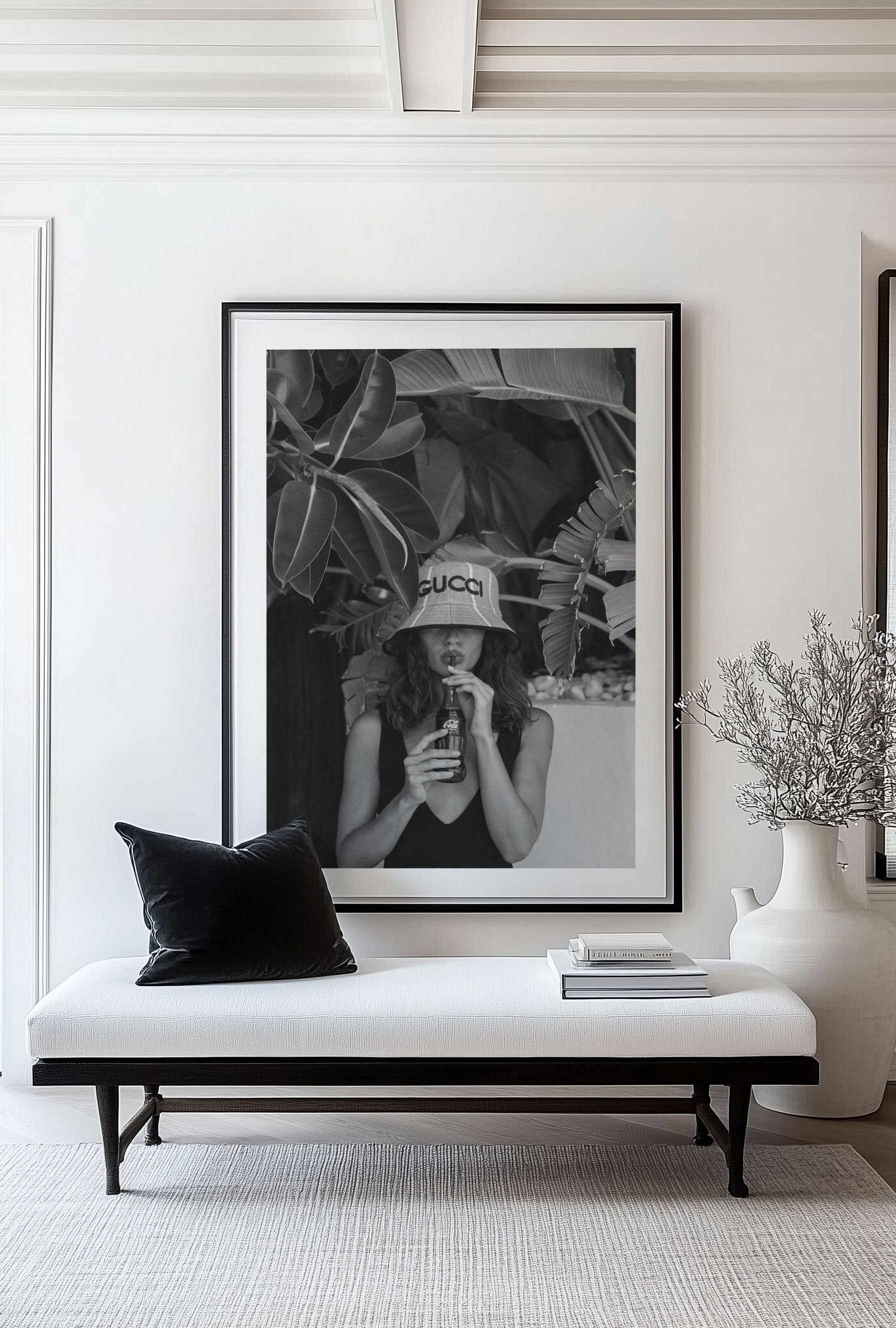
Summer Cola by Teigan Geercke Art Print · Novetta II · Green Room I B&W by Amy Hallam
What the Camera Actually Sees
Webcams flatten, compress and crop. A wall that looks generous in person becomes a narrow slice beside your head at 720p, and glossy surfaces bloom under ring lights. The working constraints: the visible zone is roughly a metre and a half wide behind and beside your head; matte surfaces only (canvas, or prints behind non-reflective finishes, never glass facing a light source); and mid-value compositions, very dark walls swallow you, very pale ones wash out. Within those constraints, the wall is a designable frame around your face, which is precisely how to treat it. (For the room around the camera, our home office guide covers the rest.)
Every video call has two participants per person: the face and the wall. Only one of them is usually briefed.
The Three Layouts That Work
- The single anchor: one artwork, 90 to 120cm wide, centred slightly off your shoulder line, bottom edge just above head height in frame. The professional default, one confident abstract work or black and white photograph, and done.
- The offset pair: two related works, per the pairs guide, one over each shoulder, creating symmetry the camera loves without the mugshot-centred look.
- The layered corner: art plus one plant plus shelf depth (an art print with photographic depth works hardest here), the editorial setup for people on camera daily. Keep the art dominant; three competing objects read as clutter at compression.
Choosing the Work Itself
- Register: composed, not loud, tonal abstraction, structured gesture, monochrome photography. The camera-safe registers of the neutrals collection and the monochrome guide exist for this wall.
- Palette: one or two tones that flatter skin under your actual lighting, warm neutrals and deep blues do most complexions favours; test on camera, not in the mirror.
- Scale: larger than instinct, small frames read as postage stamps on camera. The 90 to 120cm anchor is the floor, not the ceiling.
- Format: framed canvas wins the glare war outright; it is the video wall's native format.
- Personality, calibrated: the work can say something, this is the one wall where what it says is literally part of your professional presentation. Choose per the response-first method in our choosing guide.


Tremezzo II, Lake Como LS · Green Room II B&W by Amy Hallam
Designer Tips
- Hang for seated head height on camera, not the room's standing 145cm; frame the composition in your meeting software before fixing anything.
- Light the wall separately from your face if you can, a warm wash on the art, key light on you, and the whole frame reads produced.
- Check the wall at your worst meeting hour: west-facing rooms change completely at 4pm, and the wall must hold all day.
- For meeting rooms, one standard across the fitout (per the office guide) beats room-by-room improvisation, and trade pricing applies through the program.
- Made to order means the right size for your exact wall, in a couple of business days, shipped to more than 40 countries with duties paid, the fastest professional upgrade a home office can buy.
Frequently Asked Questions
What is the best wall art for video calls?
One mid-to-large matte artwork, tonal abstraction or black and white photography, centred just off your shoulder line at seated head height. Composed registers read professional at compression; glass glare and small cluttered frames are the two failures to design out.
What should NOT be behind you on video calls?
Glass-fronted frames facing your light, doors and door frames, unmade beds and open shelves of miscellany, high-contrast busy art that fights your face, and anything you would not want studied for an hour, because it will be.
How big should art be behind a desk?
Ninety to 120cm wide for a single anchor work, larger than most people guess, because the camera crops the wall to a slice. If it looks slightly bold in the room, it is probably correct on the call.
Is canvas or framed print better on camera?
Canvas, categorically: no glass means no ring-light bloom or window reflections, and its matte surface reads calm at any compression. Framed prints work with non-reflective positioning, but canvas removes the variable.
What colours look professional on video?
Warm neutrals, deep blues and structured monochrome, registers that flatter skin tones and survive white balance shifts. Test your shortlist through the actual camera under your actual lighting; the mirror lies about this wall.
Should companies standardise meeting room backdrops?
Yes, one artwork standard per room type puts the brand's register on every external call and ends the whiteboard-behind-the-CEO era. It is among the cheapest brand surfaces a business owns, per our office fitout guide.
Can I get an artwork sized exactly to my nook?
That is made-to-order's whole point: custom sizing to your actual wall, printed, framed in solid timber (oak, white or black finish) and dispatched in a couple of business days from our Australian facilities.
Build the wall from the neutrals collection, abstract wall art and black and white photography, or specify a fitout's worth through the trade program.


