What Is Giclée Printing?
Archival Quality Explained
Help Me Choose
What Is Giclée Printing? — Archival Quality Explained
You'll see the word "giclée" throughout Olive et Oriel — but what does it actually mean? Why does it matter? And how does it compare to the prints you'd get from a standard photo lab? This guide explains everything, in plain language, so you know exactly what you're buying.

What Does Giclée Mean?
Giclée (pronounced zhee-CLAY) is French for "to spray" — it describes the inkjet process used to produce fine art reproductions at the highest quality standard. The term was coined in the early 1990s in San Francisco by printmaker Jack Duganne, who needed a name to distinguish high-fidelity art printing from the mass-market inkjet output flooding the market at the time.
Today, giclée is the global standard for archival art reproduction. Museums, galleries and individual artists use it to produce prints that are indistinguishable from — and in some ways superior to — other traditional printmaking methods. When you see "giclée print," it means: professional grade, archival quality, produced with precision.
Olive et Oriel produces all art prints and framed prints using this method. Nothing is outsourced to a commercial photo lab.
How the Process Works
A giclée printer uses microscopic droplets of pigment ink — sprayed at up to 2880 dots per inch — to reproduce an image on a substrate (paper or canvas). The droplet size is so small that the human eye cannot perceive individual dots, even at close range. The result is a continuous-tone image with smooth gradients, deep shadows and accurate highlight detail.
The critical distinction from standard inkjet printing is the ink chemistry. Giclée uses pigment inks — solid particles suspended in a carrier solution — rather than dye-based inks. Pigment inks are physically more stable and significantly more resistant to UV light, moisture and oxidation. A dye-ink photo print might fade noticeably within 10-20 years. A pigment-ink giclée on archival paper is rated for 70-100+ years.
Olive et Oriel's UV-stable pigment inks are rated for 70+ years when displayed appropriately. Every print is produced to the same standard, regardless of size or price point.

Every piece is produced at our two manufacturing facilities on of NSW — crafting Australian wall art since 2015. We deliver to over 40 countries worldwide, with custom sizing available on all prints. Over a decade of experience, every order ships within 24 hours with our satisfaction guarantee.
Email help@oliveetoriel.com

Acid-Free Fine Art Paper — Why It Matters
The paper is as important as the ink. Standard commercial paper contains lignin — a component of wood pulp that yellows and becomes brittle over time as it oxidises. This is why old newspapers turn yellow and crumble. Acid-free fine art paper removes the lignin and buffers the pH, preventing this degradation entirely.
All Olive et Oriel prints are produced on 310gsm acid-free fine art paper. At 310 grams per square metre, this is a heavyweight, substantial substrate — it has a physical presence when you hold it, with a subtle texture that gives printed colours depth and dimension. This is not photographic paper or standard office stock. It is purpose-made for archival art reproduction.
The combination of pigment inks + acid-free fine art paper is what gives OEO prints their museum-quality longevity. Your grandchildren will still be able to hang these prints without degradation.
Giclée vs Standard Photo Printing — A Direct Comparison
| Feature | Giclée (OEO) | Standard Photo Lab |
|---|---|---|
| Ink type | Pigment inks | Dye-based inks |
| Lightfastness | 70-100+ years | 10-25 years |
| Paper | 310gsm acid-free fine art | Photo paper (resin-coated) |
| Colour gamut | Wide — full tonal range | Narrower — skews to warm |
| Surface finish | Subtle fine art texture | Glossy or satin |
| Purpose | Art reproduction | Photography output |
The difference is visible at close inspection — giclée prints have a depth and presence that photo prints lack. They feel like art, not like photographs. If you're displaying something on your wall for years to come, the investment in archival quality is worth it.
OEO's Printing Facility
All Olive et Oriel prints are produced in our own facility on of NSW — not outsourced to a contract lab, and not printed offshore. This matters because it gives us direct control over colour calibration, paper handling, quality control and turnaround time.
Every print is colour-checked against our calibrated reference standard before it's packaged. If it doesn't meet our colour accuracy threshold, it's reprinted. This is why we can confidently say: what you see on your screen is what you'll receive. Colours are not approximated — they're reproduced with precision.
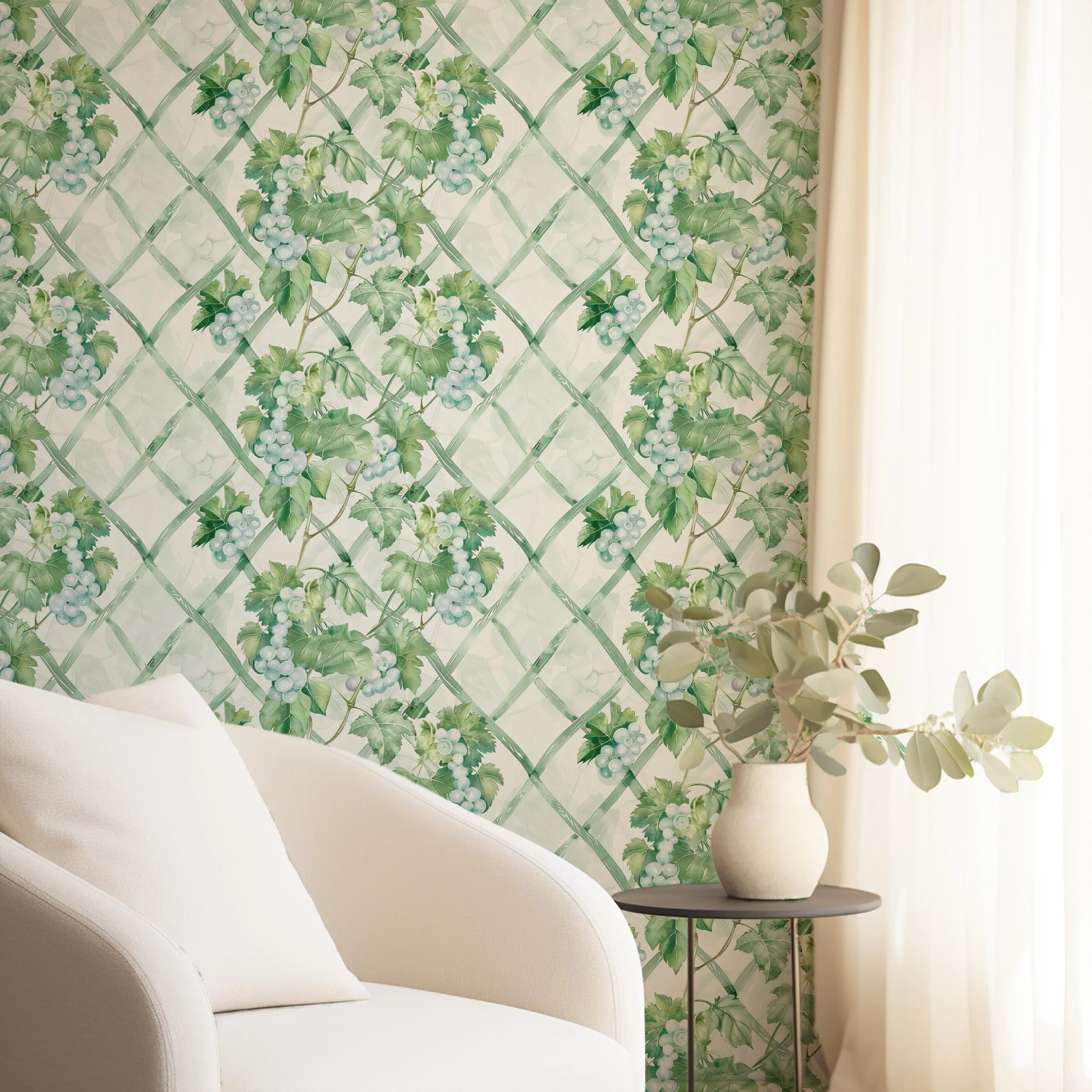
The same quality standard applies to our canvas prints and is reflected in the longevity of our Australian-made wallpaper. Questions? Email our team — we're happy to discuss print quality in detail.
Browse: Art Prints · Framed Prints · Canvas Prints


Frequently Asked Questions
What does giclée mean?
Giclée (pronounced zhee-CLAY) is French for "to spray" — it describes the inkjet printing process used to produce archival fine art reproductions. The term was coined in the early 1990s to distinguish high-quality art printing from standard commercial inkjet output.
How long do giclée prints last?
When printed with archival inks on acid-free fine art paper and displayed out of direct sunlight, giclée prints are rated for 70-100+ years without significant fading. Olive et Oriel uses UV-stable pigment inks rated for 70+ years on all prints.
What paper does Olive et Oriel use?
All OEO art prints are produced on 310gsm acid-free fine art paper — a heavyweight, museum-quality substrate with a subtle texture that gives prints depth and presence. The paper is lignin-free and pH-neutral, ensuring long-term archival stability.
Is giclée printing better than photo printing?
Yes — for art reproduction, giclée printing significantly outperforms standard photo printing. It uses pigment inks (not dye inks), which are more lightfast and stable. It uses archival paper substrates rather than photo paper. And the wider colour gamut reproduces the full tonal range of the original artwork.
Where does Olive et Oriel print its art?
All Olive et Oriel art prints are produced in NSW facility — not outsourced offshore. This means we control quality at every step, from colour calibration to paper handling to final packaging. Email help@oliveetoriel.com with any questions.