How to Light Your Wall Art
Picture Lights, Spotlights and Natural Light
How to Light Your Wall Art — Picture Lights, Spotlights and Natural Light
The same piece of art can look magnificent or mediocre depending entirely on how it's lit. Lighting transforms art — it reveals depth, colour, and texture that flat overhead lighting suppresses. Understanding how to light art is one of the most impactful and underutilised skills in home decorating.
At Olive et Oriel, we've seen how the right lighting transforms the art we produce. This guide covers the three main approaches — picture lights, spotlights, and natural light — with practical advice for each.

Picture Lights
A picture light — a small, directional lamp mounted on the frame or wall directly above the artwork — is the classic fine art lighting solution. It casts warm, directional light across the surface of the art, emphasising texture and depth while creating a visual focal point.
LED picture lights offer better colour rendering and less heat than traditional halogen options. For frames from Olive et Oriel, surface-mounted or wire-mounted picture lights are both compatible.
Explore Framed Art OptionsSpotlights and Track Lighting
Ceiling-mounted spotlights or track lighting directed at art offers more flexibility than picture lights — and can illuminate multiple pieces from a single lighting point. Position spotlights at a 30-degree angle to the art surface (approximately 1-1.5m in front of the art for standard ceiling heights) to balance light across the surface without causing glare.
Use warm white LEDs (2700-3000K colour temperature) for art lighting — this temperature replicates the warmth of natural incandescent light and renders colours most faithfully.
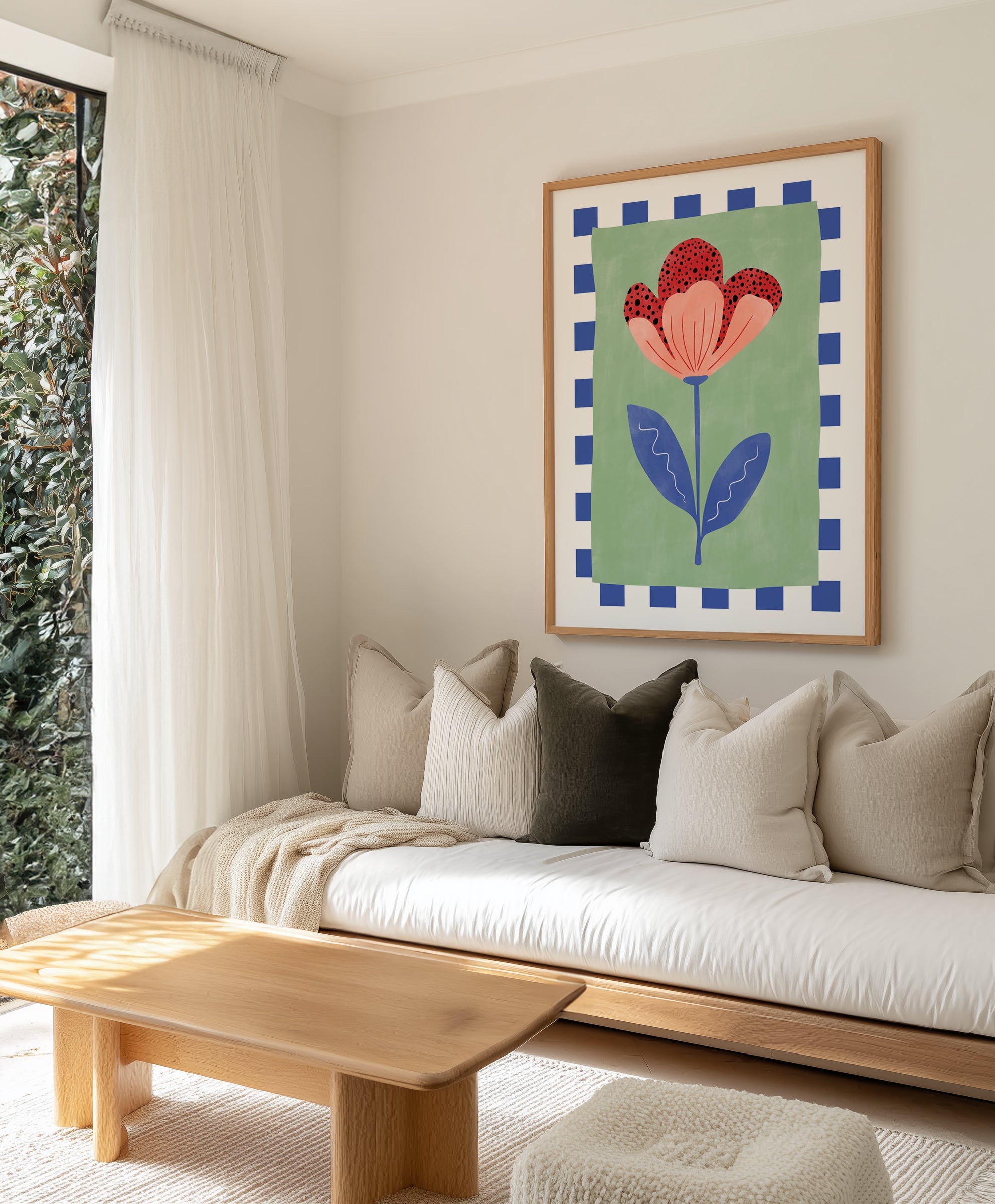
Natural Light — indirect natural light is the most considered light for viewing art, but direct UV sunlight is art's greatest enemy. The ideal position for art is where it receives indirect natural light — near a window but not in a direct sunbeam. Art ships next business day from facilities.

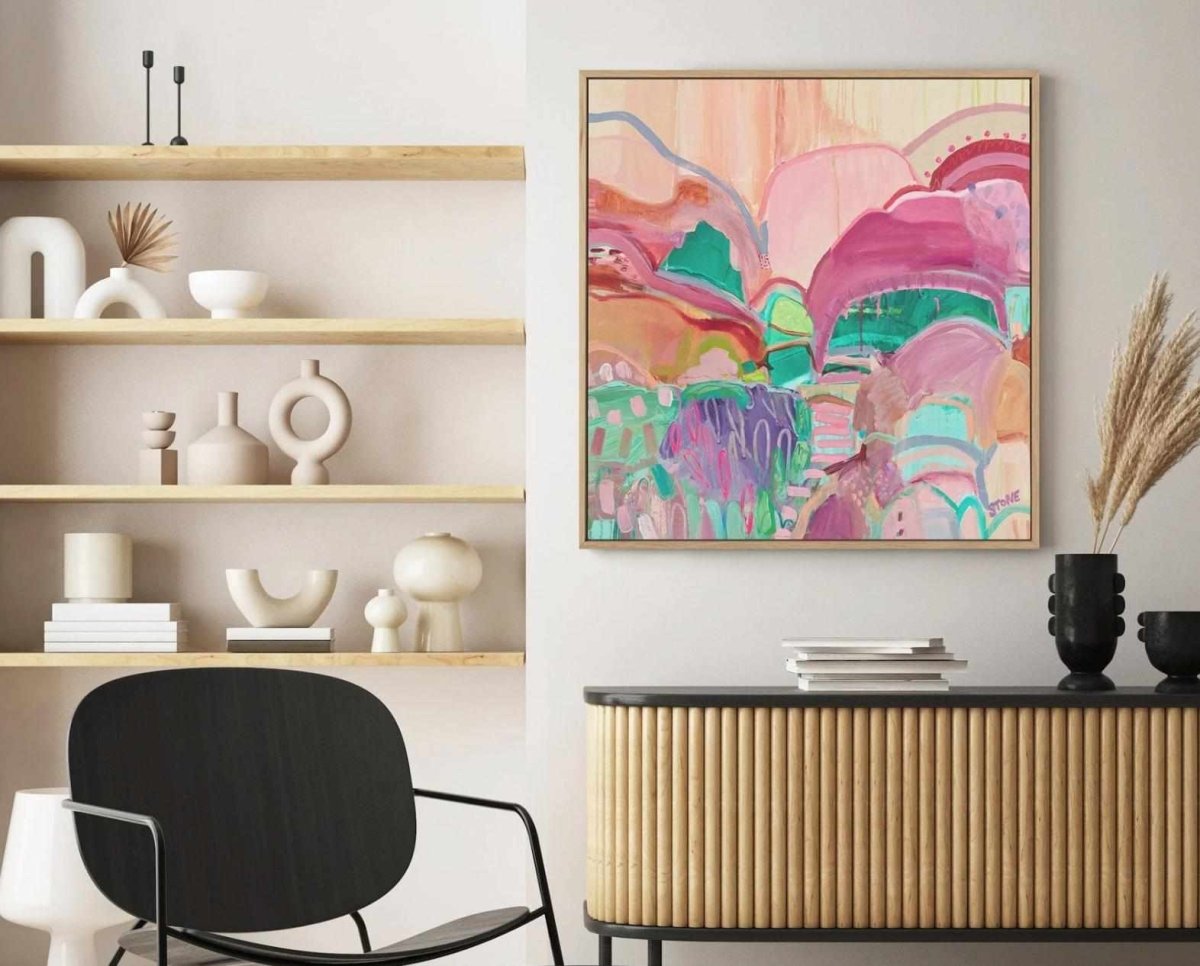
Art Lit With Directional Lighting
Warm white LEDs (2700K) enhance warm-toned art beautifully. Position art where your reading lamp or picture light will catch it gently — the difference is immediately apparent.
Our frames come with UV-protective acrylic, which reduces glare and UV damage in sun-exposed rooms. Contact help@oliveetoriel.com for specific lighting recommendations.


Every piece is produced at our two manufacturing facilities on of NSW — crafting Australian wall art since 2015. We deliver to over 40 countries worldwide, with custom sizing available on all prints. Over a decade of experience, every order ships within 24 hours with our satisfaction guarantee.
What is the best type of light to use for art?
Warm white LED lighting (2700-3000K) is the current standard for art lighting — it renders colours faithfully, produces minimal UV radiation, and generates little heat.
Should I use a picture light or a spotlight for wall art?
Picture lights create a more intimate, traditional gallery feel and work particularly well for single pieces. Spotlights or track lights offer more flexibility and can illuminate multiple pieces simultaneously.
How far in front of a painting should a spotlight be positioned?
For a standard 2.4m ceiling, position spotlights approximately 1-1.5m in front of the art at roughly a 30-degree angle.
Does natural light damage art?
Direct UV sunlight accelerates fading significantly. Indirect natural light is generally safe, particularly for prints in UV-protective frames.
What colour temperature is best for lighting art?
2700-3000K (warm white) renders art colours most faithfully. Avoid cool daylight LEDs (5000K+) which can make warm-toned art look cold.
Can I add a picture light to an Olive et Oriel frame?
Yes — our frames are compatible with surface-mounted and wire-mounted picture lights. Contact help@oliveetoriel.com for specific recommendations.