Wall Art Mistakes to Avoid
Common Decorating Errors Solved
Wall Art Mistakes to Avoid — Common Decorating Errors Solved
You've found the perfect print. You've ordered it, unwrapped it, hammered a nail into the wall. And something just feels… off. The room doesn't look like the magazine spread you were imagining. What went wrong?
Chances are it's one of ten very common mistakes that even experienced decorators make with wall art. The good news: every single one is fixable. Here's what they are and how to solve them.
Every piece is produced at our two manufacturing facilities on of NSW — crafting Australian wall art since 2015. We deliver to over 40 countries worldwide, with custom sizing available on all prints. Over a decade of experience, every order ships within 24 hours with our satisfaction guarantee.
Mistake 1: Art Too Small for the Wall
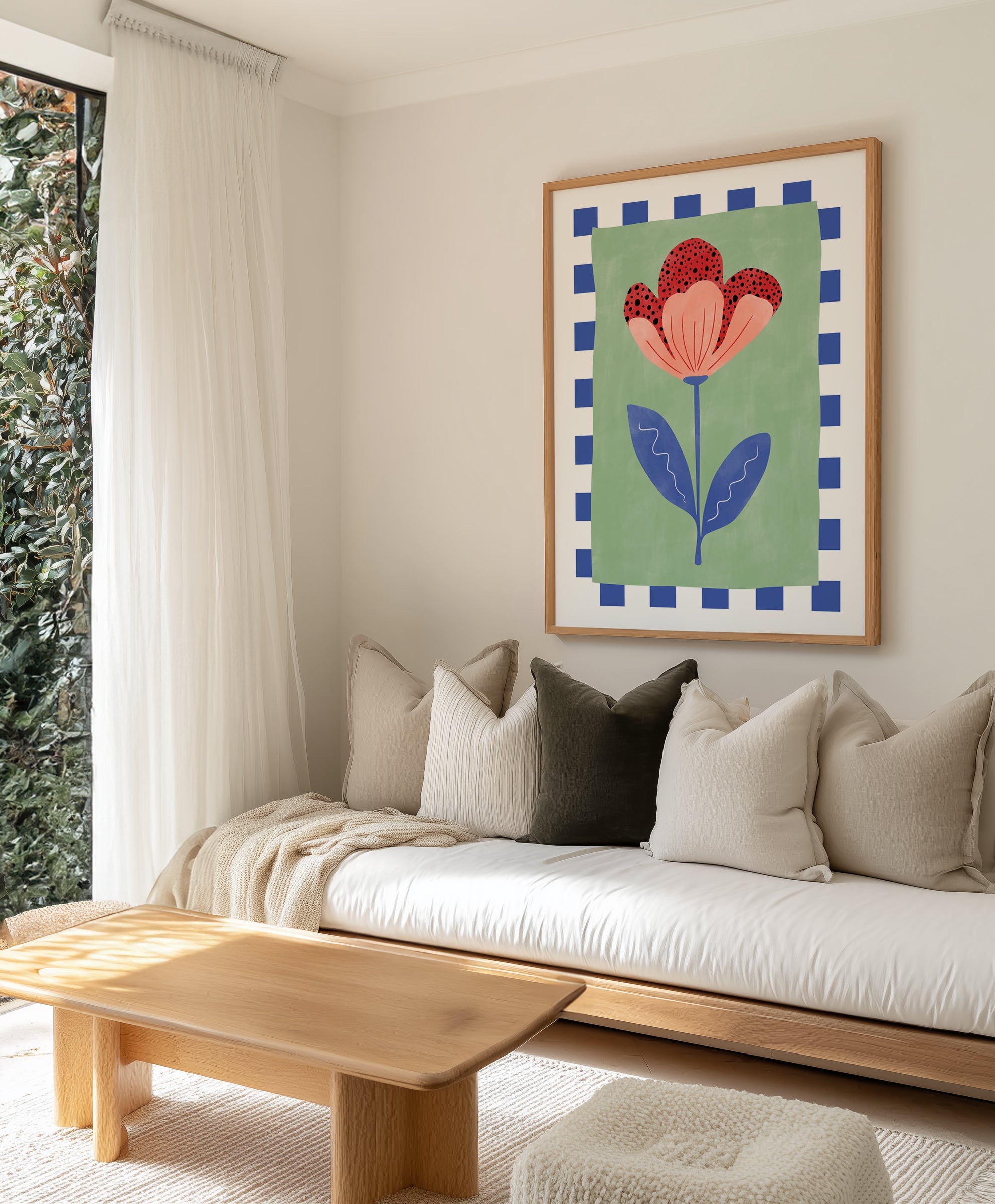
This is the single most common wall art mistake — almost always the result of being overly cautious with size. A small print on a large wall doesn't look humble — it looks like an afterthought.
The fix: Art above furniture (sofa, bed, console) should fill 60–75% of the furniture width. For a standard 2m sofa, that means a print or arrangement spanning 120–150cm. Solo art on a wall should fill at least 50% of the available width.
When in doubt, go bigger. Use our $4.99 samples to test scale in your actual space before ordering.
Mistake 2: Hanging Art Too High
This is mistake number two on every interior designer's list. People interpret "eye level" as something much higher than it actually is, resulting in art that's almost on the ceiling.
The fix: The centre of your art should be at 145–150cm from the floor. This is standard gallery height. If hanging above furniture, allow 15–25cm between the top of the furniture and the bottom of the frame.
See our full hanging guide for step-by-step instructions.
Mistake 3: One Small Piece in a Sea of Empty Wall
A single small print floating in the middle of a large wall, surrounded by empty space on all sides — the emptiness amplifies how small the art is.
The fix: Either size up significantly, or add to the arrangement (create a gallery wall with 2–3 additional complementary pieces). Our matching print sets are designed exactly for this — coordinated pieces that fill a wall with intention.
Mistake 4: Mismatched Frames Across a Gallery Wall
Gallery walls look effortlessly curated when planned, and chaotic when not. The fastest way to create chaos is mismatched frames — five different profiles, colours, and widths competing for attention.
The fix: Choose frames in the same finish (all white, all black, all oak finish, all gold). Our framed art prints come in consistent frame options across the range, making gallery walls easy to coordinate.
Mistake 5: Ignoring the Room's Colour Palette
Art chosen in isolation, without considering the room it's going into, often feels jarring when it arrives.
The fix: Before ordering, hold your top contenders against the dominant colours in your room. Our $4.99 samples let you check this in your actual room before committing.
Mistake 6: Art That Clashes with Furniture Style
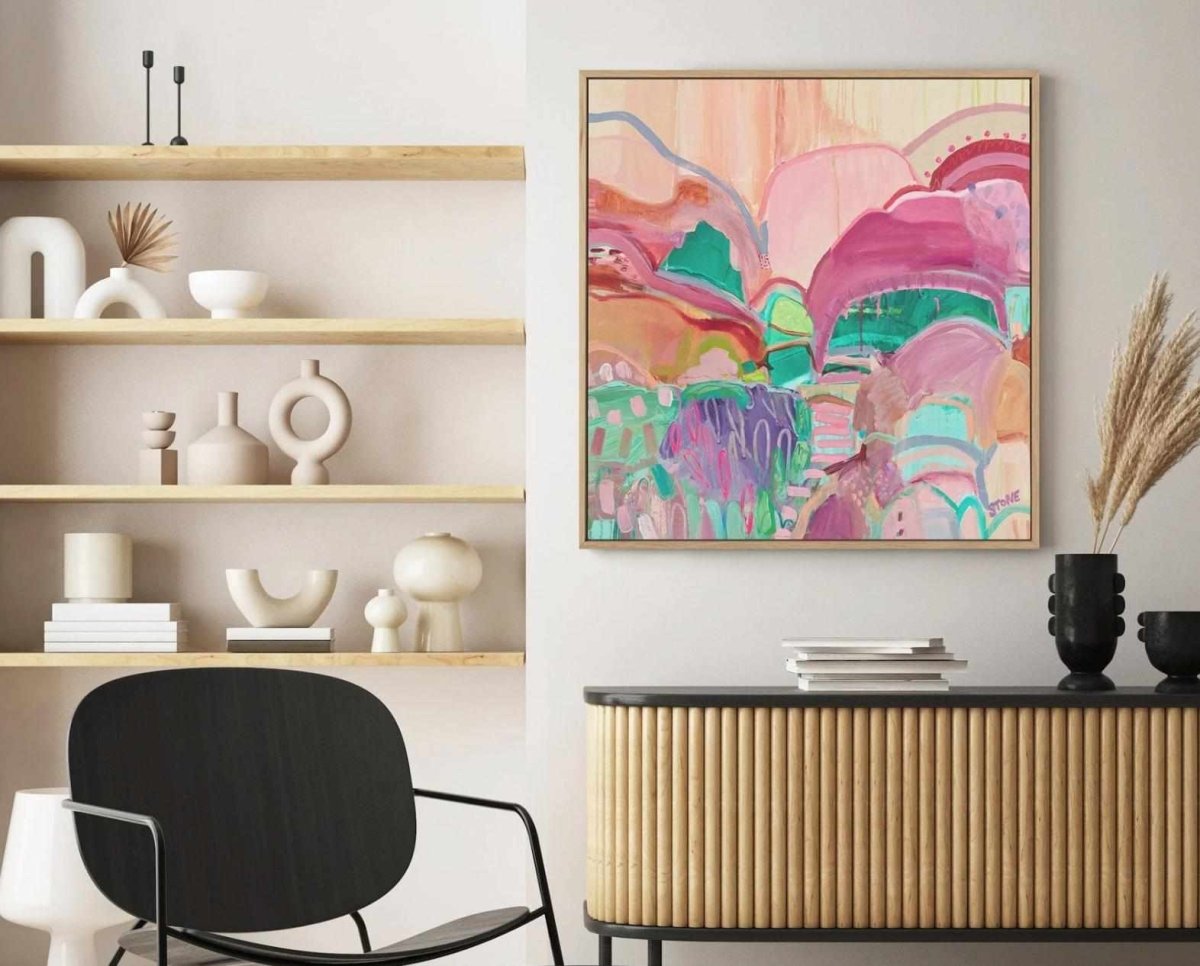
Art doesn't need to be identical in style to your furniture, but there should be a connecting thread. When in doubt, neutral or abstract art bridges almost any style gap. Browse our abstract art and neutral art collections for versatile options.
Mistake 7: Ordering Without Sampling First
Screens lie. A print that looks warm and creamy on your laptop may arrive looking cool grey. Colour calibration between screens varies enormously.
The fix: Order a $4.99 print sample. We print a small-scale version of any print so you can see the actual printed colour in your actual space. Do not skip this step for large or expensive orders.
Mistake 8: Not Measuring Properly
Measuring a wall is deceptively tricky when furniture is involved. People measure the full wall width rather than the relevant hanging zone above a sofa, or forget to account for windows and door frames.
The fix: Measure the specific zone where the art will hang. Use our size guide to convert those measurements into the right print size. Always measure twice before ordering.
Mistake 9: Choosing Trendy Over Timeless
Every design era has its moment-specific art trends, and most of them age badly. Art that reads as "very 2019" in 2022 is already dated.
The fix: Invest in subjects and styles with proven longevity — botanicals, landscapes, abstract neutrals, black and white photography. See our guide to timeless wall art for specific recommendations.
Mistake 10: Poor Lighting
Art without proper lighting is art at half-power. Even the most considered print will look flat and dull in poor light — and this is one of the most frequently overlooked elements of art display.
The fix: Invest in a picture light mounted above the frame, or aim a ceiling spotlight or adjustable downlight directly at the artwork. Warm-toned LEDs (2700–3000K) are most flattering for most art. Picture lights start at around $50–100 and the transformation is dramatic.
Shop Wall Art Done Right
Our most popular abstract and canvas prints — tested by thousands of Australian customers:


Frequently Asked Questions
How high should I hang wall art?
The centre at approximately 145–150cm from the floor — standard eye level. Hanging too high is the second most common wall art mistake. See our hanging guide.
What size art should I choose for my wall?
Art above furniture should fill 60–75% of the furniture width. Solo art should fill at least 50% of available wall width. When in doubt go bigger. Use our size guide.
Can I order a sample before buying full-size art?
Yes — order a $4.99 print sample. We print a reduced-scale version of any print so you can check colour and quality in your actual space before committing.
How do I match frames in a gallery wall?
Choose all frames in the same finish — all white, all black, all timber, or all the same metal. Our framed prints come in consistent options across the range for easy gallery wall coordination.
How important is lighting for wall art?
Critical. Art without proper lighting looks flat. Use a picture light or directed spotlight. Warm-toned LEDs (2700–3000K) are most flattering for most art styles.