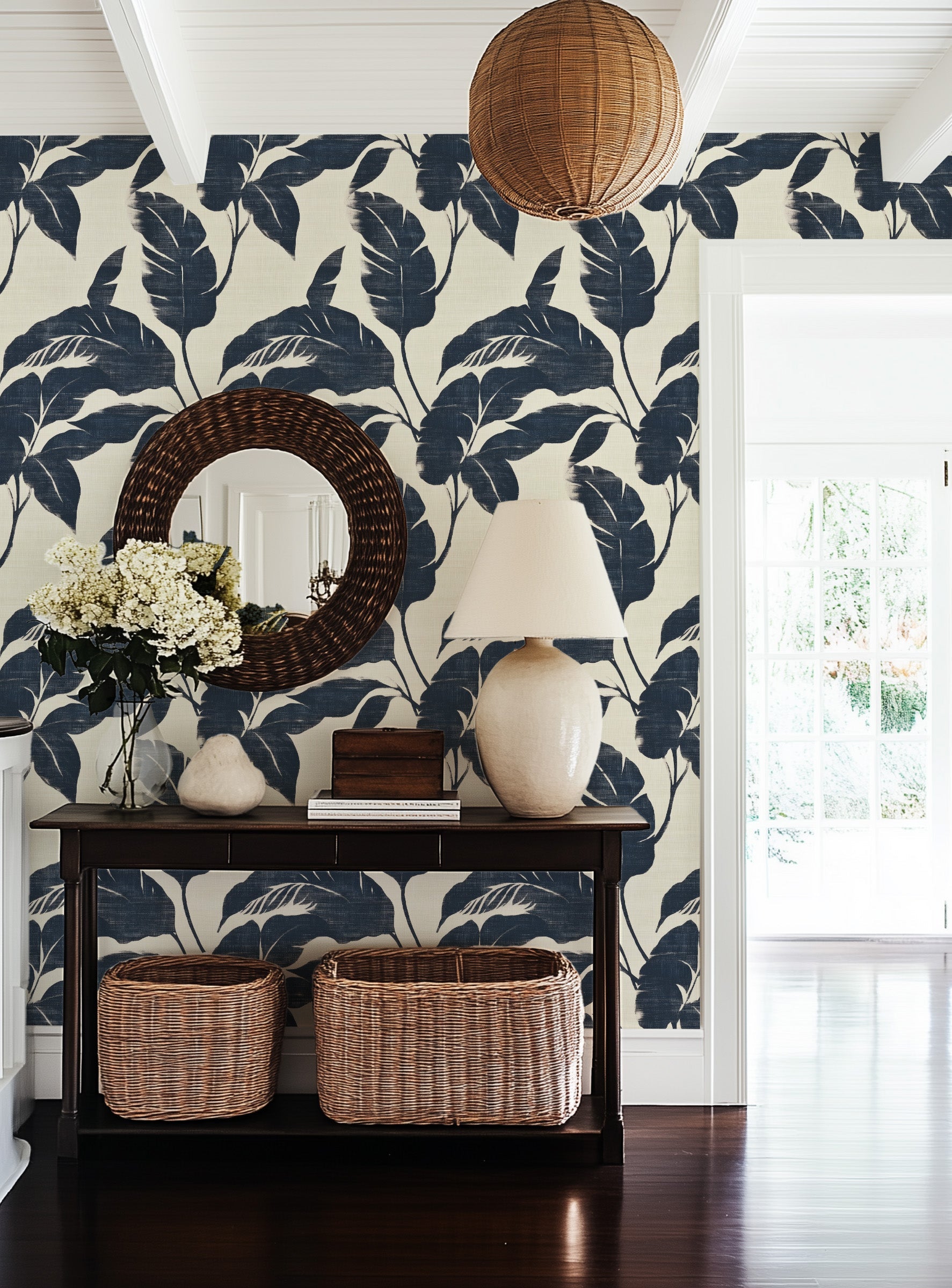
Grandmillennial style is the fastest-growing interior design aesthetic in the United States. On Pinterest, grandmillennial living rooms and bedrooms consistently generate more saves than any other traditional aesthetic. On TikTok, "grandmillennial decorating" and "old money interior design" have collectively generated hundreds of millions of views from a primarily millennial and Gen Z audience. This is not nostalgia — or rather, it is not only nostalgia. Grandmillennial style is a considered design position: a rejection of the spare, beige, everything-neutral aesthetic that dominated the 2010s, in favour of rooms that are rich with pattern, layered with textiles, and furnished with the accumulated confidence of a space that has been lived in and loved. Wallpaper is the most powerful tool available for achieving the grandmillennial aesthetic — and traditional botanical, colonial, and toile patterns are the wallpaper categories that define it.


Colonial Canopy Wallpaper · Paradise Colonial Wallpaper · Indigo Colonial Plantation Wallpaper Toile wallpaper is central to the grandmillennial aesthetic — pastoral scenes, Chinoiserie motifs, and botanical narratives custom sized to your wall.
The term "grandmillennial" was coined by House Beautiful in 2019 to describe a generation of young Americans who were decorating their apartments and first homes with the patterns, textiles, and furnishings associated with their grandparents' generation — not ironically, but genuinely and with conviction. The aesthetic draws on colonial revival, Federal style, English country house, and traditional American interior design traditions, updated with contemporary colour sensibility and the confidence of a generation that knows the difference between what is merely old and what is genuinely considered. The wallpaper at the centre of the grandmillennial room is botanical, colonial, or toile — patterns with centuries of resolved design behind them, applied to spaces that are unambiguously of the present.
Design authority Erin Kendal's 2025 Grandmillennial Surface Pattern Trend Report identifies three core directions within the aesthetic: Heritage Florals, Chinoiserie Influence, and Preppy Grandmillennial. Our colonial wallpaper collection spans all three — botanical heritage patterns, colonial palm and plantation designs, and the crisp navy-on-white compositions that define the preppy grandmillennial direction. Each of these directions is a distinct design position with its own room applications, colour logic, and furniture pairings.


Court Colonial Blue Wallpaper · Empire Colonial Palm Wallpaper
The Three Directions of Grandmillennial Wallpaper
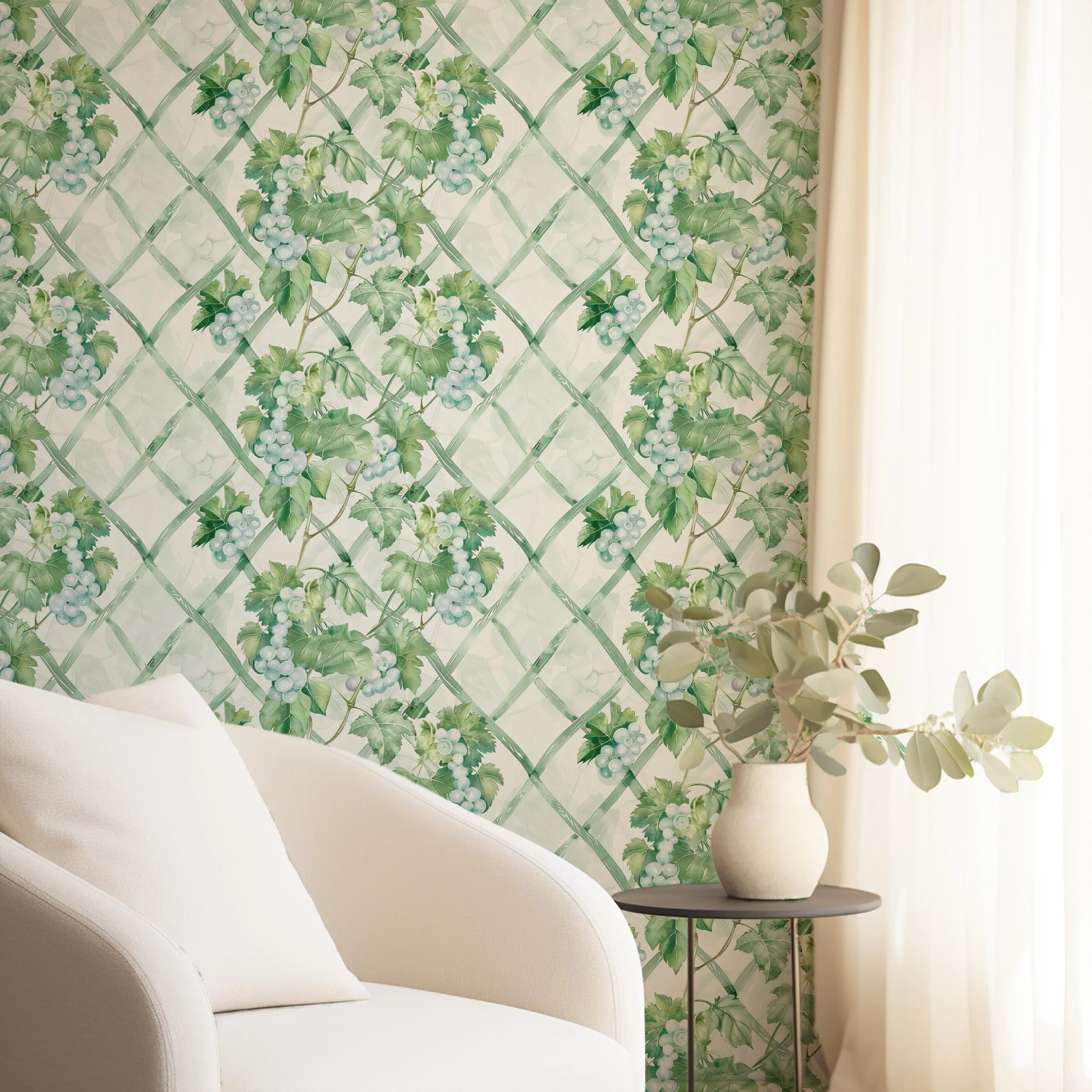
Heritage Florals. The foundational grandmillennial pattern — large-scale botanical florals, flowering vine compositions, and garden-scene wallpapers that reference the English country house and American colonial traditions. Heritage florals are the patterns most associated with the aesthetic's definition: lush, confident botanical illustration in warm colour palettes. In a grandmillennial room, the heritage floral wallpaper is the room's primary design statement, and everything else — upholstery, curtains, rugs — is chosen to coordinate with its colour story.
Chinoiserie Influence. The second grandmillennial direction draws on the 18th-century Western fascination with Chinese decorative arts — scenic wallpapers featuring pagodas, exotic birds, flowering trees, and botanical motifs rendered with the specific colour palette and compositional language of colonial-era chinoiserie. This direction is the most aspirational within the grandmillennial aesthetic — its reference points are the hand-painted de Gournay wallpapers that define the American upper-class interior, made accessible through high-quality printed reproduction. Colonial palm and plantation wallpaper — including our Indigo Plantation and Empire Palm designs — captures the chinoiserie-influenced colonial direction precisely.
Preppy Grandmillennial. The most contemporary direction — bold navy and white compositions, crisp geometric botanical patterns, and the high-contrast traditional palette associated with the American preppy aesthetic. Preppy grandmillennial wallpaper references the Ivy League dormitory room, the New England boathouse, and the traditional American club interior. Navy on cream botanical stripe, court colonial blue-and-white patterns, and crisp botanical geometrics all fall within this direction.
How to Build a Grandmillennial Room
The grandmillennial room is built from the wallpaper out — not from furniture toward the walls. This is the most important principle of the aesthetic, articulated consistently by the designers who work in this tradition: choose the wallpaper first, then select every other element in the room from the wallpaper's colour story. The wallpaper is the room's design argument, and the furniture, textiles, and accessories are the room's evidence.
Pattern mixing is central to the grandmillennial approach — but it follows the same connective logic as all successful pattern mixing. The patterns must share a colour story, even if they share nothing else. A large-scale botanical wallpaper paired with a small-scale floral fabric on the upholstery, a medium-scale stripe on the curtains, and a geometric repeat on the rug: this combination works because all four patterns draw from the same colour palette, creating visual richness without competition. The wallpaper's palette is the source document for every other pattern decision in the room.
Layering is the technique that distinguishes a grandmillennial room from a traditional room that is merely furnished. Layering means multiple textiles at every surface — cushions on cushions, throws on upholstery, rugs on rugs — and multiple pattern scales at every layer. The grandmillennial aesthetic rewards accumulation: the room should look as if it has been assembled over time, with each element chosen for its relationship to the others rather than purchased as a set. Wallpaper is the element that makes this accumulation legible as design rather than clutter, because it provides the fixed visual field against which the layers of textile and object read as intentional.
"Grandmillennial is not your grandmother's interior design. It is your grandmother's interior design, chosen deliberately and confidently by someone who understands exactly what they are doing and why."
Materials
- Paste the Wall Linen: The grandmillennial room is a room of natural materials — linen, cotton, wool, timber, ceramic. Linen-substrate wallpaper connects the wall surface to the material language of the room's other elements. The linen weave adds tactile warmth that contributes to the layered, accumulated quality that defines the aesthetic. For heritage floral and colonial botanical patterns, linen substrate is the most sympathetic choice.
- Paste the Wall Smooth: For crisp preppy grandmillennial patterns — navy-and-white compositions, precise botanical stripe, and high-contrast geometric botanical designs — smooth substrate keeps the pattern's lines sharp and the colour contrast clean. The preppy direction within grandmillennial has a graphic clarity that smooth substrate serves better than linen.
- Peel and Stick: The grandmillennial aesthetic has been significantly driven by younger renters — the millennial and Gen Z apartment-dwellers who cannot paint walls and are discovering traditional patterns for the first time. Peel-and-stick makes the full colonial and botanical wallpaper range available to renters, which is a significant portion of the grandmillennial market.
Room by Room
- Living room: All four walls in a large-scale heritage floral — the most fully grandmillennial application. Layer a geometric rug, floral upholstery in coordinating colours, and curtains in a coordinating stripe or solid. The living room all-four-walls application is the room most photographed and shared in the grandmillennial aesthetic, and the one that most clearly defines the design position. Browse our colonial wallpaper collection for heritage floral options.
- Bedroom: Total-room toile or botanical wallpaper — walls, matching bedding, and curtains in the wallpaper's palette. The total-room botanical bedroom is the most directly aspirational grandmillennial reference — the English country house guest room, the New England colonial bedroom — updated with contemporary colour and pattern quality.
- Dining room: Colonial or chinoiserie-influenced botanical on all four walls, with antique or antique-style furniture, a statement chandelier, and layered table linens. The grandmillennial dining room is the room most associated with the aesthetic's social dimension — it is the room where the design is presented to guests and experienced across the table at every meal.
- Study or library: Dark navy botanical or plantation colonial on all four walls, with timber bookshelves, leather or linen upholstery, and brass or aged bronze hardware and lighting. The grandmillennial study references the American gentleman's library and the English club — a room of serious design intent that the aesthetic has made broadly aspirational.
- Powder room: The most compressed grandmillennial room — all four walls in the most ambitious pattern you would consider anywhere in the house, experienced at close range, in a space of brief occupancy. The powder room is where grandmillennial goes furthest, and where its most aspirational pattern choices are most appropriate.
Designer Tips
- Start with the wallpaper sample in the room — not on a screen. The grandmillennial aesthetic is fundamentally about how a room feels to be in, not how it reads in a photograph. Hold the sample at arm's length, then at 3 metres, then sit in the room's primary seating position and look at it. The pattern that feels right at those positions is the pattern for the room. Order the $4.99 sample before any other decision.
- Do not match — coordinate. The grandmillennial aesthetic draws on the English tradition of related-but-distinct pattern mixing, not the American tradition of the matched suite. Every pattern in the room should share something with the wallpaper — a colour, a motif, a tonal range — but should not repeat it exactly. The room should look curated, not coordinated from a catalogue.
- Custom manufactured to your exact wall dimensions. Ships to all US states with all import duties included. Production 4 business days. Also read our guide to toile wallpaper — the pattern most central to the grandmillennial aesthetic — and our guide to chinoiserie wallpaper for the aspirational direction within grandmillennial design.