

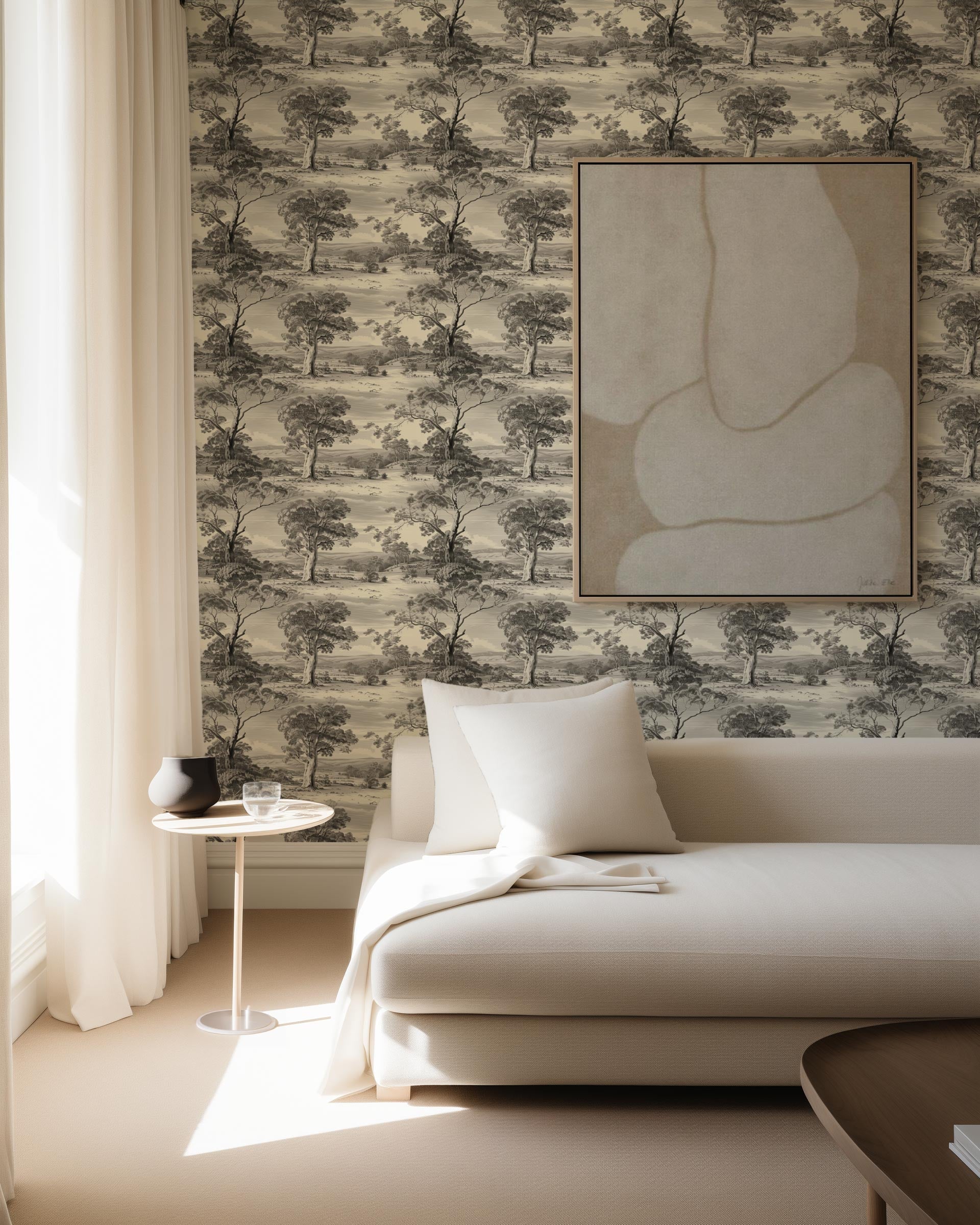
Texture is the most underestimated dimension of interior design. A room can have a strong colour palette, well-proportioned furniture, and excellent lighting, and still feel flat — visually complete but somehow lacking presence. The missing element, in almost every case, is tactile variety. Textured wallpaper addresses this directly, adding a dimension of depth and physical interest that paint and flat-printed wallpaper cannot replicate. When light crosses a textured surface — at the low angle of a winter morning or the concentrated wash of a reading lamp — it creates shadow, movement, and a sense of material richness that is felt as much as it is seen.
The category of textured wallpaper encompasses a broad range of products, from the genuinely natural — woven grasscloth, sisal fibre, and linen on paper backing — to embossed printed wallpaper that replicates the appearance of texture without the physical dimension. Understanding the distinctions between these approaches, and the different environments in which each performs best, is essential for selecting the right product for your space.
At our Central Coast facility, we produce textured wallpaper in both natural and embossed formats, custom sized to your exact wall dimensions. The natural fibre options — particularly our sisal and woven linen ranges — are among the most technically demanding products we manufacture, requiring precise tension control and consistent backing application to ensure a flat, even installation. The result, when properly installed, is a wall surface that reads as deliberately considered and irreducibly premium.


Vintage Eucalyptus Trees Wallpaper · Old Oak Tree in Blue Wallpaper · Old Oak Tree in Neutral Wallpaper
Types of Texture and What They Offer
Grasscloth and natural fibre. Woven from natural grasses, sea grass, or jute on a paper backing, grasscloth is the gold standard of textured wallpaper. It is warm, organic, and absorbs light in a way that creates an extraordinarily flattering atmosphere in any room. Its natural variation — no two panels are identical — means a grasscloth room has the quality of a handmade object. The limitation is that natural fibre is not moisture-resistant and requires careful handling during installation. It is best suited to living rooms, bedrooms, and dining rooms.
Woven linen and sisal. Similar in character to grasscloth but with a finer, more regular weave, linen and sisal wallpapers suit contemporary interiors where grasscloth might read as too organic. The texture is present without being dominant, and the range of available tones is wider.
Embossed printed wallpaper. Digitally printed onto an embossed substrate, this category offers the visual appearance of texture — raised geometric patterns, stippled surfaces, brick and tile effects — with better moisture resistance and lower maintenance requirements than natural fibre. The quality varies enormously; the best embossed wallpapers are genuinely difficult to distinguish from their physical textured counterparts in photography.
"Texture in a room is what silk is in a garment — it elevates everything around it, changes how the light falls, and makes the ordinary feel considered."


Blush Graffiti Wallpaper · Lemonata Wallpaper
Materials
- Timber: Light oak and ash complement natural textured wallpapers beautifully — both are warm, organic materials that reinforce each other. Darker timbers suit embossed geometric wallpapers where a more formal tone is appropriate.
- Stone: Honed travertine, rough-cut sandstone, and unpolished concrete all share the textural language of natural fibre wallpapers. Together they create rooms that feel materially cohesive and deeply considered.
- Metals: Brushed finishes rather than polished — brushed brass, brushed nickel, matte black. Polished metals can feel out of place in textured environments, where the predominant material language is matte and organic.
- Fabrics: Boucle, rough linen, and chunky knits. The layering of textile textures in a room with textured wallpaper creates an environment of extraordinary material richness — the tactile equivalent of a room full of interesting books.
Room by Room
- Living room: Natural grasscloth or linen on the primary wall creates an immediate sense of warmth and considered design. Works with almost any furniture style.
- Bedroom: The most intimate room benefits most from texture. A woven wallpaper behind the bed absorbs sound slightly, which contributes to the quietness that good sleep requires.
- Dining room: Textured wallpaper in a dining room reads exceptionally well in evening light. The texture catches and holds candlelight in a way that flat surfaces simply cannot.
- Home office: An embossed geometric or linen-effect wallpaper in a home office creates a backdrop that reads as professionally designed without being distracting during working hours.
Designer Tips
- Order the $4.99 sample (48cm x 40cm / 19in x 16in) for any textured wallpaper, and hold it in the room at different times of day. The difference between how a texture reads in morning light and evening light can be significant, and should be experienced in context before committing.
- Natural fibre wallpapers require experienced installation. The panels must be handled carefully to avoid stretching, and the butt-join technique (panels aligned edge to edge without overlap) requires precision. Commission a professional for natural fibre installation.
- Custom sizing is particularly important for textured wallpapers. The visual weight of a textured surface means that imprecise panel sizing is more visually apparent than with flat printed wallpaper.
- 4 business days production at our Central Coast facility, shipping to over 40 countries with all import duties included.
Browse our full wallpaper range, explore the wallpaper types guide, or read about wall preparation before installation.


