How to Choose Wall Art Colours
A Room-by-Room Guide
Help Me Choose
How to Choose Wall Art Colours — A Room-by-Room Guide
Colour is the single most powerful tool in a room — and the most misunderstood. The right wall art palette can make a small space feel expansive, a cool room feel warm, or a plain white wall feel considered and intentional. This guide walks you through how colour works in each room of the home, and how to choose wall art that genuinely elevates your space.

Understanding Warm vs Cool Tones
Every colour has a temperature — and getting this right is the foundation of confident decorating. Warm tones (terracotta, amber, blush, olive, cream) create an inviting, cosy atmosphere and work beautifully in living rooms, dining areas and studies. Cool tones (navy, sage, dusty blue, charcoal, soft lavender) feel calming and contemporary — ideal for bedrooms and bathrooms.
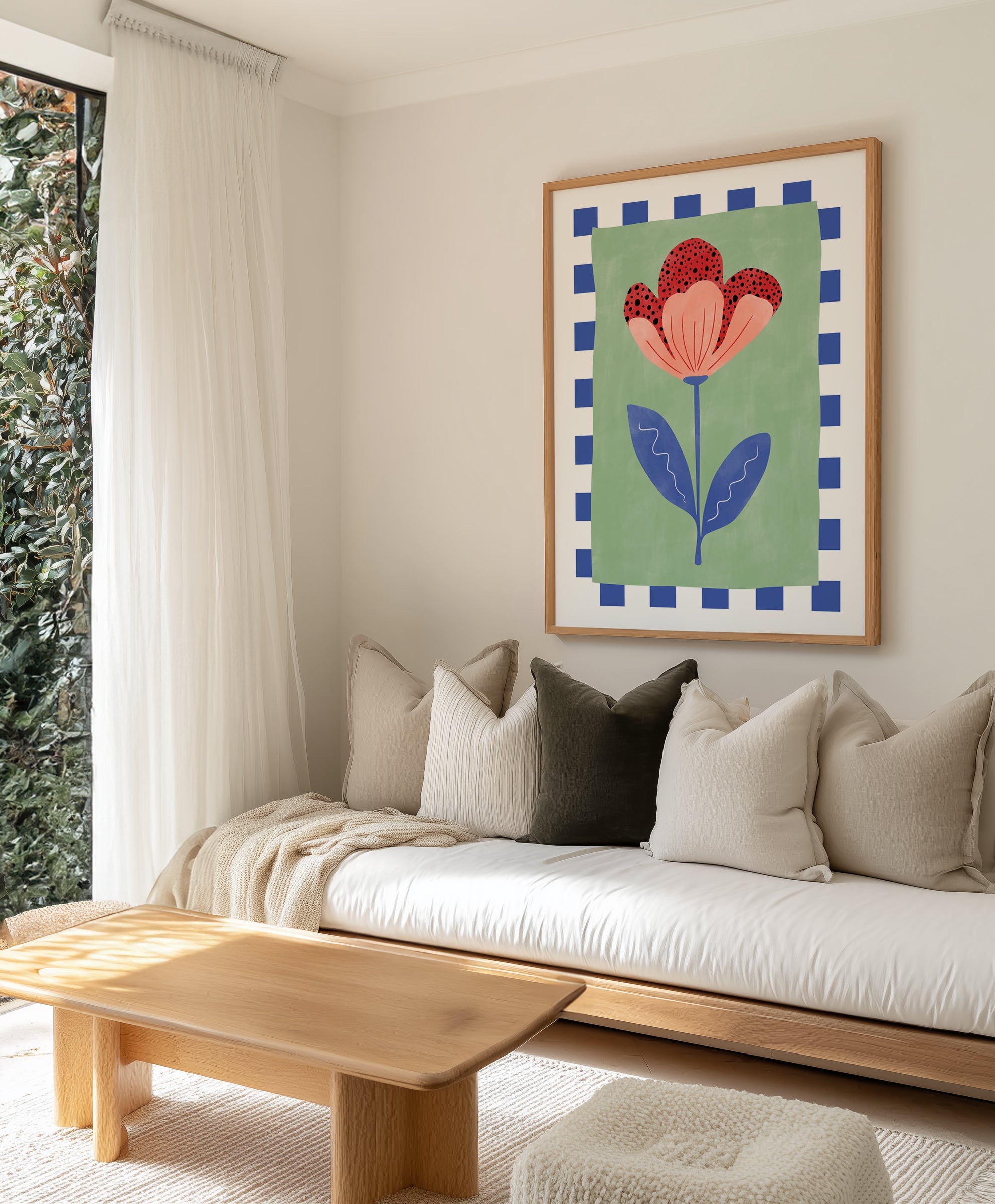
Before you choose your wall art, look at your existing furniture and flooring. Are your timbers golden-toned (warm) or grey-washed (cool)? Does your sofa lean cream or charcoal? Warm wall art prints anchor a room around earthy, rich hues, while blue wall art and green wall art bring a fresh, airy quality.
The most common mistake is choosing art in isolation — pulling it off the screen and hoping it works in the room. Instead, start with your room's dominant tone and build outward.
Complementary vs Analogous Palettes
Two approaches work consistently well in Australian homes. Complementary palettes use colours from opposite sides of the colour wheel — think blush pink with sage green, or dusty blue with warm terracotta. The contrast creates visual energy without chaos. Analogous palettes use colours that sit beside each other — cream, warm white and soft ochre, for example — creating a cohesive, layered look that feels sophisticated rather than flat.
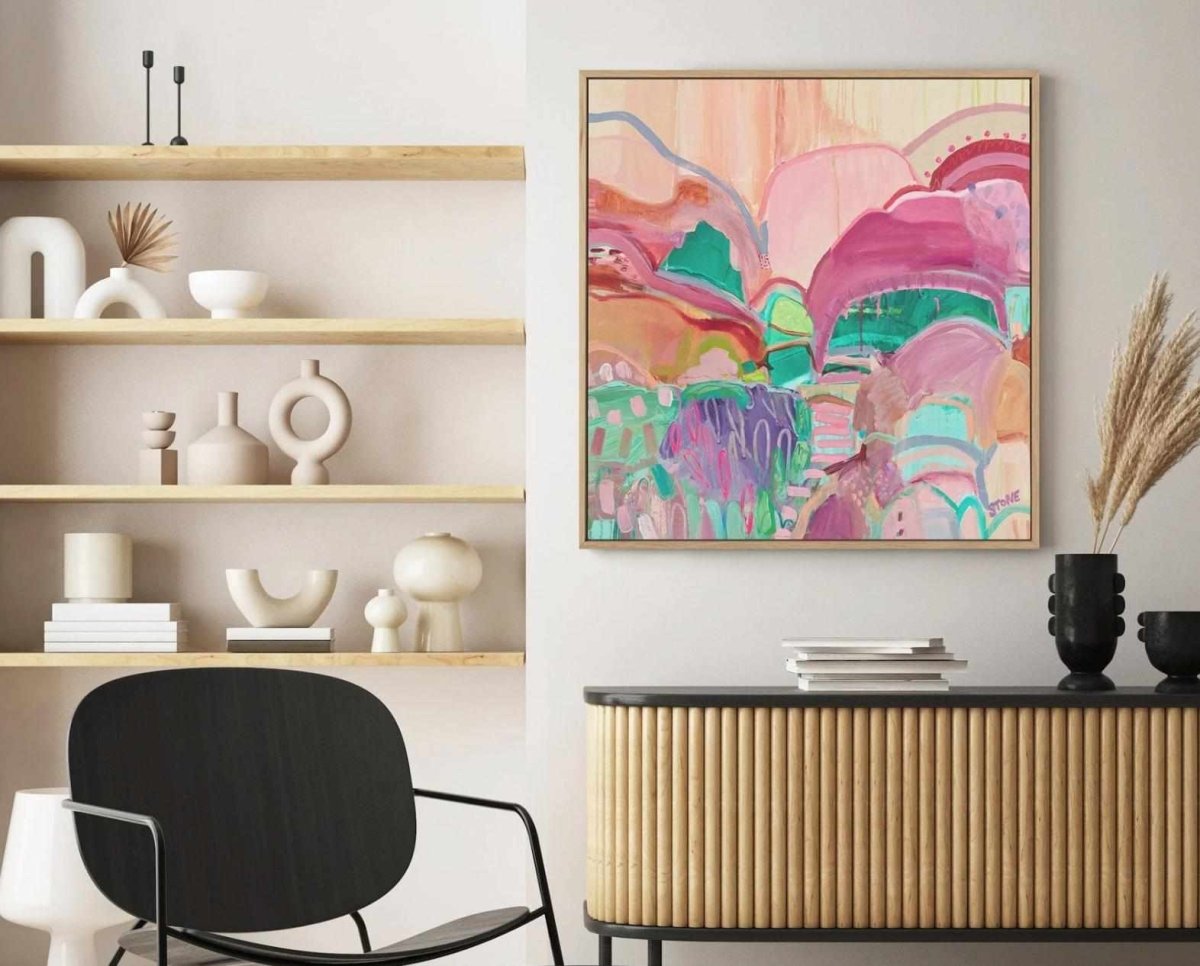
For blush and pink wall art, pair with natural linen textures, oak frames and soft sage accents. For black and white wall art, the absence of colour becomes a statement — use it in rooms with bold architectural features or strong furniture lines.
- → Warm room + warm art = layered, inviting depth
- → Cool room + warm art = welcoming contrast
- → Neutral room + bold art = confident focal point
- → White room + monochrome art = timeless minimalism

Every piece is produced at our two manufacturing facilities on of NSW — crafting Australian wall art since 2015. We deliver to over 40 countries worldwide, with custom sizing available on all prints. Over a decade of experience, every order ships within 24 hours with our satisfaction guarantee.
Email help@oliveetoriel.com

Living Room: Make a Statement
The living room is the home's social heart — and your wall art should reflect that. This is the space to be bold. Large-format art in warm ochres, rich earthy tones or deep navies creates an immediate focal point. If you have a neutral sofa, use your art to introduce the room's personality.
The 60-30-10 colour rule applies here: 60% dominant colour (walls + large furniture), 30% secondary colour (rugs, curtains), 10% accent colour (cushions, art). Your wall art typically falls in that 10% accent — but it should punch above its weight visually. Choose a piece that repeats a colour already in the room for instant cohesion, or introduce a deliberate contrast for drama.
For open-plan living and dining areas, consider how colours flow between zones. A continuous warm palette ties the spaces together. Matching wall art sets are ideal — they provide visual continuity across a large wall without the guesswork.
Bedroom: Calm and Considered
The bedroom calls for restraint. Colours that promote rest — dusty blues, soft greens, blush pinks, warm whites and earthy neutrals — are your palette. Avoid high-saturation or very dark art in a bedroom unless your room is large and well-lit.
The most successful bedroom art selections echo the bedding tones. If your linen is a warm white or oat, blush floral prints or soft botanicals feel natural and considered. If you have charcoal or navy bedding, crisp black and white art or cool blues provide elegant contrast.
Above the bed is the prime position — and sizing matters as much as colour here. Art should feel anchored, not floating. See our complete sizing guide at what size wall art do I need for exact measurements.

Hallway, Kitchen and Bathroom Colour Tips
Hallways are high-traffic, often narrow spaces. Lighter colours — soft whites, blush tones, warm creams — keep them feeling open. A single bold piece works better than a complex gallery. Green botanicals add life to a naturally dark hallway.
Kitchens suit cheerful, energising art. Warm yellows, terracottas, botanical greens and warm abstract works complement timber cabinetry. Avoid very large or very heavy frames in kitchens — keep it light and practical.
Bathrooms are underrated gallery spaces. Water-resistant frames (not canvas) are best. Coastal blues, botanical prints and soft pink art work beautifully in a bathroom setting. Stick to one or two small-format pieces rather than a gallery — the space rarely supports more.
Explore Olive et Oriel's full colour-curated collections: Blue Wall Art · Green Wall Art · Pink & Blush Wall Art · Warm Tones · Black & White · Browse All Prints


How to Use OEO's Colour Collections
Olive et Oriel curates art by colour specifically to make this process easier. Every piece is photographed in styled, real-room settings so you can see exactly how each hue behaves in a living space — not against a white studio backdrop.
If you're drawn to a specific palette but unsure which piece to choose, curated print sets take the decision away entirely. Each set is pre-matched by colour, tone and style — simply choose your size and hang.
All art is printed on of NSW using archival inks rated for 70+ years, on acid-free fine art paper. Colours are reproduced with exceptional accuracy — what you see on screen is what arrives. Questions? Email help@oliveetoriel.com — our team can recommend specific pieces based on your room's palette.
Frequently Asked Questions
How do I choose wall art colours for a neutral room?
Start with your furniture tones. Warm neutrals like beige and cream pair beautifully with earthy terracottas, warm whites, and sage greens. Cool greys work well with blues, blush pinks, and crisp black and white. Browse Olive et Oriel's warm-toned collection for inspiration.
Should wall art match my wall colour?
Not necessarily — contrast often creates more visual impact. If your walls are white or off-white, almost any art colour works. For coloured walls, choose art that either picks up one of the wall tones or provides a deliberate contrast in a complementary hue.
What colours work best in a bedroom?
Soft blush pinks, sage greens, warm creams and dusty blues create a calming atmosphere ideal for sleep. Avoid high-contrast black and white in bedrooms unless offset with warm textures. See our full guide on choosing wall art for your space.
Can I mix colours in a gallery wall?
Yes — the key is a common thread. Choose art that shares at least one colour across all pieces, or limit your palette to two or three tones. Olive et Oriel's curated sets are pre-matched for exactly this reason.
What is a complementary colour palette for wall art?
Complementary colours sit opposite each other on the colour wheel — blue and orange, pink and green, purple and yellow. Using these in art creates visual energy. For a calmer effect, choose analogous colours — hues that sit next to each other, like sage, olive and warm cream.