
The most common mistake in decorating a home is not spending too much on art — it is spending too little thought on it. Bare walls are not a budget problem. They are a decision problem. The assumption that quality art is expensive, or that affordable art will look cheap, keeps most rooms unfinished far longer than they need to be. This guide exists to correct that assumption, and to give you a practical framework for choosing, sizing, styling and hanging affordable wall art in Australia that genuinely transforms a space. For a quick-reference summary, see our affordable wall art buying guide.


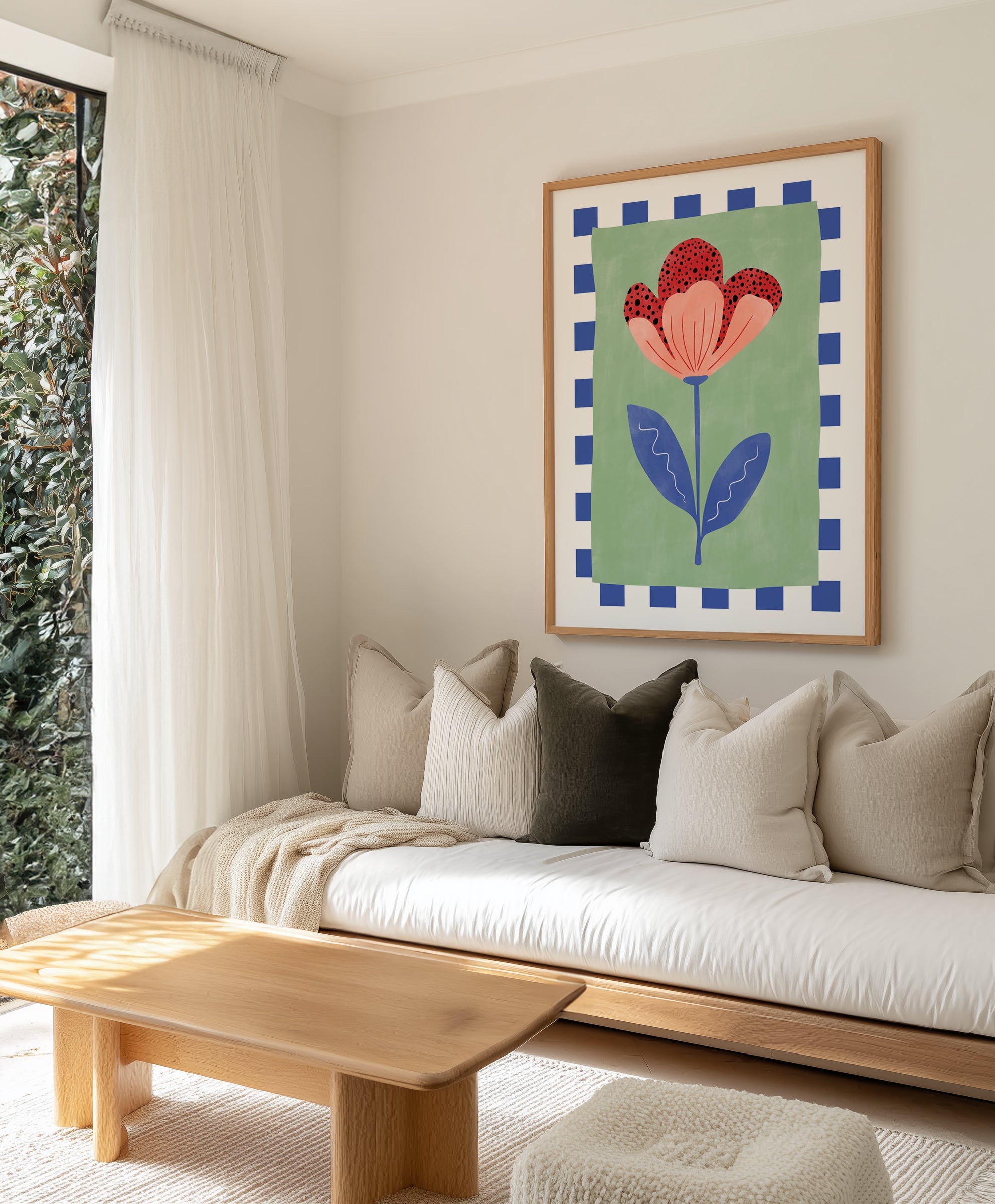
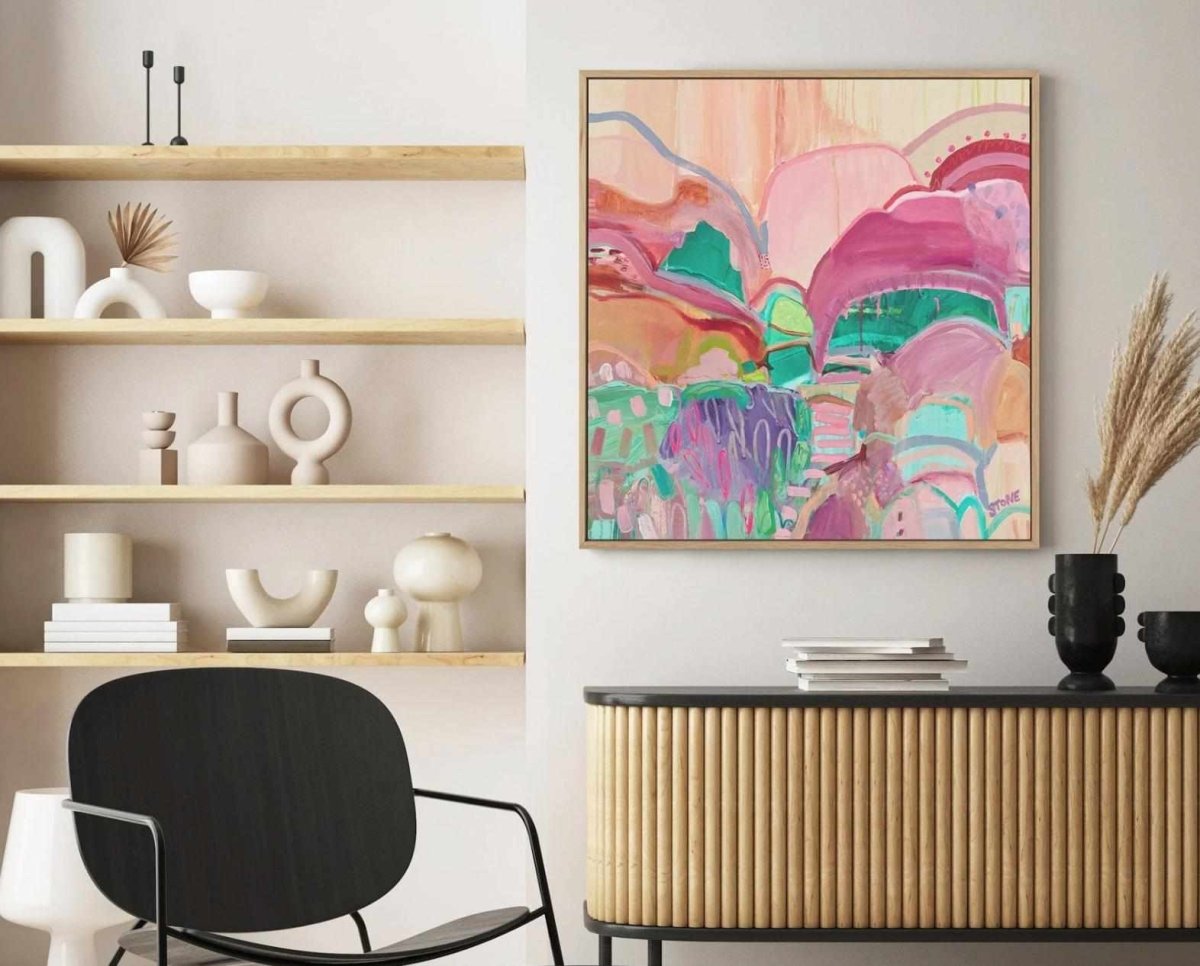
Pictured: Abstract art prints from Olive et Oriel — affordable wall art Australia from $9.95. Produced on 230gsm fine art paper with archival inks at our Central Coast NSW facility. For bedroom wall art specifically, explore our calming collection — soft abstracts, botanicals and landscapes custom sized for above the bed. For living room wall art, scale matters most — one large considered piece anchors a seating area more effectively than multiple smaller works. For walls that need more than one piece, our matching wall art pairs and sets are already curated — two or three pieces matched and ready to hang together. For walls that need more than two pieces, see our guide to 3 piece wall art sets Australia.
What separates affordable art that works from art that looks cheap
The distinction that matters is not price. It is material. An art print produced on 230gsm fine art paper with archival pigment inks will hold its colour for decades — properly stored and away from prolonged direct sunlight, it is rated for 75+ years of colour stability. A standard poster on 90gsm paper with dye-based inks will fade within 1–3 years of regular light exposure. The price difference between these two products is often smaller than most people expect. The quality difference is not.
The second distinction is sizing. A piece produced to the exact dimensions of your wall — not to a standard format that happens to be close — will always look more considered. This is where made-to-order affordable wall art has a structural advantage over pre-sized imported stock: the piece is produced to fit the specific wall it is going on, at the same price point.
The third distinction is framing. A frame chosen for margin rather than for the artwork will betray the piece regardless of how good the print is. The proportion of the moulding to the work, the depth of the profile, the finish against the wall colour — these details are what separate art that looks placed from art that looks chosen. At Olive et Oriel, every frame moulding is designed to our own specification and produced using specialised Italian framing equipment from FSC certified solid timber. The result is a frame that recedes when it should and holds the room when it needs to.


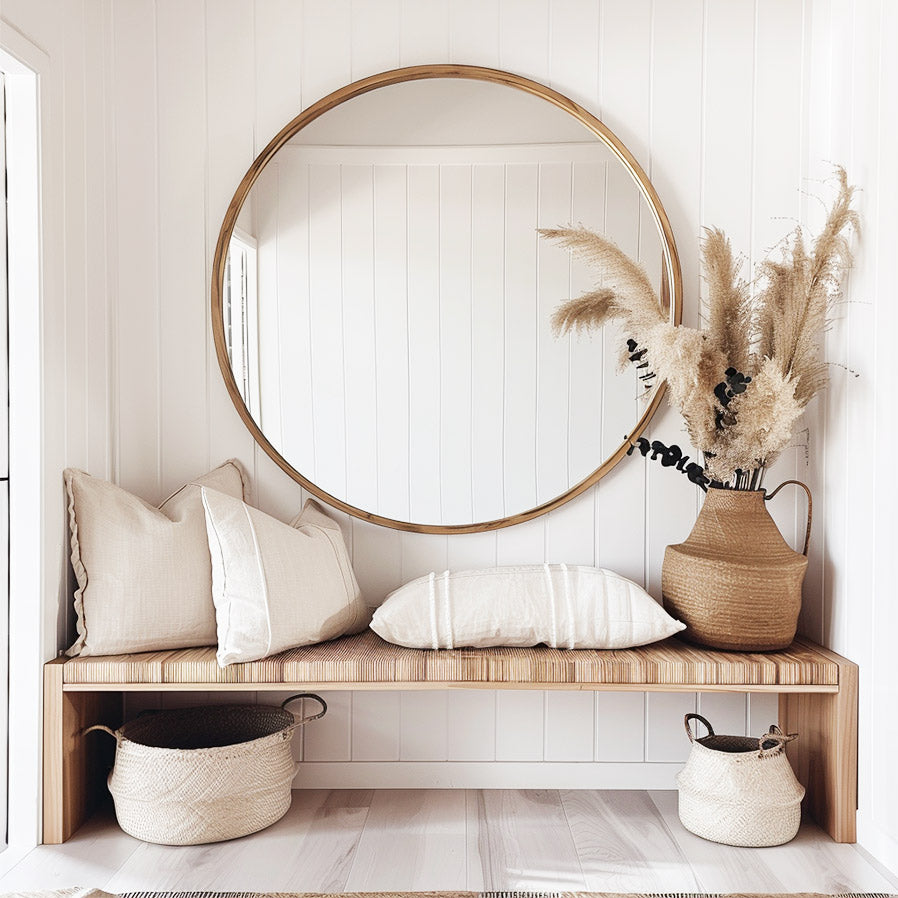
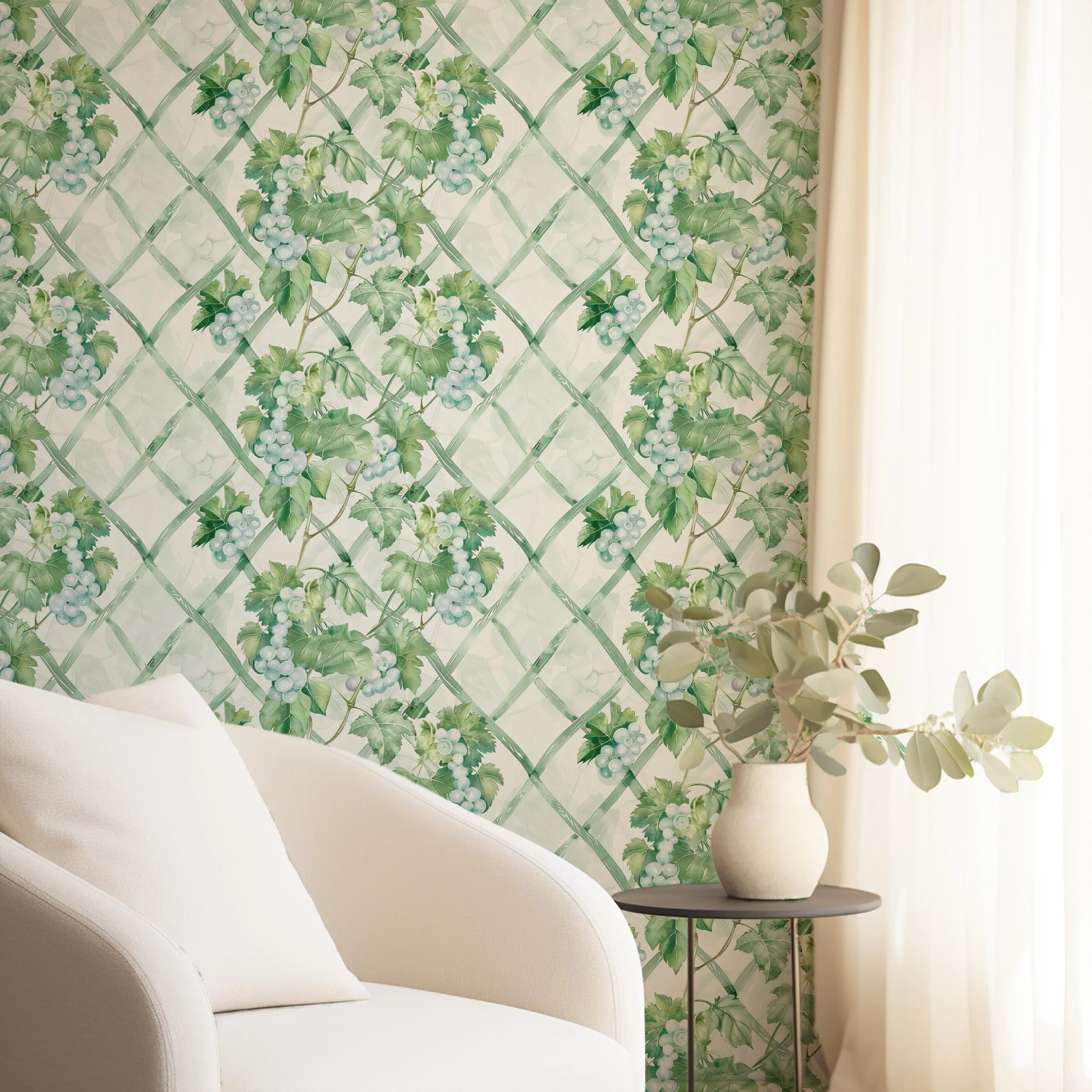
Pictured left: Coastal art prints — right: Botanical and floral wall art. Both from Olive et Oriel affordable wall art — from $9.95, made in Australia.
The frame question most people never think to ask
When you buy a framed art print online, you are making two decisions simultaneously: one about the artwork, and one about the frame. Most buyers focus entirely on the first and accept whatever comes with the second. This is where quality is most often lost — and where the price of affordable art is quietly paid in ways that only become visible months later.
A significant proportion of framed wall art sold in Australia arrives in shipping containers from offshore factories. Pre-made frames, manufactured to standard dimensions, assembled at volume, loaded into containers and shipped across oceans. The economics work. The quality does not — and the reason is accountability. When a frame is manufactured offshore, there is no one present to catch a warped moulding, correct a loose join, or reject a batch that has not met specification. By the time it reaches a customer's wall, the manufacturer is ten thousand kilometres away and the retailer has limited recourse.
The other material to understand is MDF — medium-density fibreboard, the substrate used in the majority of imported and budget frames. MDF is cheap to produce and easy to work with at scale. It is also moisture-sensitive. In Australian conditions — coastal humidity, seasonal temperature swings, the ambient moisture of a bathroom or kitchen — MDF absorbs, expands, and warps. Over time, it pulls against the art it is supposed to protect. A fine art print mounted in an MDF frame is not a long-term proposition.
Glass presents a separate problem. It is heavy, which affects shipping cost and increases the risk of breakage in transit. It is not optically clear in the way acrylic is — there is a colour cast and a reflectivity that changes how art reads on a wall. And when glass breaks in transit, it does not break cleanly. It breaks into the artwork, and the art is gone.
What Olive et Oriel does instead
Every frame in the Olive et Oriel collection is made to order at our own manufacturing facilities on the Central Coast of NSW — two facilities, staffed by professionals with a combined total of over 30 years of experience in picture frame manufacturing. No offshore production. No pre-made stock sitting in a container.
The mouldings are designed by our team — proportioned specifically for how fine art should sit against a wall, not engineered for the cheapest possible production cost. They are built from FSC certified solid timber using specialised Italian framing equipment. No MDF. No glass. The result is a frame that is dimensionally accurate, structurally sound, and made to last in Australian conditions.
We could sell these frames — and the art inside them — for significantly more. Some Australian art companies do. There is no need to, because we control the entire process. No middlemen. No container markups. No quality concessions made offshore that we have to price our way out of on arrival. The price is what it is because the cost is what it is — and we choose to pass that efficiency directly to the customer.
When you are buying framed wall art, it is worth asking three questions: Is the frame Australian made? Is it solid timber or MDF? Does it use glass or acrylic? The answers tell you everything you need to know about what you are actually buying — and what it will look like on your wall in five years.
How to choose the right size art for any room
Scale is the variable most often misunderstood in interior styling. The instinct in most homes is to go smaller than the space requires — a cautious choice that reads, on the finished wall, as an afterthought rather than a decision.
The practical rule is reliable: aim for 50–75% of the furniture width below the piece. Above a 2m sofa, that means 100–150cm wide. Above a queen bed, 100–120cm. In a dining room, the artwork should not exceed the width of the table. In a hallway, ceiling height guides the format — taller ceilings take taller, narrower pieces; lower ceilings respond better to horizontal formats that extend the perceived width of the space.
For gallery walls: plan the arrangement on paper first and transfer to the wall using paper templates and painter's tape before making a single hole. The visual centre of the arrangement — not the geometric centre — should sit at 145–150cm from the floor. The most common mistake is undersizing: a piece that reads correctly in a retail environment will often disappear on a domestic wall. When in doubt, go larger. For a complete room-by-room breakdown, see our guide to sizing wall art in every room.
Styling affordable art by room
The room dictates the brief more than personal taste does. Understanding what each space asks of its art is the starting point for decisions that hold over time.
Living room
The living room rewards scale and compositional confidence. A single large-format abstract print, a wide landscape photograph, or a generous coastal piece anchors a seating area far more effectively than a cluster of smaller works competing for attention. Where the wall is long, a curated pair or trio with consistent framing reads as a considered decision. Colour should echo something already present in the room — a cushion, a rug, a throw. That coherence is what separates styled from decorated. For more, see Australian coastal luxe interiors and maximalist styling.
Bedroom
The bedroom calls for restraint. Soft abstracts, muted botanicals, quiet landscapes. Colour temperature matters here: cool blues and greens are associated with lower cortisol and better sleep quality. Warm terracottas and creams create a sense of shelter. Scale above the bed: 60–80% of the bedhead width, centred, with the piece hung so its centre sits at 145–150cm from the floor. Art in a bedroom should feel chosen, not displayed. For a complete guide, see how to design a bedroom that feels genuinely expensive.
Bathroom
Bathroom wall art benefits from subject matter that connects to the space — botanicals, coastal photography, abstract watercolour in muted tones. In high-moisture bathrooms, frame paper prints behind glass. Framed canvas is naturally more moisture-tolerant. One well-chosen piece rewards a bathroom more than multiple smaller works. For more, see how to transform a bathroom with wall art.


Pictured: Bedroom wall art from Olive et Oriel — affordable art prints Australia from $9.95. Made to order at our Central Coast NSW facility.
How to hang wall art correctly
Use a spirit level. Even a slight deviation from horizontal reads as careless, regardless of how good the piece is. The standard hanging height — centre of the piece at 145–150cm from floor — corresponds to the eye level of a standing adult. In a dining room, this drops to 120–130cm to sit at seated eye level. In a children's room, lower again to the child's eye level.
For heavier framed works, locate a wall stud or use appropriate wall plugs rated for the weight. Every Olive et Oriel framed piece arrives with fixings included and ready to hang. For gallery wall arrangements, map the layout on paper, transfer with painter's tape templates, and make holes only when the arrangement is confirmed. For mural installation, see the complete Australian hanging guide.
Using colour in affordable art decisions
Colour in wall art functions differently from colour in furnishings. A bold sofa commits the room for years. A bold print can be moved, swapped, or re-framed. This flexibility makes affordable wall art a lower-stakes decision than most decorating choices — and a higher-impact one than most people expect.
The most reliable approach: identify one or two colours already present in the room and use them as anchors for the art selection. A print does not need to match exactly — it needs to belong to the same colour conversation. Neutral and earthy tones hold across changing light conditions and seasonal shifts in furnishing. Bold and colourful pieces reward rooms already committed to a palette that need a focal point to resolve it.
For colour-led styling: greige and mushroom interiors, mocha mousse, forest green and emerald.


Shop the full range: Affordable wall art Australia — Abstract — Coastal — Botanical — Minimalist — Indigenous Australian — Neutral
What to look for when buying affordable art in Australia
Three specifications tell you everything you need to know about whether an art print will last:
Paper weight and type. 200gsm and above on a fine art substrate is the threshold for archival quality. Below this, the print is a poster in everything but name. Olive et Oriel art prints are produced on 230gsm fine art paper.
Ink system. Archival pigment inks — the standard used in museum-quality reproduction — are rated for decades of colour stability. Dye-based inks are not. The difference becomes visible within 2–3 years of display.
Where it is made. Australian-made prints avoid the quality variance that comes from offshore volume production. They also mean faster dispatch, no import delays, and accountability when something is wrong. Olive et Oriel prints are produced at our own facility on the Central Coast of NSW and dispatched within 4 business days.
Designer Tips
From an interior design perspective, the decisions that make affordable art look expensive are almost always about placement and proportion rather than price. A few principles that hold across every room and every style:
One considered piece beats many small ones. A single well-sized print at the correct hanging height will read as a deliberate design decision. A cluster of undersized frames at inconsistent heights reads as accumulated, not curated. Start with one piece, size it correctly, and the room will tell you if it needs more.
Frame finish should follow the room's metal tones. If the room has brass hardware, a warm timber frame or a gold-finish frame belongs. If the hardware is matte black, a black frame connects the piece to the space. This is the simplest way to make an affordable print look like it was chosen for the room specifically.
Leave breathing room around the piece. Art hung too close to adjacent furniture or architecture looks crowded. A minimum of 20–25cm between the bottom of the frame and the top of furniture below it is a reliable starting point. More space reads as more considered.
Lighting changes everything. A print lit by a picture light or positioned to catch natural light from a nearby window will read at a completely different quality level than the same print in a dim corner. When selecting art for a room, consider not just the wall but the light that falls on it throughout the day.
The Olive et Oriel affordable art range
Over 8,000 designs across every interior direction: abstract, coastal and beach, floral and botanical, Indigenous Australian art, landscape photography, minimalist, neutral and earthy, and bold and colourful.
Each design is available as an unframed art print, a framed art print, or a framed canvas — every piece produced at our own Australian facility to the same archival standard. Art prints from $9.95. Framed canvas from $59.95. Find an equivalent Australian-made piece at a better price elsewhere and we will beat it — not by an inch, by a mile.
For further inspiration: canvas art on real walls — coastal art in real Australian homes — Japandi interior design — mid-century modern interiors — Hamptons style guide.