

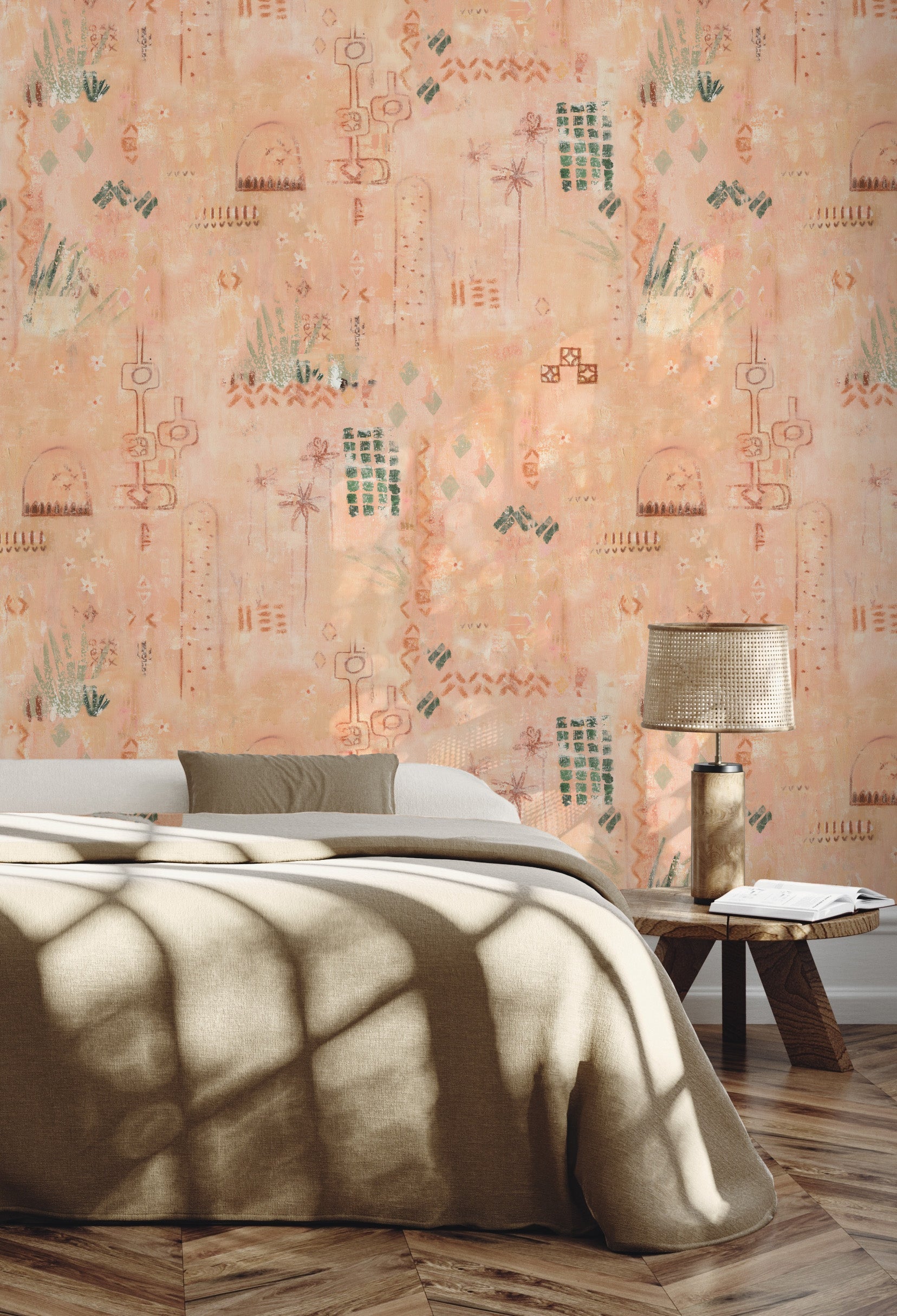
Maximalism is the most misunderstood design movement in contemporary interiors. The word itself suggests excess — too much of everything, a room that overwhelms rather than invites. But genuine maximalism, executed by a designer who understands it, is not about accumulation. It is about density with purpose. Every element is considered, every surface contributes to a coherent whole, and the wallpaper is almost always the element that makes or breaks the result. A maximalist room without a strong wallpaper foundation is just a cluttered room. A maximalist room anchored by the right wallpaper is a curated, immersive environment that rewards sustained attention.
The starting point for any successful maximalist interior is the decision about what is doing the primary visual work. In most maximalist rooms, this is the wallpaper. It establishes the colour palette, the dominant pattern language, and the emotional register of the space. Everything else — the furniture, the art, the soft furnishings, the objects on surfaces — should be selected to complement and extend the wallpaper's visual argument, not to compete with it. The wallpaper leads; the rest of the room follows.


Come As You Are Wallpaper by Jackie Green · Love Your Mind Wallpaper by Jackie Green · One Summer Wallpaper by Jackie Green
With over a decade producing premium wallpaper at our Central Coast facility for homeowners, interior designers and commercial clients across more than 40 countries, we have seen maximalist interiors done extraordinarily well and badly. The distinction almost always comes down to understanding the difference between pattern mixing (which works) and pattern clashing (which does not).
The Rules of Pattern Mixing
Pattern mixing is the technical skill at the heart of maximalist design. The fear most homeowners have — that mixing patterns will look chaotic — is almost entirely unfounded when three basic principles are applied.
Vary the scale. A large-scale botanical on the wall can coexist with a small geometric on a cushion and a medium-scale stripe on a chair because the eye processes them at different levels of detail. Patterns of the same scale fight each other; patterns of different scales create visual rhythm.
Anchor in a common palette. The patterns in a maximalist room do not need to be related in motif — a floral wallpaper and a geometric rug can coexist — but they must share at least two or three colours. The shared palette is what makes the room feel intentional rather than accidental.
Use texture to break tension. A solid linen throw, an unglazed ceramic vase, a timber shelf — these textural elements provide visual rest between patterned surfaces. Without them, maximalist rooms feel relentless rather than rich.
"Maximalism is not about owning more. It is about seeing more — a room that rewards careful attention with layers of detail that continue to reveal themselves over time."


Sipping Lemonade Wallpaper by Jackie Green · U Do U Wallpaper by Jackie Green
Materials
- Timber: Dark and medium-toned timbers — ebonised oak, aged walnut tones, dark jarrah — suit maximalist rooms where the wallpaper is already carrying significant visual weight. The depth of dark timber grounds the room rather than competing for lightness.
- Stone: Heavily veined marble, malachite effect, and richly patterned stone surfaces are all at home in maximalist interiors. The pattern in the stone becomes another element in the room's visual conversation.
- Metals: Aged brass, verdigris bronze, and blackened iron. Maximalist rooms benefit from metals with patina and age — they contribute to the sense of accumulated richness that defines the aesthetic.
- Fabrics: Velvet, silk, and brocade in deep saturated tones. Layer multiple textile weights — a velvet sofa with a woven throw and silk cushions creates the textural density that maximalism requires.
Room by Room
- Living room: The most ambitious maximalist rooms treat all four walls with the same wallpaper. Wrap the room completely and furnish with solid, anchor pieces that let the walls dominate.
- Dining room: Maximalism works best in spaces used for entertaining. A deeply patterned dining room feels intimate and theatrical — precisely the atmosphere that makes a dinner memorable.
- Bedroom: A fully wallpapered bedroom in a bold botanical or geometric print, with curtains in a complementary solid, creates the cocoon-like quality that the best maximalist bedrooms achieve.
- Study/library: The natural maximalist room. Books provide existing visual texture; add a richly patterned wallpaper and the room reads as deeply personal and considered.
Designer Tips
- Order the $4.99 sample (48cm x 40cm / 19in x 16in) and live with it for a week before committing. Maximalist wallpaper patterns are transformative in large quantities — the sample helps you understand the scale of the commitment.
- The most common maximalist mistake is introducing too many pattern sources. Lead with wallpaper, add one textile pattern, and keep everything else in solids. Three pattern sources maximum.
- Our wallpaper is custom manufactured to your exact wall dimensions at our Central Coast facility, with 4 business days production time. All import duties are paid globally, so the price you see includes delivery to your door.
- In a fully wallpapered room, lighting becomes critical. Wall-wash lighting that skims across the surface of the wallpaper reveals its texture and depth in a way that overhead lighting alone cannot achieve.
Browse our full wallpaper range, explore botanical wallpaper for maximalist interiors, or read our design guides for more inspiration.


