

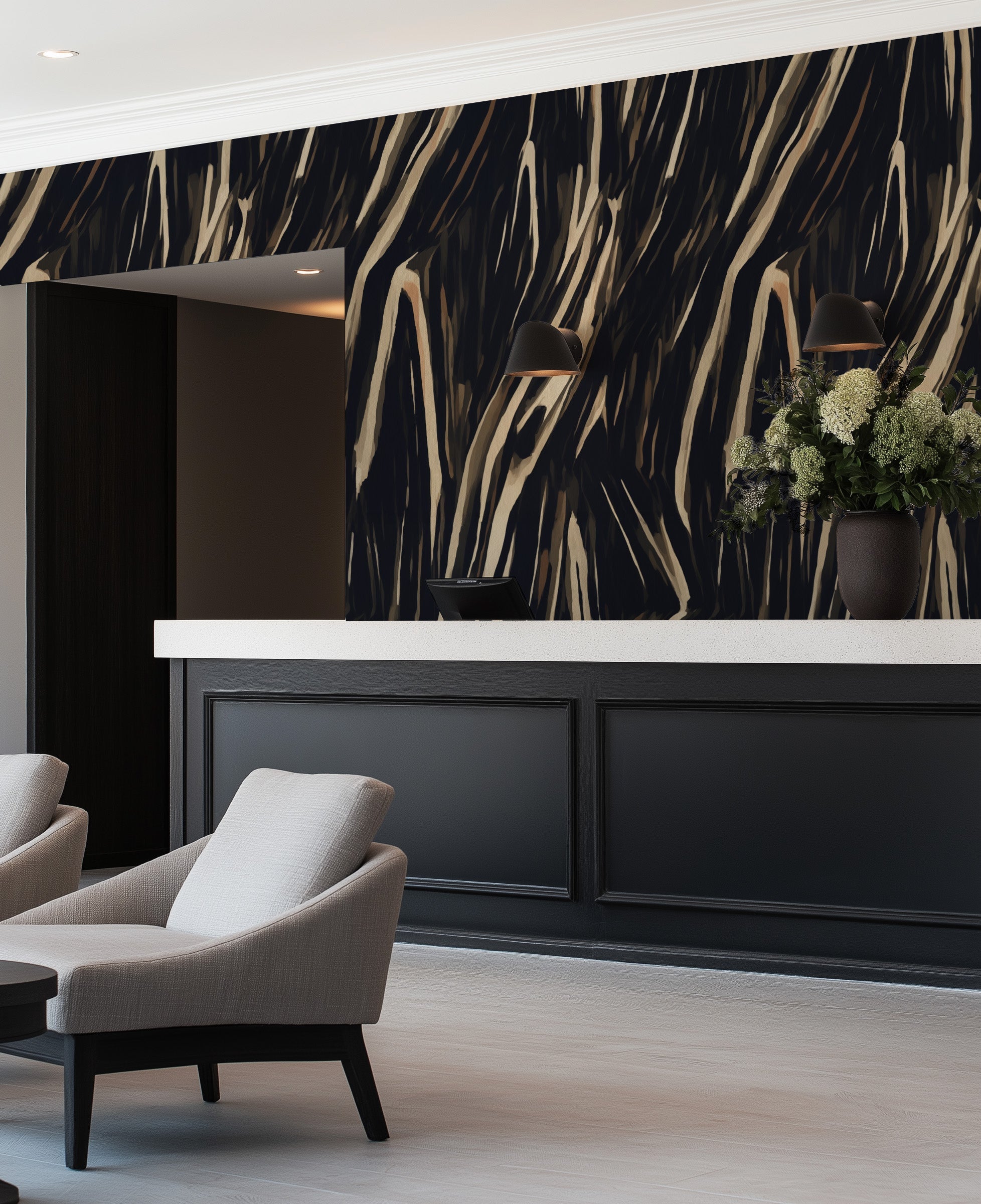
Every commercial fitout has the same argument scheduled somewhere between concept and tender: wallcovering or paint? Paint wins the day-one line item and loses almost everything after it, but the case is rarely made with numbers. This guide runs the whole-of-life comparison honestly, cost, durability, design capacity, maintenance and sustainability, so the wall decision can be made once, properly.
We manufacture Type II commercial vinyl wallcoverings in Australia, so our position is declared, but the numbers below are the ones we walk procurement teams through, including where paint genuinely remains the right answer.


Pienza Abstract in Black & Beige Commercial Vinyl Wallpaper · Pienza Abstract in Navy Blue Commercial Vinyl Wallpaper · Ziggy Abstract in Navy Blue Commercial Vinyl Wallpaper
The Day-One Illusion
Paint's advantage is real and singular: lower installed cost on day one. A commercial repaint runs materials plus labour on a surface already prepared; a Type II installation adds substrate preparation, material at commercial weight and professional hanging (installer directory). On a corridor tender line, paint wins comfortably. The illusion is the timeline: commercial paint in traffic zones is a two-to-four-year surface. Type II vinyl is a ten-plus-year surface. Price the wall per year of presentable service and the ranking inverts by the second repaint, before counting the disruption costs, closures, moves, downtime, that repaints carry and reprints do not.
Paint is cheap the day it dries. Walls are paid for by the decade.
The Comparison, Category by Category
- Durability: 20oz vinyl over woven backing shrugs off the trolley strikes, chair backs and bag scuffs that gouge paint. In traffic zones this is the whole argument.
- Cleanability: scrubbable versus wipeable-until-it-polishes: sanitisation regimes (healthcare, childcare, food service) burn through paint sheen in months, detail in our Type II guide.
- Design capacity: paint delivers colour; printed wallcoverings deliver texture, pattern, mural scale and brand, the difference between a compliant wall and a designed one, custom-sized via the custom service.
- Repair: paint patches flash and mismatch as walls age; vinyl panels reprint exactly from held files, years later.
- Health specification: modern low-VOC paints are good; our wallcoverings are made without formaldehyde, heavy metals, solvents or latex inks, with Greenguard GOLD certified inks and mould inhibitors, documentation certifiers accept in childcare and healthcare.
- Where paint stays right: ceilings, low-traffic upper walls, budget-critical back-of-house, and heritage fabric where reversibility rules. The professional answer is zoning, not ideology.


Ziggy Abstract in Khaki Green Commercial Vinyl Wallpaper · Arbor Etchings Commercial Vinyl Wallpaper
The Zoned Wall Strategy
Fitouts that get this right run both materials by zone: Type II vinyl through circulation, dining, wet-adjacent and touch zones; paint above datum lines and in gentle-use rooms; and art carrying the identity moments over both (choose it per the five-decision method), per the commercial art guide. One palette system across all three layers (we coordinate art and wallcoverings in the same conversation through the trade program) is what makes the zoning invisible and the scheme coherent.
Designer Tips
- Run the cost-per-presentable-year calculation in the tender document itself, procurement teams change position when the timeline is on paper.
- Photograph existing walls at handover on repaint-cycle buildings; the before-state wins the wallcovering argument at the next refit.
- Specify overage (5 to 10 percent) with the original vinyl order, future repairs at production cost, zero colour-batch risk.
- In tenancy fitouts, vinyl's clean-strip removal protects make-good clauses better than accumulated paint layers.
- Where budgets force paint today, design the substrate for vinyl tomorrow, sound, sealed walls take Type II directly at the first refit.
Frequently Asked Questions
Is commercial wallpaper more expensive than paint?
On day one, yes. Per year of presentable service in traffic zones, no, Type II vinyl's ten-plus-year life against paint's two-to-four-year commercial repaint cycle inverts the economics by the second repaint, before counting closure and disruption costs.
How long does commercial vinyl last compared to paint?
Type II vinyl is a decade-grade surface in high-traffic commercial environments; commercial paint in the same zones typically needs recoating every two to four years. The heavier the traffic and cleaning regime, the wider the gap.
Can wallcoverings be repaired like paint can be touched up?
Better: paint touch-ups flash against aged walls, while single vinyl panels reprint exactly from held files and swap invisibly. Repair is where the whole-of-life gap is widest.
Where does paint remain the better choice?
Ceilings, upper walls above touch height, low-traffic and back-of-house rooms, and heritage fabric requiring reversibility. Professional fitouts zone the two materials rather than choosing one everywhere.
Is vinyl wallcovering sustainable versus repainting?
Fewer replacement cycles is the headline: one manufacture and installation against multiple repaints with their VOC events, closures and material runs. Composition matters too, ours are low-VOC, made without solvents or heavy metals, with certified inks, and made in Australia, shortening the supply chain.
Does wallcovering damage walls at removal?
Commercial vinyl strips cleanly as part of designed refurbishment, generally kinder to substrates than cutting back accumulated paint layers, and an advantage under tenancy make-good clauses.
Can you match our brand colours in vinyl?
Exactly, custom colour direction is standard with made-to-order printing, iterated with samples until the brand palette lands, then held on file for every future site and repair.
Run the numbers on your project through the Designer Trade & Commercial Program, and explore the Type II collection, commercial vinyl designs and custom printing. Made in Australia.


