
Burgundy is the colour that separates a room with personality from a room that plays it safe. It is wine at the bottom of a glass, the leather of a well-worn armchair, the velvet of a theatre curtain before it rises. Unlike red, which demands attention and raises the pulse, burgundy absorbs attention. It draws you in rather than pushing outward. It is the difference between someone who shouts across a room and someone who speaks quietly and makes you lean closer to listen.
In interiors, burgundy has been unfairly categorised as heavy and old-fashioned — associated with Victorian parlours and gentlemen's clubs. The current generation of designers is reclaiming it by pairing it with contemporary materials and restraint. A burgundy wallpaper behind a modern timber bed. A burgundy cushion on a cream linen sofa. A burgundy art print in a white-framed gallery wall. Used with discipline, burgundy brings warmth, depth, and sophistication that no neutral can achieve.


Colour Psychology
Burgundy inherits the physiological effects of red — increased heart rate, heightened appetite, a sense of warmth — but filters them through depth. Where red is immediate and intense, burgundy is slow and sustained. It creates a sense of enclosure that promotes intimacy and conversation, which is why it has been the colour of dining rooms and wine bars for centuries. The association with wine is not accidental — both burgundy the colour and Burgundy the region share a quality of richness that accumulates over time.
In colour temperature terms, burgundy is warm — it contains significant red and yellow pigment beneath the dark overlay. This makes it one of the few dark colours that actively warms a room rather than cooling it. A burgundy wall in a north-facing room compensates for the lack of natural warmth in a way that navy or charcoal cannot. The warmth is inherent in the pigment, not dependent on the light.
Four Colour Palettes
Palette 1: Burgundy and Blush

Burgundy softened by blush pink — its lighter, gentler relative. The blush prevents the burgundy from feeling heavy. The burgundy prevents the blush from feeling insubstantial. Together they create a palette with range: 60% warm white and cream, 30% blush (sofa, curtains, rug), 10% burgundy (cushions, art, a single armchair). This is burgundy for a bedroom — romantic without being theatrical.
Palette 2: Burgundy and Forest Green

Two of the richest colours in interiors, and they never compete because they occupy different parts of the spectrum. Burgundy brings warmth, green brings cool depth. Used together with cream and walnut timber, they create a room that feels like an English country library or an Italian trattoria — depending on whether you lean traditional or Mediterranean. The 60-30-10: 60% cream and warm white, 30% green (wallpaper or large furniture), 10% burgundy (art, cushions, ceramics).
Palette 3: Burgundy and Gold

The most luxurious combination in this set. Gold amplifies burgundy's richness the way it amplifies everything — by adding light. A burgundy wallpaper with gold-framed art, brass sconces, and a gold-legged side table reads as deliberate opulence. This is a dining room palette: the candlelight catches the gold, the gold warms the burgundy, and the room feels like the kind of place where important conversations happen.
Palette 4: Tonal Reds

A gradient from blush through terracotta, garnet, and burgundy to oxblood — the full spectrum of red at varying depths. This is for a confident room: wallpaper in burgundy, cushions in garnet, a throw in terracotta, ceramics in blush. Every surface is a different temperature of the same colour family. The room reads as enveloping and cohesive.
Wallpaper and Art

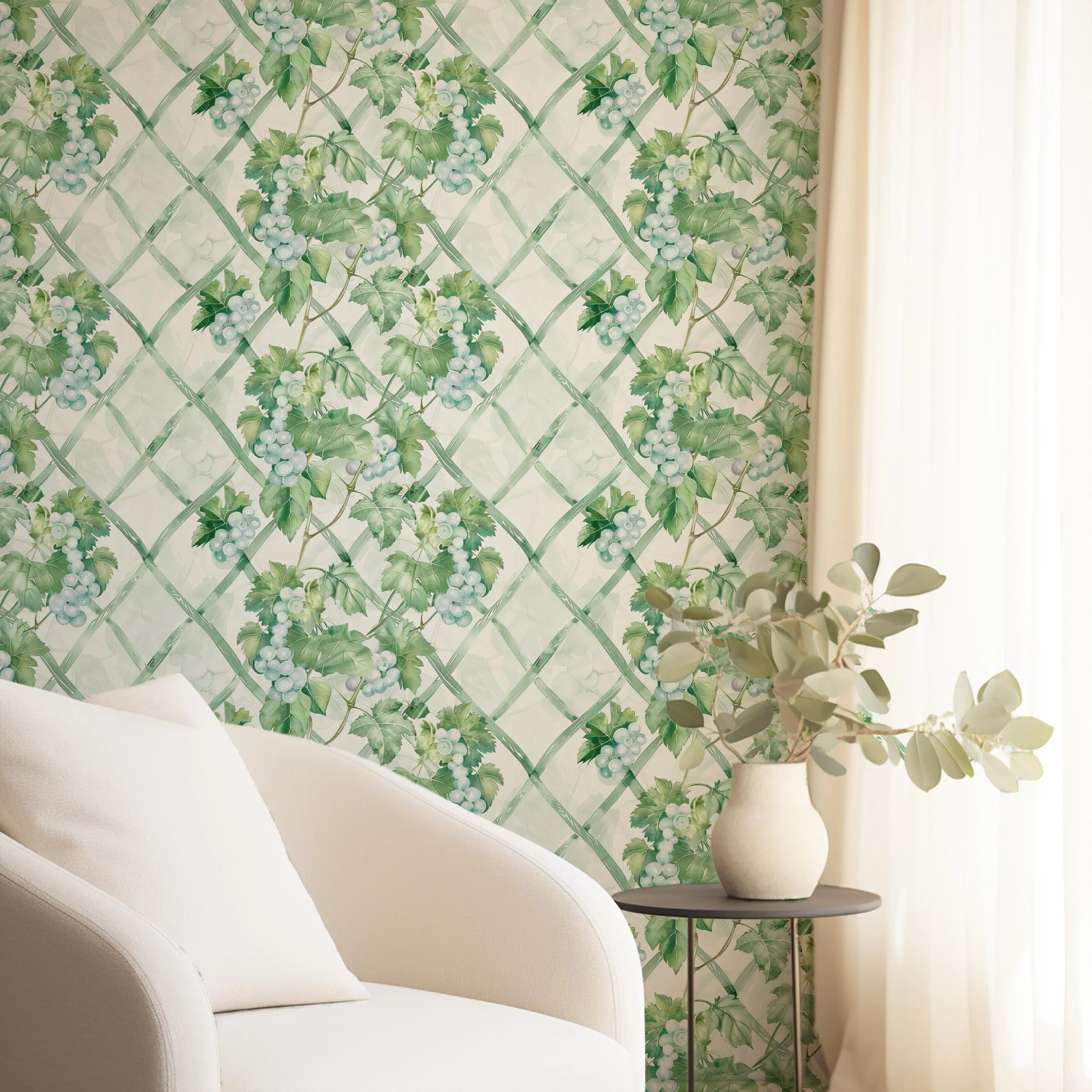
Our Imperial Bloom in Burgundy is a heritage floral that references the ornamental tradition without feeling dated — deep wine tones with botanical detail that rewards close looking. Abstract Trees in Burgundy and Green takes a more contemporary approach — a panoramic mural of abstracted trees in burgundy and deep green.
Burgundy Wildflower Study is the subtlest option — scattered wildflower illustrations in burgundy on cream that works in bedrooms and living rooms where you want the colour without the intensity.

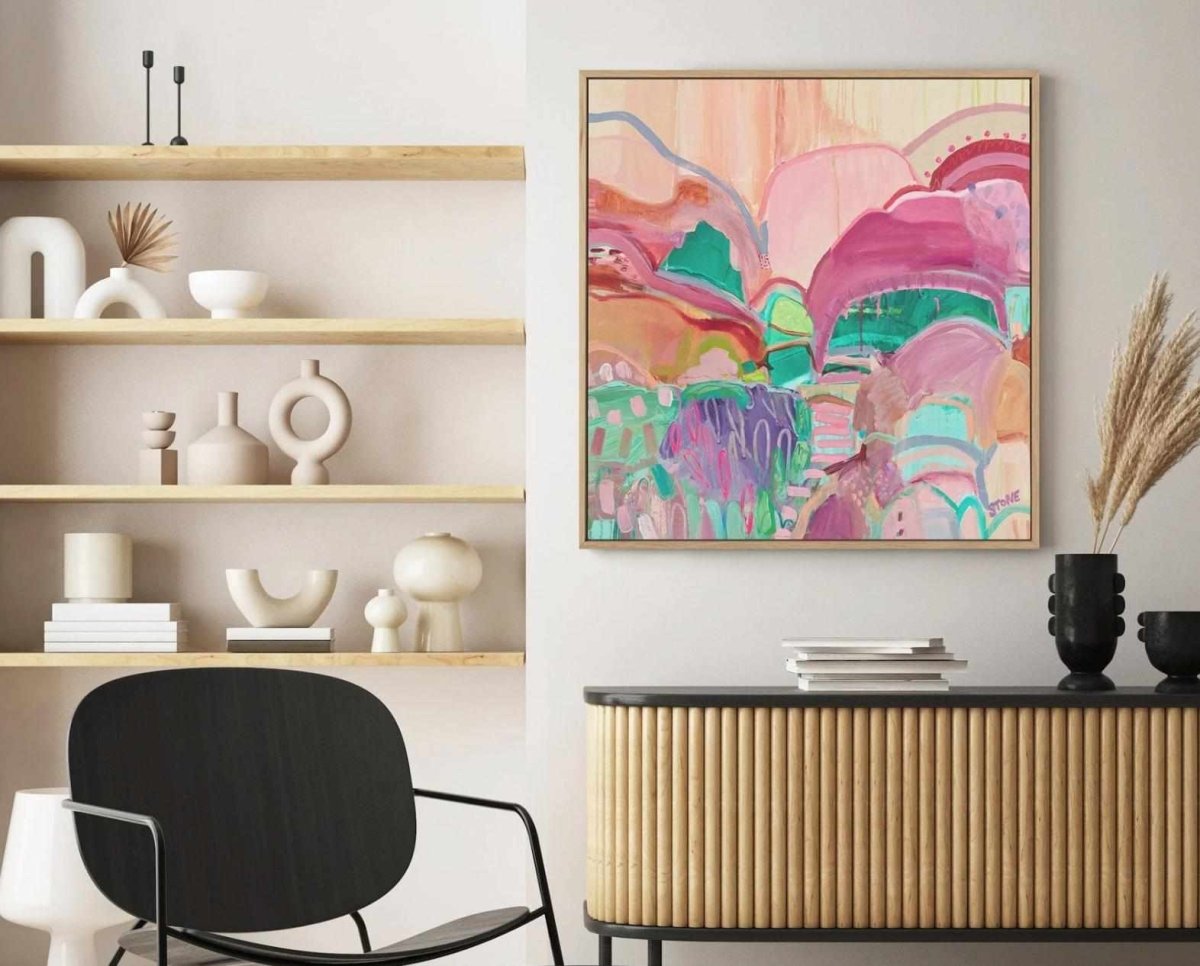
The Burgundy Horizon series — abstract landscapes in layered wine and earth tones — works as standalone art or as a triptych. The abstraction means the art carries the burgundy colour without any figurative reference, which makes it the right choice for modern rooms where a floral wallpaper would feel incongruous.
Materials
- Timber: Dark walnut and warm oak. Burgundy is one of the few colours that works with dark timber — both are warm-toned and deep, so they coexist rather than compete. Avoid light ash or birch — the contrast is too stark and the burgundy feels disconnected.
- Stone: Warm marble with gold or burgundy veining (Rosso Levanto is the dream stone for this palette). Honed, not polished — the matte finish keeps the room feeling grounded rather than flashy.
- Metals: Brass and antiqued gold. The warm metallic is non-negotiable with burgundy — it provides the light that prevents the depth from feeling heavy.
- Fabrics: Velvet in burgundy for the hero textile — sofa, armchair, or curtains. The sheen of velvet makes burgundy glow. Linen in cream for the balancing textile. Wool in charcoal for a rug that grounds without competing.
Room by Room
- Dining room: The best room for burgundy. Wallpaper on the feature wall, brass chandelier, walnut dining table, velvet chairs. This room is designed for evening — candlelight on burgundy is one of the most atmospheric combinations in interior design.
- Bedroom: Burgundy wallpaper behind the bed creates a cocoon effect. Pair with cream and blush bedding to prevent the room from feeling heavy. Brass bedside lamps provide warm light that brings out the red undertone.
- Living room: Burgundy as accent — a velvet armchair, a pair of cushions, a triptych of Burgundy Horizon art prints. The living room usually needs energy during the day, so reserve the full burgundy treatment for rooms you use primarily in the evening.
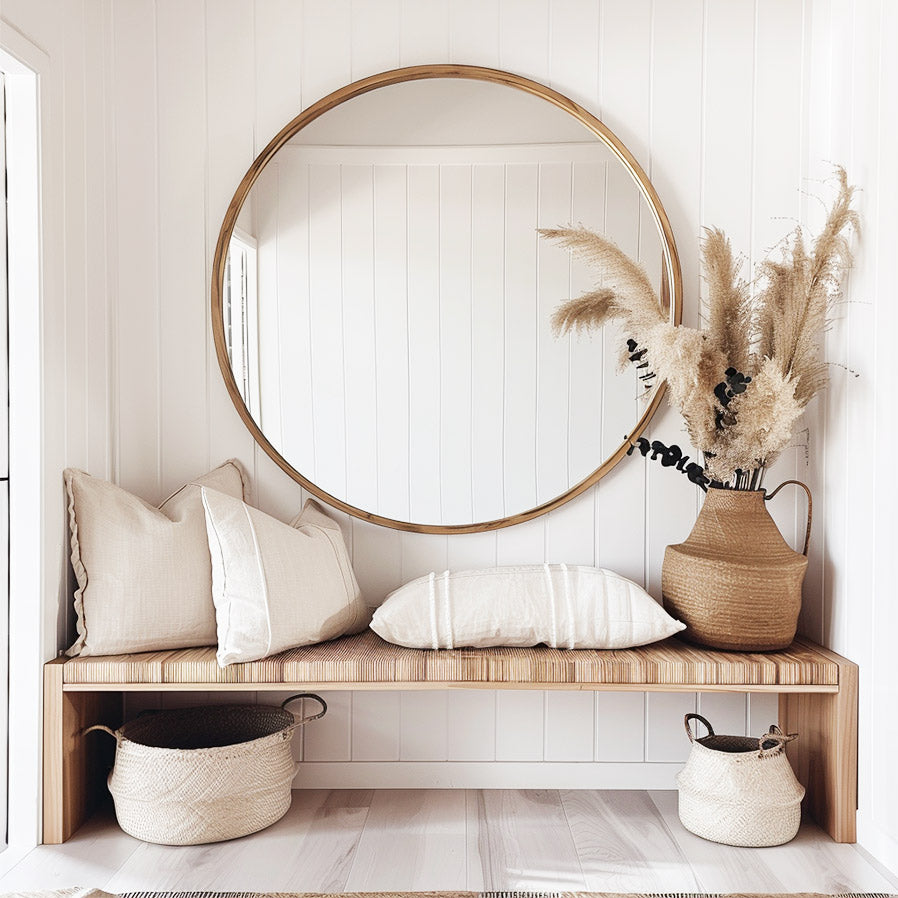
- Entry: A burgundy feature wall with a gold-framed round mirror makes a statement of confidence from the moment someone walks through your door.
Designer Tips
- Order the $4.99 sample (48cm x 40cm). Burgundy on screen looks lighter and more red than it reads in person. The sample shows you the true depth — hold it against your wall under lamplight, not daylight, since burgundy rooms are typically experienced in the evening.
- Never pair with cool grey. Grey drains the warmth out of burgundy and the result feels corporate. Use warm whites, cream, and stone instead.
- Light the room from below, not above. Table lamps, floor lamps, and sconces create the kind of warm, directional light that makes burgundy glow. Overhead downlights flatten the colour and make it look brown.
Browse our dark wallpaper collection, explore wall art for burgundy-toned prints, or read more colour guides on On the Wall.