Kitchen Wall Art — How to Style Art in the Hardest Room to Decorate | Olive et Oriel
Kitchen Wall Art — How to Style Art in the Hardest Room to Decorate
The kitchen is the hardest room in the house to decorate with art. Humidity from cooking, limited wall space broken up by cabinets and appliances, proximity to splashbacks and grease — all of it makes hanging art feel risky. Most people give up and leave their kitchen walls bare.
That's a missed opportunity. The kitchen is where Australians spend enormous amounts of time — morning coffee, weeknight dinners, weekend baking sessions. The right art makes it a room you genuinely love being in.
Every piece is produced at our two manufacturing facilities on of NSW — crafting Australian wall art since 2015. We deliver to over 40 countries worldwide, with custom sizing available on all prints. Over a decade of experience, every order ships within 24 hours with our satisfaction guarantee.
Why Kitchens Are Tricky — and How to Work with It
Three things make kitchens challenging for art: humidity and steam from cooking; grease and airborne particles from the hob; and fragmented wall space broken up by cabinetry, rangehoods, windows, and appliances.
The solutions are straightforward: choose the right location, use the right print medium, and frame behind glass. With those three boxes ticked, kitchen art is completely achievable.
What Works: Art Styles for the Kitchen
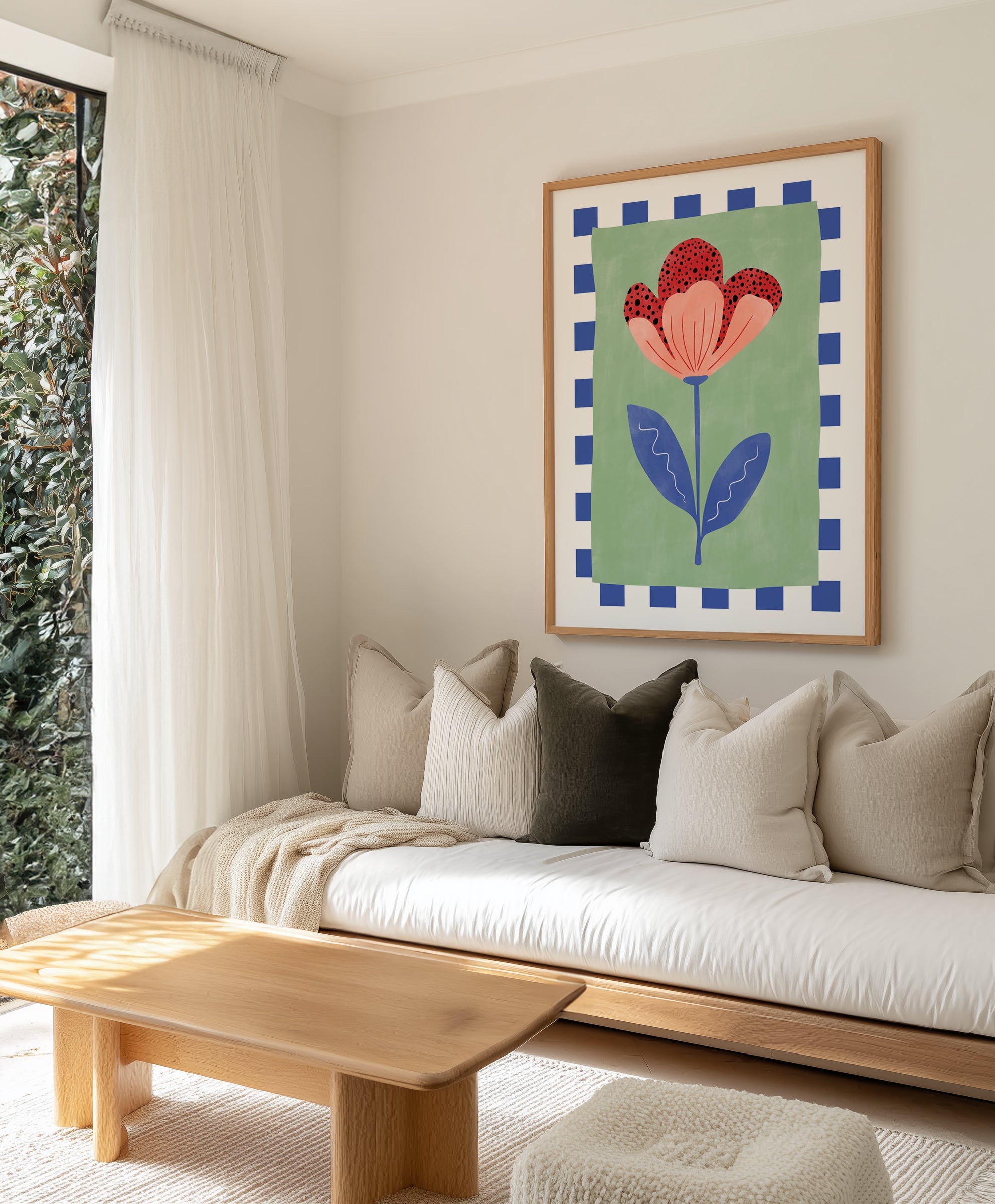
Botanical and floral prints are the classic kitchen art choice. They bring nature inside, connect the kitchen to the garden and table, and come in virtually endless palettes. Our floral prints are particularly popular for contemporary Australian kitchens.
Food-inspired art — illustrations of fruits, vegetables, herbs, and botanicals — feels natural and appropriate in a kitchen context. Think loose watercolour botanicals, clean illustrated produce, or moody still-life art.
Coastal and landscape photography brings light and space into kitchens that lack natural outlook. An expansive beach photograph makes a small kitchen feel connected to something larger. Browse our coastal art collection.
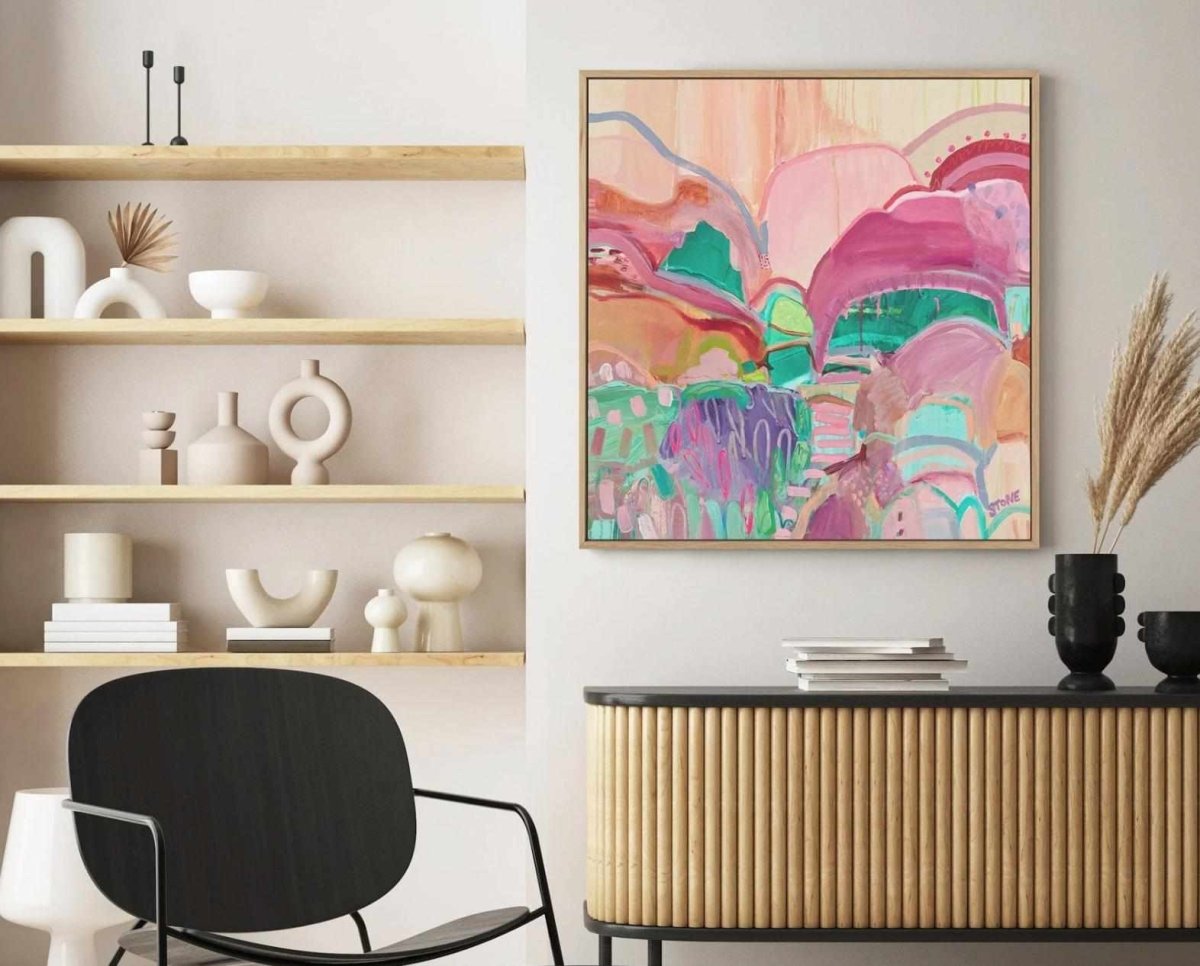
Abstract prints in warm tones — ochres, terracottas, warm creams — complement kitchen materials like timber, stone, and brass hardware without competing. Our abstract art collection has many kitchen-appropriate options.
What to Avoid Near Cooking Zones
- Large canvas directly above the hob — Steam and grease from cooking will damage canvas. Use a framed print behind glass in this zone.
- Very pale prints near cooking zones — Light cream or white prints near a hob will show discolouration over time.
- Unframed art prints — Exposed paper is vulnerable to kitchen humidity. Always frame kitchen art behind glass.
- Very large format art in small kitchens — Medium formats (40×48 cm, 50×70cm) tend to be the sweet spot.
How to Hang Art Above a Splashback
- Hang above the tiles, not on them — Art should sit on the painted wall above the splashback tiles.
- Allow 10–15cm clearance — A gap between the top of the tile line and the bottom of your frame looks intentional and keeps art out of the steam zone.
- Standard eye level still applies — The centre of your art at approximately 145–150cm from the floor.
- Use proper hooks — Kitchen walls can be tiled or rendered; use appropriate fixings for your wall type.
- Frame behind glass — Glass creates a barrier between your art and kitchen humidity and makes the print easy to wipe down.
Our framed art prints come ready-to-hang with glass protection — ideal for kitchen placement. See our size guide for help choosing dimensions.
OEO's Archival Printing for Kitchen Durability
Olive et Oriel uses archival giclée printing — a process that uses pigment-based inks (rather than dye-based) on premium cotton-rag paper. Pigment inks are significantly more resistant to moisture, UV fading, and degradation over time. Our prints are tested to archival standards and are substantially more durable than mass-produced art prints from cheap online retailers.
For kitchens, we still recommend framing behind glass, keeping art away from direct steam sources, and dusting or gently wiping the glass surface periodically.
Sizing for Kitchen Walls
- Small kitchen (under 8sqm): 30×40cm to 40×48 cm. One focused piece or a tight pair.
- Medium kitchen: 40×48 cm to 50×70cm. Single statement piece or set of two.
- Large kitchen / kitchen-dining: 60×90cm or wider. Can handle a gallery wall arrangement on the dining side.
- Above splashback: Width should be roughly half the splashback width.
Our $4.99 print samples let you test colours and scale before committing to full size. Our size guide walks you through measuring for any space.
Shop Kitchen Wall Art
Our most popular prints for kitchens — botanicals, florals, and nature art:


Frequently Asked Questions
What is the best wall art for a kitchen?
Botanical prints, floral art, coastal photography, and warm-toned abstracts. Choose archival printing and frame behind glass for kitchen durability.
Can I hang canvas art in a kitchen?
Yes, but keep canvas away from direct cooking zones. Our framed prints with glass are more practical for kitchen environments.
How do I hang art above a kitchen splashback?
Hang above the tile line with 10–15cm clearance. Centre at 145–150cm from floor. Use framed prints with glass for easy cleaning and moisture protection.
What size art works best in a kitchen?
Medium prints (40×50cm to 50×70cm) work well in most kitchens. Use our size guide. Order a $4.99 sample to test scale first.
Is Olive et Oriel's printing moisture-resistant?
Our giclée printing uses archival pigment inks which are significantly more moisture-resistant than standard inkjet printing. Frame behind glass for maximum kitchen protection.