Australia's period homes represent the most architecturally rich residential stock on the continent. A Queenslander with its wraparound verandah and high-set timber construction, a Federation cottage with its red brick, terracotta roof tiles and leadlight windows, or an Art Deco apartment with its curved corners and geometric detailing — each has a character so specific that generic modern wallpaper rarely serves it well. Getting the wallpaper right in a period home is not about historical recreation. It is about understanding the bones of the building and selecting designs that amplify what is already there rather than fighting against it.
The challenge most homeowners face is the fear of being too literal. Period-appropriate does not mean museum-accurate. A Federation cottage does not require Morris-style repeating florals throughout every room; it simply benefits from designs that share Morris's vocabulary — organic, hand-drawn, layered, and full of botanical observation. An Art Deco apartment does not demand gold sunburst wallpaper in every hallway; what it needs is the geometric confidence and rich colour that defined the era, expressed in a contemporary print that can live alongside modern furniture without looking like a costume.
With over a decade of manufacturing experience and more than 2,000 designs produced at our facility on the Central Coast of New South Wales, we have supplied heritage homes across Australia, the United Kingdom, and the United States. The guidance below draws directly from that experience.


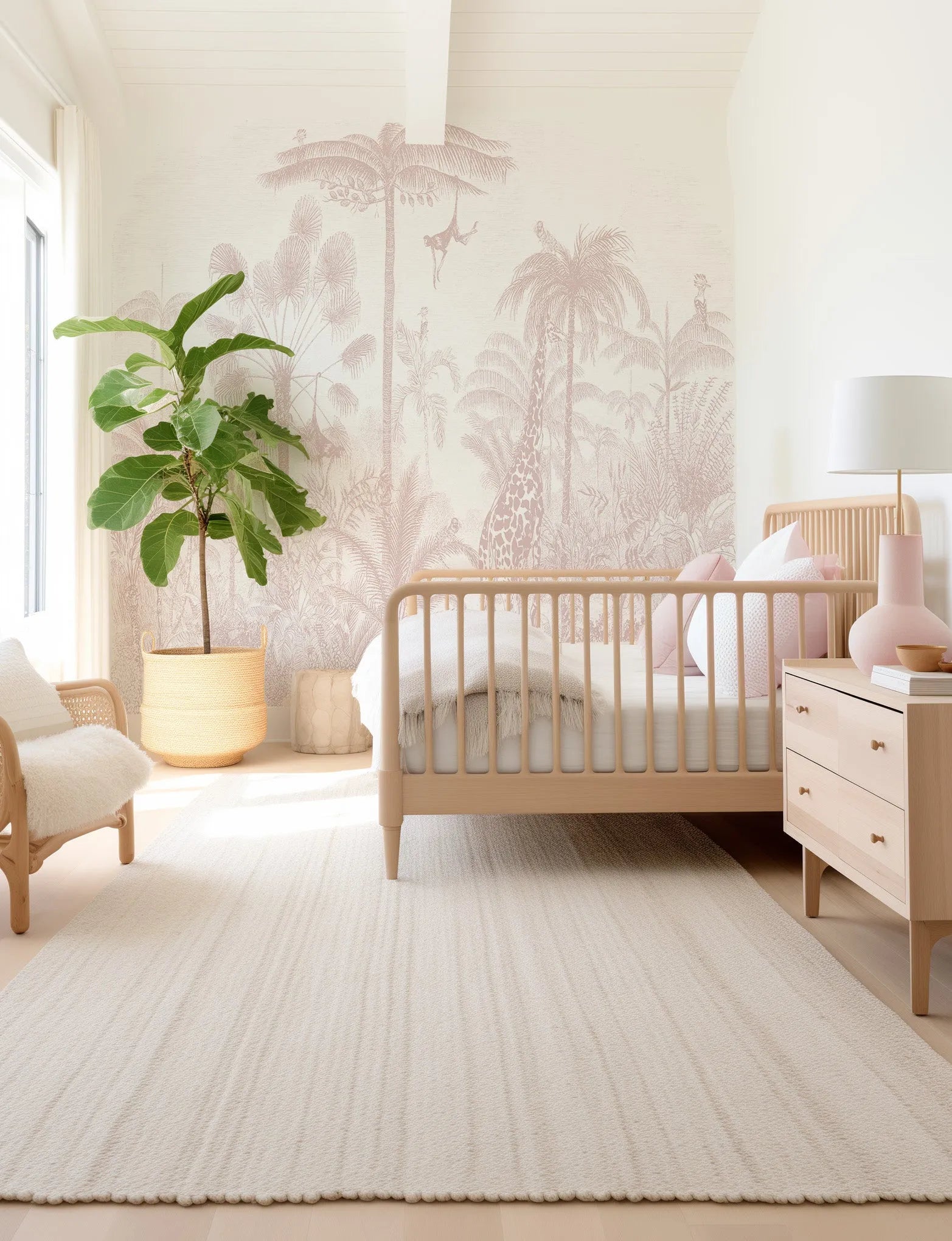
Tropical Dreamscape Painted Mural Wallpaper · Heritage Arbor Hand Painted Tree Mural Wallpaper · Noir Panorama Hand Painted Landscape Mural Wallpaper
Understanding Each Period
The three most common period styles in Australian residential architecture each have distinct wallpaper personalities.
Queenslander (c.1880–1940). Elevated on timber stumps, with VJ (vertical joint) board walls throughout, the Queenslander is defined by lightness and airflow. Heavy, dark wallpaper fights its nature. The most successful approach is tonal — soft sage greens, dusty blues, and warm creams in botanical or geometric repeating patterns. The VJ boards often remain painted, with wallpaper used selectively in formal rooms such as the dining room or master bedroom. A horizontal dado treatment, with wallpaper above and painted VJ below, is historically accurate and visually elegant.
Federation (c.1890–1915). The Federation style is richer and more ornamented than the Queenslander. Deep forest greens, burgundy, terracotta, and gold were the palette of the era, inspired by the Arts and Crafts movement in England. Geometric tile patterns, stylised florals, and repeating motifs based on native Australian flora all sit well in Federation interiors. The entrance hall and formal lounge are the ideal rooms for the strongest wallpaper choices; bedrooms can carry softer, more restrained versions of the same palette.
Art Deco (c.1920–1940). Geometric precision and bold colour are the hallmarks of Art Deco. Fans, chevrons, stepped arches, and stylised botanical forms work beautifully. The palette — black and gold, jade and cream, cobalt and silver — is graphic and confident. Art Deco apartments benefit most from wallpaper used as a single feature wall in a key room, rather than as a full-room treatment, which can feel overwhelming in smaller apartment spaces.
"The best wallpaper for a period home is the one that makes the architecture feel inevitable — as though the house always looked this way."


Horizon Mist Wallpaper Mural · Colonial Canopy Wallpaper
Materials
- Timber: Light oak and aged ash complement the warm tones of period homes across all three eras. Avoid cool-toned modern timbers which clash with the organic warmth of heritage architecture.
- Stone: Encaustic tiles, honed marble, and terrazzo — all historically present in Australian period homes — pair beautifully with patterned wallpaper. Let the floor and wall patterns work together rather than compete.
- Metals: Aged brass, oil-rubbed bronze, and blackened iron are all historically appropriate. Polished chrome is the one metal to avoid — it is a post-war material that sits awkwardly in pre-war spaces.
- Fabrics: Woven linen, velvet, and cotton in deep, saturated tones. Period rooms benefit from heavy drapes that pool slightly on the floor — a detail that photographs beautifully and reads as considered rather than casual.
Room by Room
- Entrance hall: The first impression of any period home. A bold botanical or geometric wallpaper here sets the tone for everything that follows. This is the room to be brave.
- Formal lounge: A rich, deeply tonal wallpaper on the chimney breast wall only, with the remaining walls painted to match one of the wallpaper's secondary colours.
- Dining room: Deep greens, burgundy, and botanical patterns create the intimacy that period dining rooms were designed for. Candle and pendant lighting at night transforms the space.
- Bedroom: A softer interpretation of the main palette — the same design family but lower in saturation. The headboard wall only, to avoid the room feeling heavy.
- Bathroom: Period bathrooms suit smaller-scale repeating patterns. Geometric tile-inspired prints above a dado rail are historically accurate and exceptionally durable with the right substrate.
Designer Tips
- Order the $4.99 sample (48cm x 40cm / 19in x 16in) before committing. The interplay between the wallpaper and your period home's specific light — often filtered through leadlight, deep eaves, or a verandah — cannot be predicted from a screen.
- Period homes often have walls that are not perfectly plumb or level. This is normal. Our 48cm panels include a 5cm overlap allowance specifically to accommodate older walls that have moved over time.
- With 4 business days production time at our Central Coast facility, you can plan your renovation timeline with precision. We ship to over 40 countries with all import duties covered on wallpaper orders.
- The VJ board walls found in Queenslanders require preparation before wallpapering. Prime with three coats of Viponds Self-Adhesive Prep Coat before applying peel and stick, or use a standard wallpaper primer for paste-the-wall options. See our wall preparation guide for the full process.
Browse our full wallpaper collection, explore designs suited to classic Australian interiors, or read our guide to wallpaper installation for period-home-specific advice.