

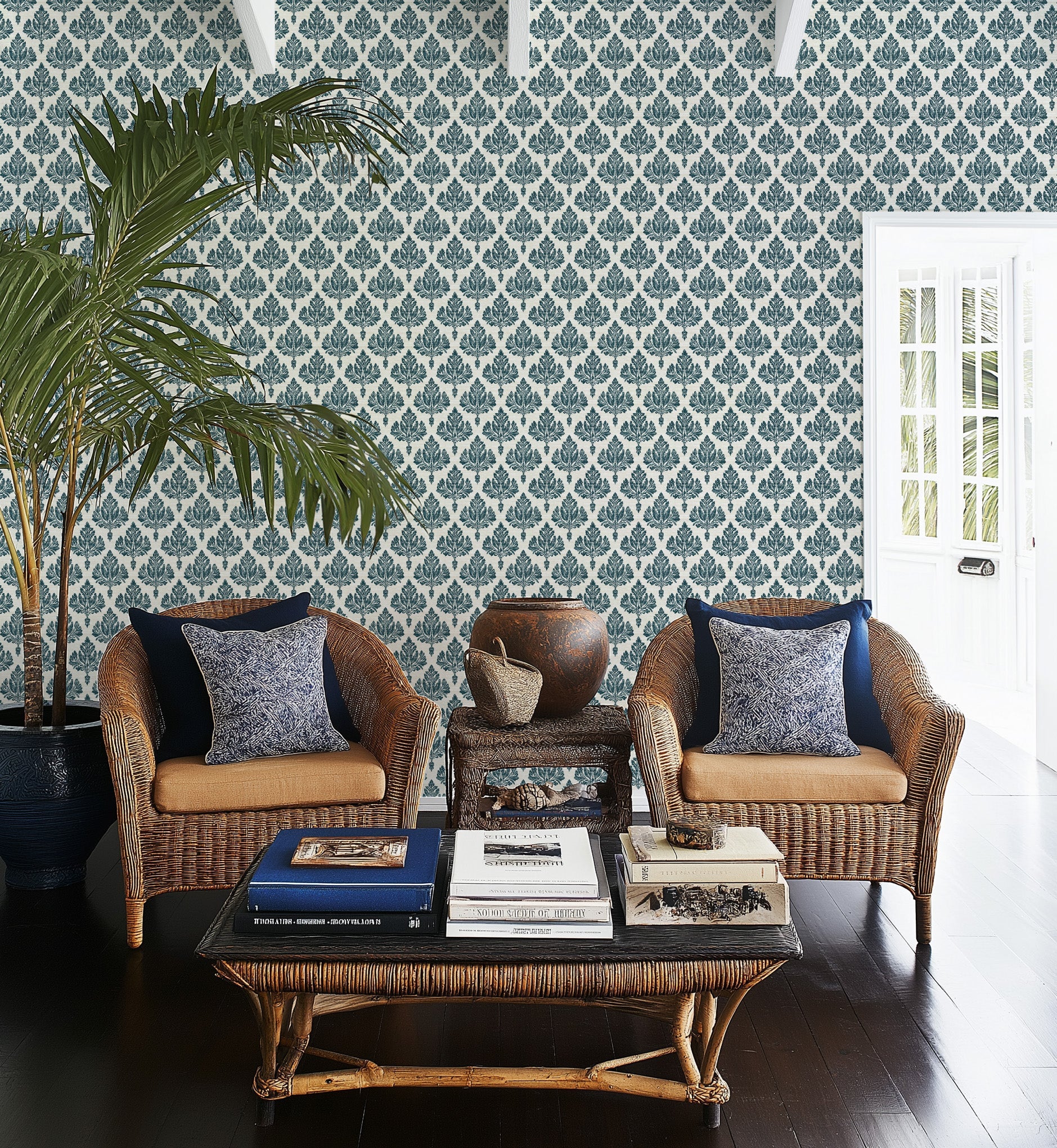
Colonial style interior design is the foundational American aesthetic, the design language present in American homes since the founding era and continuing to define the aspirational residential interior across the Northeast, the South, and the Mid-Atlantic. Colonial revival decorating is among the most consistently searched interior design categories in the United States, driven by homeowners in period homes from the 18th and early 19th centuries and by the millions more who want their newer homes to carry the weight and warmth of that tradition. Wallpaper is the most important single tool for achieving the colonial aesthetic and botanical, toile, and plantation-inspired patterns are the categories that define it most powerfully.
The American colonial interior is not a single aesthetic but a family of related aesthetics united by shared values: quality of material, confidence of pattern, restraint of ornament, and the sense that a room has been furnished by someone who understood both the design tradition and their own life within it. The New England colonial aesthetic is distinct from the Southern plantation colonial, which is in turn distinct from the Mid-Atlantic Federal style. Each is a coherent design position and each uses wallpaper as its primary pattern language. At Olive et Oriel, our colonial wallpaper collection spans all these regional traditions. Botanical vine and heritage floral for New England colonial, palm and plantation for Southern and coastal colonial, and navy and cream compositions for the Federal direction. All are custom manufactured to your exact wall dimensions and shipped to all US states with import duties included. Toile and Chinoiserie wallpaper is at the heart of colonial interior styling — delicate narrative prints custom sized for any wall.
The revival of interest in colonial interior design in the United States is not simply a nostalgia cycle. It is a response to the specific qualities that colonial interiors possess and that contemporary minimalist and neutral aesthetics do not: pattern richness, material warmth, and the sense of accumulated design intention that makes a room feel as though it has been designed by someone with a genuine point of view rather than assembled from a catalogue of safe choices. The grandmillennial aesthetic, the fastest growing traditional design direction in the US as of 2025, is the most visible expression of this revival. American homeowners across every region and every home type are returning to the visual traditions of their design history, and colonial wallpaper is at the centre of that return.


Court Colonial Blue Wallpaper . Savannah Colonial Blue Wallpaper . Colonial Floral Wallpaper
The New England colonial colour palette is navy, cream, forest green, and warm white. High contrast, graphic, and historically precise, associated with historic properties across Massachusetts, Connecticut, and Rhode Island. The Southern and coastal colonial palette is warm ivory, indigo blue, terracotta, and palm green. Lighter and warmer than the New England palette and more influenced by the tropical botanical traditions that shaped Southern colonial decorating. Our Savannah Blue and indigo plantation patterns reference this tradition directly. The Mid-Atlantic Federal palette uses rich primary colours including Prussian blue, Federal red, and warm gold against white woodwork, the most formally aspirational colonial direction associated with historic properties from Virginia to Massachusetts.


Colonial Wreath & Vine Wallpaper . Colonial Heritage Vine Wallpaper
Colonial Pattern Types
Botanical vine and heritage floral is the foundational colonial wallpaper pattern: branching vine compositions, flowering heritage botanicals, and garden scenes in the fine line illustration tradition of 18th century American wallpaper. Our Heritage Vine Wallpaper and Wreath Vine Wallpaper are the most historically grounded patterns in the collection. Plantation and palm is the Southern colonial pattern tradition with exotic palms and tropical botanicals in the indigo, navy, and warm cream palette of the Southern colonial interior. This direction is the fastest growing within the colonial aesthetic in the US market. Court colonial blue and white is the navy and cream direction most associated with the Hamptons, Marthas Vineyard, and New England coastal colonial interiors. Our Court Colonial Blue is appropriate for the preppy grandmillennial room, the coastal colonial bedroom, and the Federal dining room equally.
Room by Room
- Dining room: All four walls in botanical vine or heritage floral toile. The historically correct application for the American colonial dining room from the 18th century to the present. Federal moulding, dark timber furniture, white trim, and a statement chandelier complete the room.
- Living room: Feature wall in large scale plantation botanical or court colonial blue, remaining walls in coordinating paint. The colonial living room typically uses the feature wall approach to allow the pattern presence without overwhelming the room functional flexibility.
- Bedroom: All four walls in heritage floral or botanical vine toile, with bedding and curtains in the wallpaper colour palette. For a more contemporary approach, the headboard wall only in plantation palm or court colonial blue, with the other three walls in coordinating paint.
- Entryway: Full height botanical or vine wallpaper on all walls. The entrance hall is where the colonial home design language is most boldly stated. In a period home with original moulding and hardwood floors, the botanical wallpaper entrance hall is the most correct and most beautiful restoration choice available.
- Home office or library: Navy plantation botanical or deep indigo colonial pattern on all four walls. The colonial library aesthetic the grandmillennial movement has brought back to mainstream aspiration. Timber bookshelves, leather or linen seating, and brass lighting complete the room.
The colonial interior is the American home most direct connection to its design history. Wallpaper is the element that makes that connection visible, not as decoration, but as the room primary design argument.
Materials
- Paste the Wall Linen: The most sympathetic substrate for colonial botanical patterns. Linen weave adds tactile warmth connecting the wall surface to the natural material context of the traditional American interior.
- Paste the Wall Smooth: For crisp colonial blue and white compositions and high detail botanical toile patterns where line sharpness is central to the design effect.
- Peel and Stick: Available for all colonial patterns. Appropriate for rental properties and the feature wall application where full room commitment is not the direction.
Designer Tips
- In period homes including colonial, Federal, and Greek Revival, select patterns with historical precedent for the specific room type and period. A Federal dining room should use patterns consistent with Federal period American wallpaper. Historical appropriateness strengthens the room design authority and is the quality that distinguishes a period restoration from a period-inspired room.
- Order the $4.99 sample and assess it against the room architectural elements including moulding scale, window proportions, and ceiling height. The sample assessment against the actual room is the only reliable scale check before ordering the full installation quantity.
- Custom manufactured to your exact wall dimensions. Ships to all US states with import duties included. Production 4 business days. Browse the full colonial wallpaper collection. Read companion guides: toile wallpaper, chinoiserie wallpaper, and grandmillennial style.
Ordering custom wallpaper for a traditional room requires careful attention to three measurements: the wall height at three points (left corner, centre, right corner), the wall width at top and bottom, and the ceiling cornice or moulding depth if the wallpaper will run beneath it. Provide the largest measurement for each dimension. Our production team manufactures each set of panels to the exact dimensions provided, with the composition scaled to fill the wall correctly from edge to edge. There are no standard roll width calculations to perform, no pattern repeat waste to account for, and no partial pattern repeats at corners or edges. Every panel is complete. Production takes four business days from order confirmation. Shipping to all US states is tracked and insured. All import duties on wallpaper orders are included in the purchase price, so there are no additional charges on delivery. If you are ordering for a period home restoration or a designer project with a specific installation date, order at least two weeks in advance to allow for shipping transit time and a 48 hour acclimatisation period for the panels in the installation room before hanging begins.
Wall surface preparation is the foundation of any successful wallpaper installation and the step most commonly given insufficient attention. In older American homes built before 1950, walls are typically plaster rather than drywall. Plaster walls are denser and more moisture resistant than drywall, which means they accept wallpaper paste more reliably and produce more consistent adhesion across the full wall surface. However, older plaster frequently has surface cracks, areas of delamination, and multiple layers of paint that have built up over decades to create an uneven surface. Surface cracks should be filled with a flexible filler compound rather than rigid plaster, which will crack again as the wall moves seasonally. Areas of delamination should be rebonded with diluted adhesive. Previously painted surfaces should receive a coat of wallpaper primer to create consistent porosity across the full wall surface. This preparation adds time but is the difference between a wallpaper installation that performs correctly for decades and one that begins to show problems within months of completion. For the most historically significant rooms, this preparation is the investment that protects the pattern investment above it.
Modern non-woven paste-the-wall wallpaper is more forgiving to install than the paper-backed wallpaper that filled American homes in the mid-20th century. It does not stretch or shrink when wet, does not need to be booked and waited for before hanging, and can be repositioned on the pasted wall surface without tearing. A careful first-time installer, working with a laser level and following the installation guide provided with each order, can achieve professional results in a straightforward rectangular room. For rooms with multiple windows, complex moulding profiles, or patterns with large repeats requiring careful matching across panels, professional installation remains the more reliable choice. Contact us directly if you have questions about the installation requirements for a specific pattern or room type before placing your order. We have supplied colonial, toile, and chinoiserie wallpaper to period home restorations and designer projects across the United States and can advise on both pattern selection and installation requirements for your specific project.


