

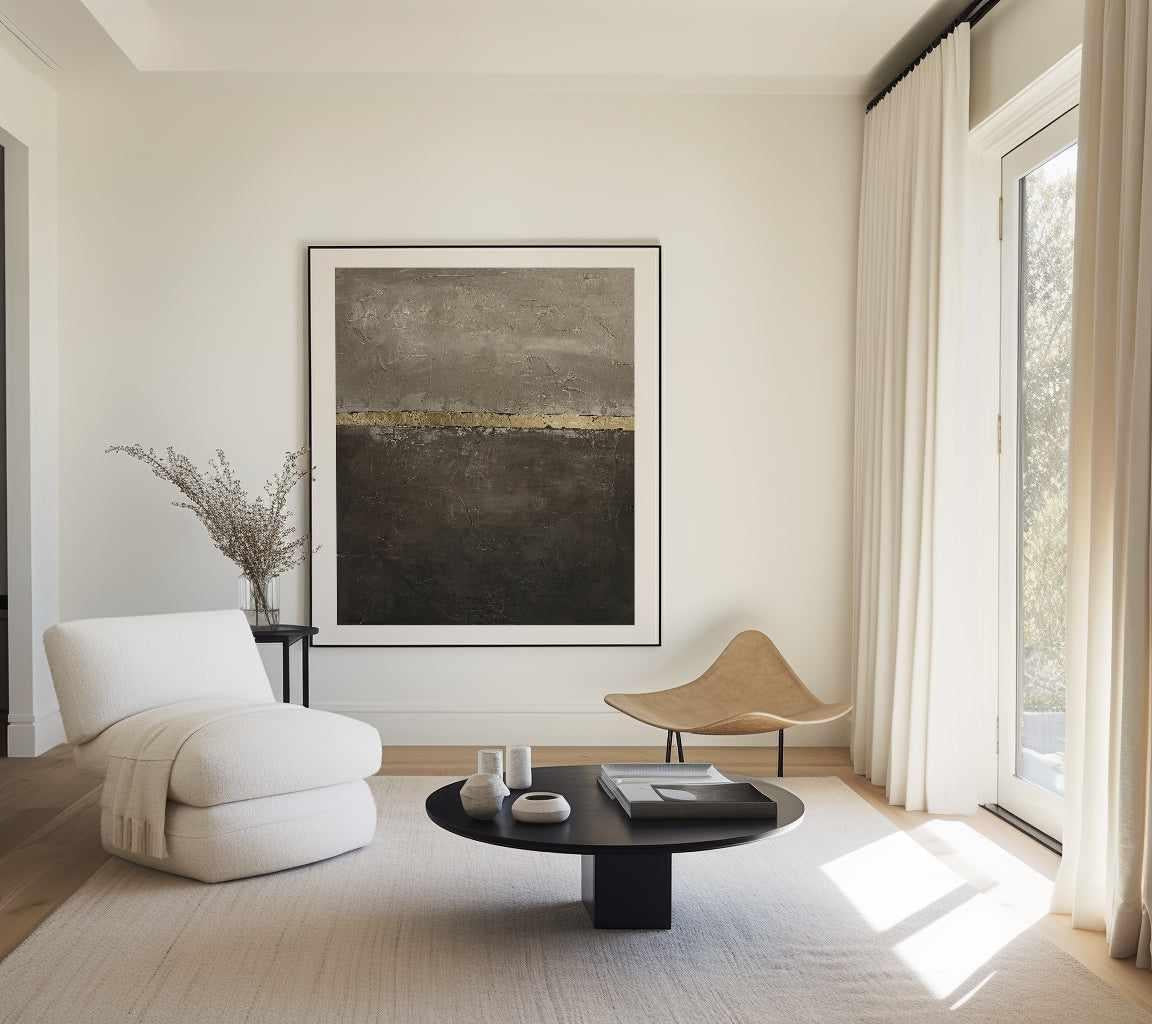
Wabi-sabi is the Japanese philosophy of finding depth in imperfection and transience. In interiors, it translates to rooms that feel honest rather than perfect — where a hand-thrown ceramic sits on a timber shelf that shows its grain, where a linen curtain hangs with natural creases, where the wallpaper has a texture you can feel when you run your hand across it. Nothing is polished. Nothing is symmetrical. Nothing pretends to be anything other than what it is.
This is not an excuse for carelessness. Wabi-sabi is perhaps the most difficult aesthetic to execute well because it requires intentional imperfection — which is a contradiction that only resolves when you understand the principle beneath it. The beauty is not in the flaw itself. The beauty is in the evidence of time, use, and human hands. A crack in a ceramic bowl is only wabi-sabi if the bowl was worth making in the first place.


The Five Principles in Practice
Kanso — Simplicity
Strip the room to its essential elements. A bed, a side table, a light, a single piece of art. In wabi-sabi, each object must justify its presence not through function alone but through the quality of attention it received in its making. A mass-produced lamp fills the same function as a hand-turned ceramic one, but only the handmade one carries kanso — because someone simplified the form until nothing unnecessary remained.
Fukinsei — Asymmetry
Symmetry is the language of perfection. Wabi-sabi speaks in asymmetry — a single vase placed off-centre on a shelf, a piece of art hung slightly lower than convention suggests, three objects in a group rather than two or four. Asymmetry creates visual tension that the eye finds more interesting than balance. It suggests that the room was arranged by a person, not a template.
Shibui — Understated Beauty
The materials should speak quietly. Natural timber with visible grain rather than painted timber. Raw linen rather than pressed cotton. Matte ceramics rather than glazed porcelain. Stone with natural veining rather than engineered quartz. Every surface in a wabi-sabi room should reward close looking — the kind of detail you notice the tenth time you sit in the room, not the first.
Art That Embodies Wabi-Sabi


The art in a wabi-sabi room should feel found rather than chosen. Our neutral contemporary art collection includes pieces that embody this principle — organic forms, natural textures, and earth-toned palettes that look like they emerged from the material rather than being imposed on it. Rituals Earth by Design Fabrikken captures the textured surface of natural earth. Sea Shells by Julita Elbe renders natural forms with the quiet attention that wabi-sabi demands.
Straw No 2 celebrates raw fibre texture — the kind of subject that only becomes art when someone pays enough attention to see it. Calarru brings abstract organic forms in muted tones that feel geological rather than designed.
Wallpaper in Wabi-Sabi
Wabi-sabi wallpaper is about texture, not pattern. Our Paste the Wall Linen substrate is the closest match to this philosophy — the woven linen surface catches light differently across the day, creating subtle shadow and warmth that flat surfaces cannot replicate. Print a soft abstract wash or a tonal texture on the linen substrate and you get a wall that has depth without decoration — which is exactly what wabi-sabi asks for.
Grasscloth and sisal wallcoverings are the other natural fit. The handcrafted irregularity of natural fibre weave — where no two sections are identical — is wabi-sabi in its purest material form. Each roll has slight variations in colour and texture because the fibres are natural and the weaving is done by hand. These are not flaws. They are evidence of process.
Materials
- Timber: Reclaimed, weathered, or raw. The timber should show its history — knots, grain variation, saw marks, nail holes. New timber with a perfect finish contradicts the aesthetic. If you must use new timber, leave it unfinished or apply a single coat of clear wax that lets the grain darken naturally over time.
- Ceramics: Handmade, unglazed or matte-glazed, in earth tones. The throwing marks, the slight wobble of a hand-turned rim, the variation in glaze thickness — these are the qualities that separate a wabi-sabi ceramic from a manufactured one. One piece per surface. Never a set.
- Stone: Natural, unhoned, with visible imperfection. River stones, rough-cut limestone, tumbled marble. The stone should look like it was lifted from a riverbed or quarried from a hillside, not polished in a factory.
- Fabrics: Raw linen, undyed cotton, handwoven wool. Fabrics that wrinkle, soften, and change colour with washing. The Japanese concept of shibui — understated, unassuming texture — is best expressed through textiles that age visibly.
- Metals: Oxidised copper, blackened steel, aged brass. Metals that patina and change over time rather than maintaining a constant shine. The transformation IS the decoration.
Room by Room
- Living room: A linen-textured wallpaper on one wall. A low timber coffee table with visible grain. A single large ceramic on the floor beside it. A linen sofa in undyed cream. One piece of neutral art. The room should feel like breathing space — not empty, but open.
- Bedroom: Grasscloth or linen wallpaper behind the bed. Linen bedding in oat or cream — never bright white, which reads as commercial. A single bedside table in raw timber. A handmade ceramic lamp. The room should feel like the inside of a cocoon — warm, soft, and undemanding.
- Bathroom: The most natural wabi-sabi room in the house. Stone basin, timber vanity, matte-glazed tiles with slight variation. A single branch in a ceramic vase. No chrome — blackened taps and aged brass accessories only.
- Entry: One hook. One ceramic bowl for keys. One piece of art. The entry to a wabi-sabi home should set the expectation: here, less is more, and every less is chosen with care.
Honest Advice
- Wabi-sabi is not minimalism in earth tones. Minimalism removes until nothing is left. Wabi-sabi keeps what is meaningful, even if it is imperfect. The distinction is intention — everything in the room should be there because it means something to you, not because it fits a formula.
- Spend on materials, not objects. A handmade ceramic bowl costs more than a factory one. A reclaimed timber shelf costs more than an IKEA one. But in wabi-sabi, the material quality IS the aesthetic. You cannot achieve this look with substitutes.
- Order the $4.99 sample (48cm x 40cm). Our linen substrate wallpaper has a tactile quality that photographs cannot capture. The sample lets you feel the weave — and in wabi-sabi, touch matters as much as sight.
- Accept ageing. The linen will crease. The timber will darken. The brass will patina. The ceramic glaze will craze over time. In wabi-sabi, these are not problems to solve — they are the room becoming more itself.
Browse our neutral contemporary art, explore grasscloth wallcoverings, or read our grasscloth guide for natural fibre options. More styling on On the Wall.


