

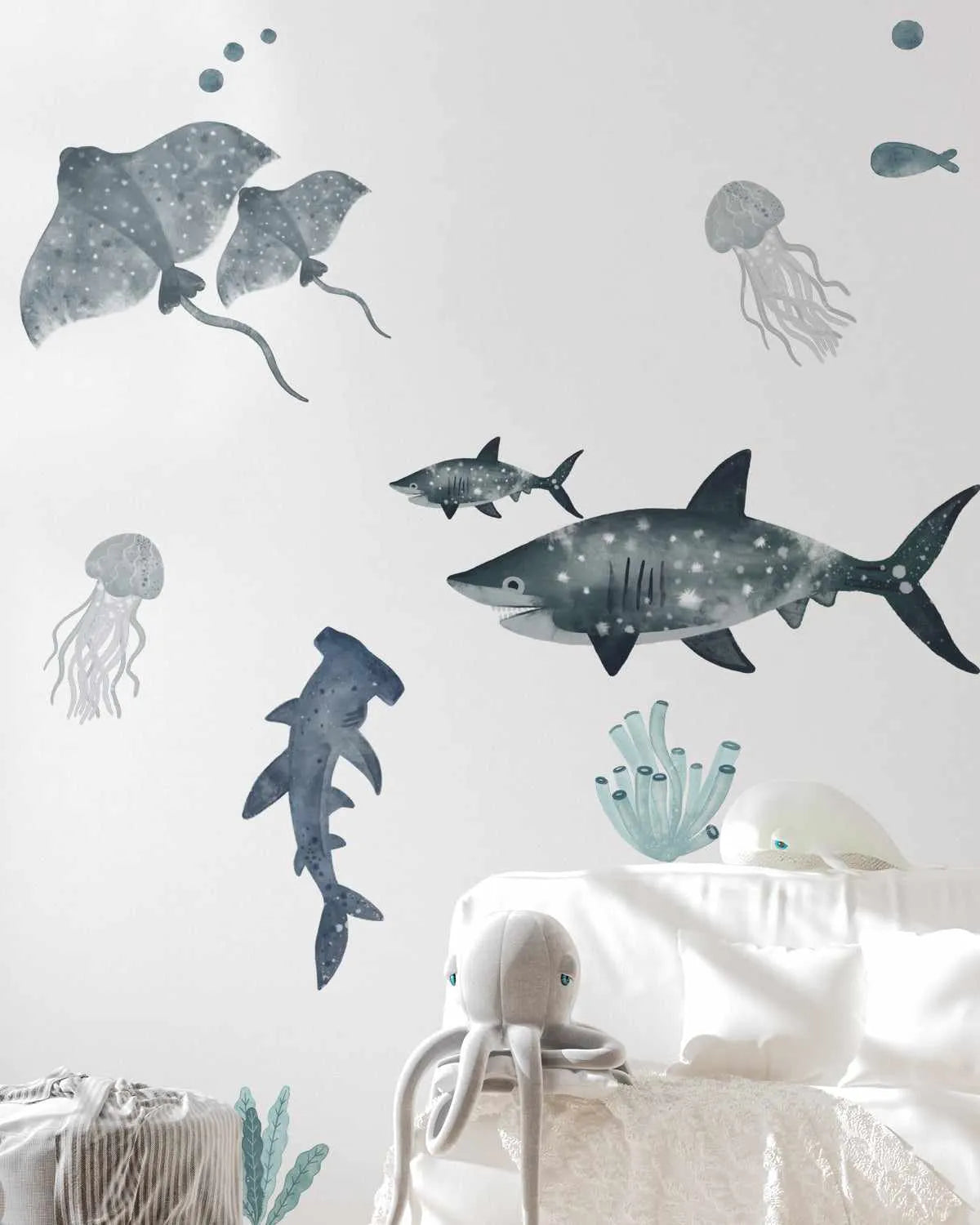
Wall stickers are the fastest way to transform a room in Australia: peel, position, press, done. No paste, no tradesperson, no damage when they come down. But the category is crowded with cheap vinyl that bubbles, tears paint and fades in a year, and the difference between a sticker that survives a decade and one that curls off by Christmas comes down to the material it is printed on. This guide covers everything: what wall stickers actually are, fabric versus vinyl, how to apply them perfectly, whether they are safe for rentals and nurseries, and how to style them so the room looks designed rather than decorated.
A quick note on words. Wall stickers, wall decals and wall transfers are the same thing: pre-cut, self-adhesive designs that stick straight onto a painted wall. In Australia the terms are used interchangeably, and everything below applies whichever word you shop with. All of ours are printed to order in West Gosford on the NSW Central Coast on premium self-adhesive fabric, which matters for reasons this guide will make very clear.


Rays, Jellyfish & Shark Decal Set · Octopus & Ocean Friends Decal Set · Peach Rainbow Peel & Stick Decal
What Are Wall Stickers, Exactly?
A wall sticker is a printed design, cut to its outline, with a repositionable adhesive backing. Unlike wallpaper, which covers the whole wall in a continuous sheet, stickers are individual elements: stars, animals, botanical stems, dots, rainbows, height charts, whole safari scenes. You place each piece exactly where you want it, which makes stickers the most flexible wall treatment there is. A five-year-old's ceiling can get a constellation; a hallway can get a trail of eucalyptus leaves climbing a corner; a rental bedroom can get a full feature wall that packs into a tube on moving day.
Because each element is separate, stickers scale to any budget and any commitment level. One large statement decal above a cot is a ten-minute project. A full scattered-pattern wall, with spacing you control, gives the effect of designer wallpaper at a fraction of the cost and none of the permanence. That flexibility is why stickers dominate kids rooms, but they have quietly moved into living rooms, laundries and home offices too, and our modern home decals collection exists precisely because adults kept buying the kids ranges for themselves.
Fabric vs Vinyl Wall Stickers: The Only Comparison That Matters
Nearly every problem people report with wall stickers, bubbling, wrinkling, peeling paint, edges that grab dust, comes from cheap PVC vinyl. Vinyl stickers are made from thin plastic film with an aggressive one-shot adhesive. They are cheap to produce, which is why they fill marketplaces, but the film creases permanently if it folds on itself during application, the adhesive can strip paint when removed, and PVC off-gasses in a way you do not want in a nursery.
Fabric wall stickers are a different product. Printed on a woven polyester textile with a repositionable, low-tack adhesive, they behave less like a sticker and more like a soft, forgiving textile panel. The practical differences:
- Repositionable. Fabric stickers peel back off and re-stick dozens of times without losing grip. Crooked placement is a two-second fix, and a room can be rearranged years later.
- No bubbles. The woven texture lets air escape, so application is almost impossible to get wrong. Vinyl traps air and needs a squeegee and a prayer.
- Paint-safe. Low-tack adhesive releases cleanly from painted plasterboard, which is what makes fabric stickers genuinely rental-safe and the reason we recommend them for bond-protected walls.
- No PVC. Our fabric stickers are PVC-free and printed with water-based inks, certified safe for kids rooms and nurseries.
- Matte designer finish. Fabric reads like art on the wall. Vinyl shines under downlights and always looks like plastic.
Every sticker in our fabric wall decals and stickers collection is the woven fabric type. It costs more than marketplace vinyl and it is worth every dollar of the difference.
Are Wall Stickers Removable? Rentals, Bond and Repositioning
Quality fabric wall stickers are fully removable. Peel a corner and pull back slowly, flat against the wall rather than straight out, and they release without lifting paint or leaving residue. That makes them one of the very few wall treatments that are truly safe for rental properties: no landlord permission required, no bond anxiety, no patching on the way out. They are equally suited to strata apartments, university accommodation and anywhere else the walls are not yours to damage.
Two honest caveats. First, freshly painted walls need four weeks to cure before any sticker goes up, or the adhesive can bond with uncured paint. Second, textured render, raw brick and dusty or flaking surfaces will not hold any sticker well; stickers want smooth, clean, painted plasterboard. If your walls are textured, a removable wallpaper in the paste-the-wall style is the better route, and our removable wallpaper buying guide covers that decision in detail.
How to Apply Wall Stickers: The Five-Minute Method
- Clean the wall. Wipe with a dry microfibre cloth to remove dust. Avoid wet washing right before application; the wall must be completely dry.
- Plan the layout first. For scattered patterns, lightly mark positions with chalk or removable washi tape before peeling anything. Photograph the marked wall and check the spacing reads evenly from across the room.
- Peel from the backing paper. Peel the sticker slowly off its backing at a sharp angle. For large pieces, peel the top third only, position it, then release the rest gradually.
- Press from the centre out. Smooth with a flat hand from the middle towards the edges. Fabric will not bubble, but firm pressure seats the adhesive.
- Step back and adjust. Anything crooked peels off and goes back on. Take your time; the adhesive does not punish hesitation.
For height charts and large single decals, a second pair of hands and a spirit level turn a fiddly job into an easy one. Full placement ideas by room are below.


Big Dots in Sage Green Peel & Stick Decal · Big Dots in Ballet Pink Peel & Stick Decal
Styling Wall Stickers Room by Room
Nurseries. The classic use, and still the best. A scattered pattern of stars, dots or leaves behind the cot gives the softness of wallpaper with the option to change everything when the child's taste arrives. Keep the palette to two or three tones drawn from the rug and curtains. Browse girls wall decals and boys wall decals for palette-led sets.
Kids rooms. This is where stickers beat every other treatment, because kids rooms change fast. Dinosaurs at four become surf posters at nine; fabric stickers make that a Saturday-morning swap rather than a repaint. Height charts earn their wall space for a decade, and ceiling stars above the bed remain the single most requested placement we print. See the dot decals for the easiest all-ages option: dots scattered loosely read as designer polka-dot wallpaper and survive every phase.
Living areas and hallways. Botanical stems climbing beside a doorway, a trail of leaf and palm decals along a stair wall, or an oversized single motif above a console. In grown-up spaces, fewer and larger reads better than many and small.
Laundries and bathrooms. Fabric stickers tolerate humidity better than paper but keep them out of direct splash zones. Above-tile placements work well and give the most neglected rooms in the house a reason to smile.
Designer Tips for a Wall That Looks Professionally Done
- Respect the repeat. When scattering a pattern, vary the rotation of each piece slightly and keep spacing irregular but balanced. Perfect grids look like a stamp; loose scatter looks like wallpaper money cannot buy.
- Start from eye level. Place the most detailed elements at standing eye height where they will be seen, then thin the pattern as it rises. Density at the bottom, air at the top, makes ceilings feel higher.
- Anchor to furniture. Stickers floating in the middle of an empty wall look lost. Let the arrangement rise from behind a cot, bedhead or shelf so the wall and the furniture read as one composition.
- Pair with art, not instead of it. A scattered sticker wall behind one or two framed prints in a solid timber frame with oak finish is a designer trick that layers pattern and art without competition.
- Match the palette, not the theme. Choose stickers by colour first and subject second. A sage and terracotta leaf set will outlast any licensed character by years.
Frequently Asked Questions
Do wall stickers damage paint?
Quality fabric wall stickers with low-tack adhesive do not damage sound, cured paint. Peel them back slowly and flat and they release cleanly. Cheap vinyl stickers with aggressive adhesive are the ones with a reputation for lifting paint, especially from matt and low-sheen finishes.
How long do wall stickers last?
Printed fabric stickers last five to ten years on the wall without curling or fading indoors. They usually come down because the room changes, not because the sticker failed. Direct hard sunlight will slowly soften any printed colour, so avoid placements that cop full afternoon sun through unshaded glass.
Can I reuse wall stickers after removing them?
Yes, within reason. Fabric stickers keep their tack through dozens of repositions. If you are storing them between homes, smooth them back onto their original backing paper or onto baking paper, keep them flat, and they will survive a move. Tack does reduce gradually with dust exposure, so reuse works best within a few years.
Will wall stickers stick to textured walls?
Lightly textured paint is usually fine; heavily textured render, bagged brick and popcorn surfaces are not, because the adhesive only contacts the high points. If a test corner lifts within 48 hours, the surface is too textured and a paste-the-wall removable wallpaper is the better option.
Are wall stickers safe for a nursery?
Ours are. PVC-free woven fabric, water-based inks and no off-gassing, printed to order in Australia. Place stickers out of arm's reach of the cot for children under three, purely because determined little fingers will peel anything.
What is the difference between wall stickers and wall decals?
Nothing. Sticker, decal and transfer are three words for the same self-adhesive product. Decal is more common in the trade, sticker in everyday Australian use.
Where to Start
Begin with the room that changes most often, which is almost always a child's. Browse the full wall decals collection for the complete range, the fabric wall stickers collection for the material story, or jump straight to height chart decals for the one wall treatment your family will measure itself against for the next ten years. For pattern across a whole wall with zero placement decisions, our kids wallpaper collection and complete decals guide are the natural next reads, and everything ships from our West Gosford facility, printed to order.


